
Safety is essential
Gender inequality drives violence against women, affecting their safety, mobility, health, and economic security.
Women are more likely than men to experience violence and harassment in both public and private spaces, which can limit access to education, employment, and participation in community life.
In Tasmania, rates of intimate partner violence are higher than the national average and have increased over time. Many women report feeling unsafe in public places, particularly at night or in poorly lit areas. Some also feel unsafe at home, with financial barriers making it harder to leave violent relationships.
Safety is essential for women and girls to participate fully in society. A key goal for the Tasmanian Government is that all women and girls are safe at work, at home, and in the community.
“I didn't realise how ingrained in us this was until I spoke to my daughter about not walking down the street by herself if there isn’t a streetlight. Or telling her to cross the road if she sees a man coming towards her. We need to educate men and boys about how to support women and girls in feeling safe. They have a role to play.” Community member, southern Tasmania
“At one stage in my life I was living with a controlling partner, and I realised that home is not the safest place. I felt safer running around my suburb at night than in my own home.” Community member, southern Tasmania
Personal stories of Tasmanian women
The impact of feeling unsafe at work
I am a young woman and I recently kept having conversations with a much older male colleague in a shared kitchen space. He was always there when I was in there over a period of a few weeks. One day he started to ask me personal questions about my relationship status and where I lived. He told me he was divorced and that where he lived had great views.
I became visibly uncomfortable, and he backed off, but I later realised that I had been walking past his office to go to the kitchen. I feel it deeply that he must have been following me in there. I don't go into that kitchen anymore but hated the way the whole interaction made me feel at my place of work, where I should feel safe. I feel like a lot of my energy is spent managing my wellbeing instead of being able to focus on the job. As women we so often must put up with things and compromise to maintain our economic security.
Worrying about my safety in public spaces
I always walk down well lit streets at night with my keys grasped in my hands. My friends and I always call or message each other once we've reached home safely. We all have our strategies on how to feel space in public spaces. It has an impact on how I move throughout the world. I won't go for a run or walk in a space without good lighting, I won't get involved with activities where I can't guarantee my physical safety. It has all these little impositions that lead to huge impacts when you add them all together.
I won't use pedestrian or cycling tracks that do not have sufficient safety features such as good lighting and security cameras. It's just not worth the risk. I know rationally that statistically women are at greater danger in their own homes but every woman I know has their own story of harassment in public. I cannot be outside at night in exercise clothes, I just know that I will be cat-called on the street and I am sick of it.
The story in data
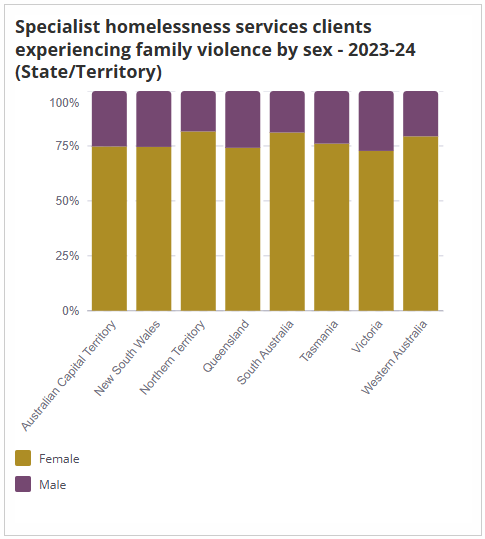
- Across Australia, including Tasmania, women are overrepresented among those accessing homelessness services due to family violence. This links to broader patterns of violence, financial stress, and higher rates of single parenthood, with long-term impacts on children.
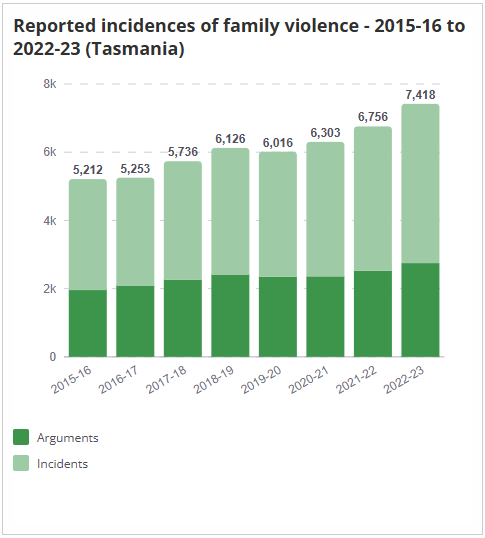
- Women are more likely than men to experience family and sexual violence, usually by male perpetrators. In Tasmania, reported incidents continue to rise, affecting women's economic, social, and personal wellbeing.
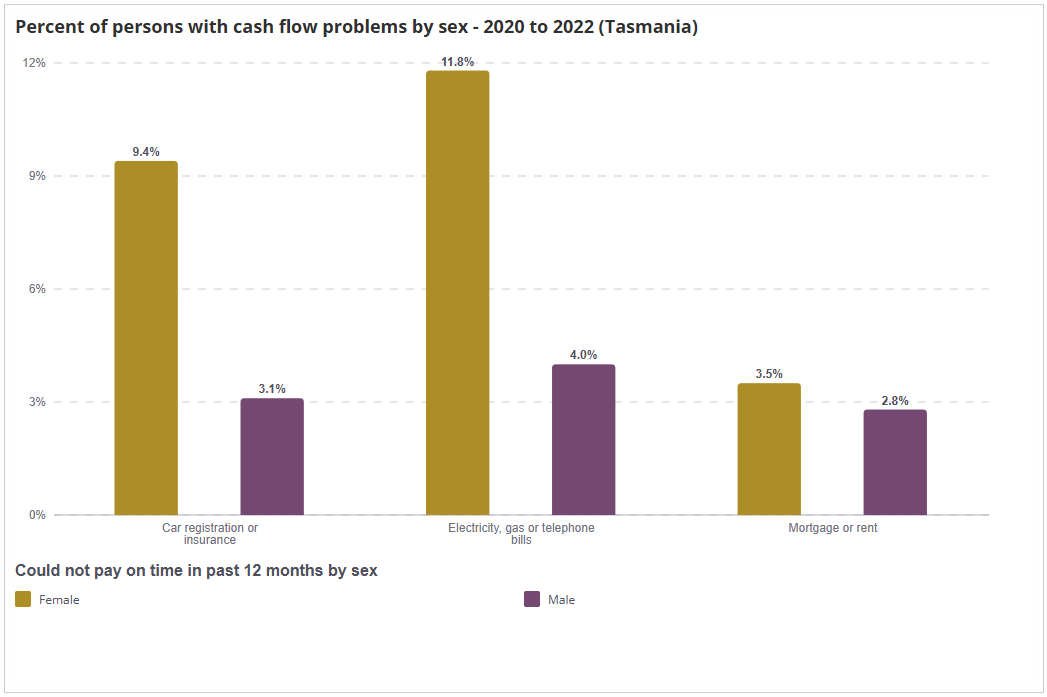
- Financial insecurity makes it harder for women to leave violent situations. Tasmanian women are three times more likely than men to face difficulty paying bills, at higher rates than women nationally.
Women's safety checklist
These are suggested starting points to consider. You can use your selections in the gender impact assessment tool in step 3.