
Barriers to accessing healthcare
Gender is a core determinant of health, and women in Tasmania often face barriers to accessing healthcare. These barriers include cost, distance, long wait times, and misdiagnosis, particularly for reproductive health issues.
Many women also report feeling the need to “remain strong and resilient,” avoiding healthcare altogether.
Poor health can limit a woman’s ability to fully participate in social, economic and political life, creating further challenges to achieving gender equality.
A key goal for the Tasmanian Government is to ensure all women and girls have equal access to quality health services and wellbeing support.
“Women carry a lot more responsibility, often running the home on top of work, and that extra pressure compounds mental health issues. I think sometimes I would avoid going to the doctor because it just felt too hard”. Community member, southern Tasmania
Personal stories of Tasmanian women
How birth trauma has impacted me
After my baby was born, I did not expect it would be so hard to get help. The constant message I received from doctors and medical professionals was that the pain and distress I was feeling were all normal because I had "just had a baby". I experienced extreme physical pain and discomfort from a long and difficult labour, and when I was finally given a medical examination after asking multiple times, medical staff questioned why I was reacting so “extremely” to the pain I felt during the physical examination.
My baby is three now and I have still not been able to find a diagnosis or treatment options for my birth injuries, and I have not been able to return to a normal healthy life. I feel ashamed of my body, and I can't even run around after my toddler. Although I would like to have another baby and give my toddler a sibling, I feel too scared to give birth again.
The impact of misdiagnosis
I have had terrible experiences dealing with male specialists who have not listened to me. I felt at the time, and still do, that this primarily was because I was a woman. One instance that has stuck with me was dealing with a male specialist who operated on me, and the operation went so poorly. I tried to raise my concerns with him again and again, but he refused to acknowledge that there were any issues with how the procedure went.
I then went to my female GP as a last resort. She advocated for me, we went back to the specialist and complained. Only then did we get a resolution. Other male specialists have avoided eye contact with me and didn't listen.
The story in data
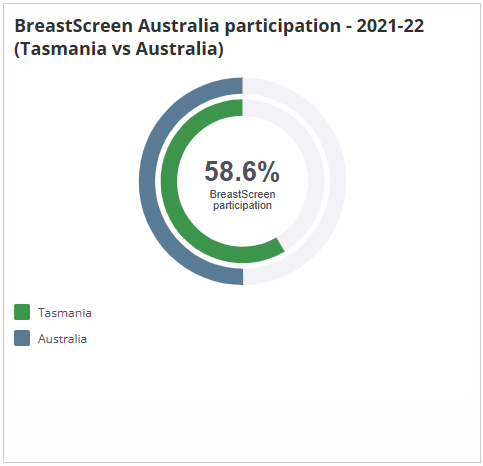
- BreastScreen Tasmania, part of the national program, aims to reduce breast cancer deaths through early detection. Tasmania’s higher participation rate reflects its positive impact on health outcomes.
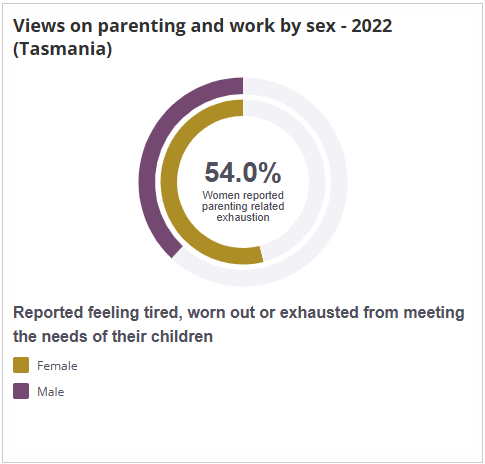
- Despite more gender-balanced parenting, women in Tasmania remain the primary caregivers, with over half reporting exhaustion from meeting their children’s needs, affecting their wellbeing.
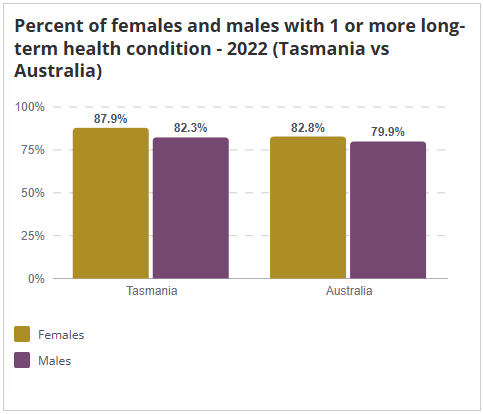
- Women in both Tasmania and Australia are more likely than men to have long-term health conditions, with the disparity more pronounced in Tasmania, highlighting the unique health challenges women face.
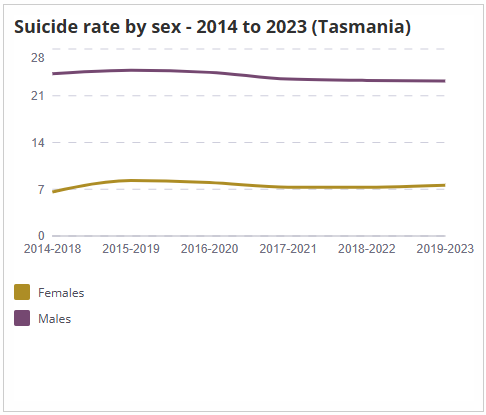
- While men historically have higher suicide rates, recent trends show an increase among women, reflecting growing mental health challenges. Women, particularly in the LGBTIQA+ community, may face compounded risks and need targeted support.
Women's health and wellbeing checklist
These are suggested starting points to consider. You can use your selections in the gender impact assessment tool in step 3.