
Representation matters
Women remain under-represented in leadership roles across government, business, community, and sport. This reflects ongoing gender inequality, biased expectations, and narrow ideas about who is seen as a leader.
Some women report feeling unheard, judged after returning from parental leave, or pressured to adopt male leadership styles to succeed. Barriers in education and sport also affect participation.
When women and girls have equal opportunities to lead and influence decisions, it strengthens inclusion and results in better outcomes for everyone. Supporting their full participation is a key goal for the Tasmanian Government.
There is this unspoken rule that you cannot have someone in a leadership role working part-time. This has big impacts on men and women, as this inevitably has an impact on one's ability to have a full and fulfilling family life.
“I was on a board for a while and even when I knew that things were wrong, I felt silenced. I was never given the space, power or time to have my thoughts heard. Even though I had expertise in the area, my contributions were not welcomed or valued.” Community member, northern Tasmania
“I have always wanted to work in the Australian Border Force, but I worry about the culture and relationships between men, women and gender diverse people in these jobs. I would like to see women and gender diverse people encouraged to be in these roles. They are very resilient and have a lot to offer these organisations.” Community member, northern Tasmania
Personal stories of Tasmanian women
What workplace attitudes have meant for me
I was brought up in a gender equal household. I was always told that I could achieve and strive for anything I wanted to do, my brother and I had the same opportunities and expectations placed on us. Because of this, I was not aware of discrimination until I was in my mid-20s.
I remember it so clearly, I was in my first few years of teaching, and I was told by management that I couldn't go on an excursion because the second teacher, a senior male teacher was unwell. I suggested that I was able to do it alone but was told that I couldn't as I was young woman. It wasn't about safety quotas or anything like that. There was that attitude that women are lesser people, less able to manage, lead and be listened to. This had a big impact on me as a young woman.
Men very often defer to other men for opinions, and this still exists, less overtly today. I still notice at times the way men look to other men for decisions in meetings, rather than to women, even in instances where women hold higher leadership positions than men.
Now that I'm older I am noticing that as women we are having two experiences. When we are young, we are too young, too attractive to be taken seriously. And then suddenly we are older and feel invisible. We are no longer deemed to fit an unattainable standard and then are discriminated against again for being too old.
I'm noticing this in many ways, across many industries. Calling our young female colleagues 'girls', but never calling our young male colleagues 'boys'. Women reaching their used by date in the entertainment industry and being pushed aside for younger women. While men can retain their positions no matter their age. It's everywhere.
How trying to manage work and life has impacted me
I have always worked in the public service, and I do not think the public service is immune from gender inequality. I have spent years working part-time, and the public service has been very slow to take up flexible working arrangements.
We are lacking in innovation such as job sharing which means that men and women in leadership are sometimes still modelling very 'male' leadership styles and lifestyles for their families. Especially for women it is difficult to balance leadership positions and young families, as you have the double expectation of being a supportive, involved mother but maintaining the status quo of what a leader looks like traditionally of working long hours, and being an assertive presence.
The story in data
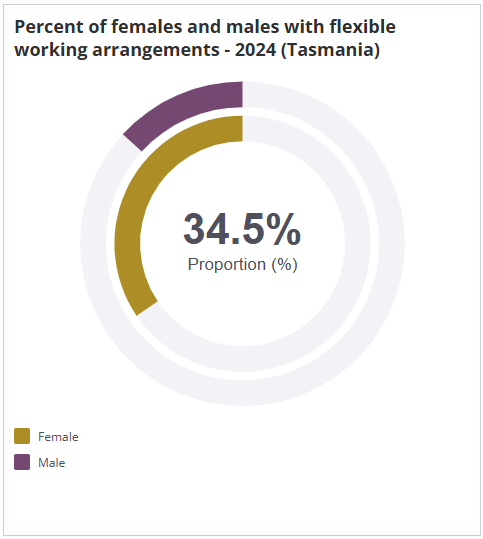
- In the Tasmanian State Service, women are 2.5 times more likely than men to use flexible work arrangements. However, one in eight women not using these options feel they are unavailable in their role, reflecting gendered expectations around work and care.
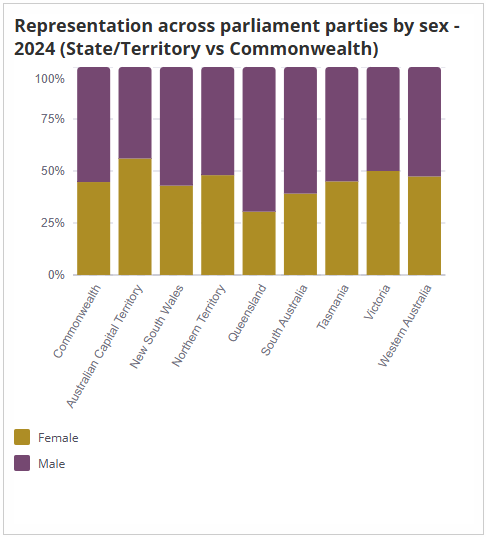
- In 2024, Tasmania had one of the most gender-balanced parliaments, with women making up around 45 per cent of representatives. However, gender gaps in political leadership persist across Tasmania and Australia.
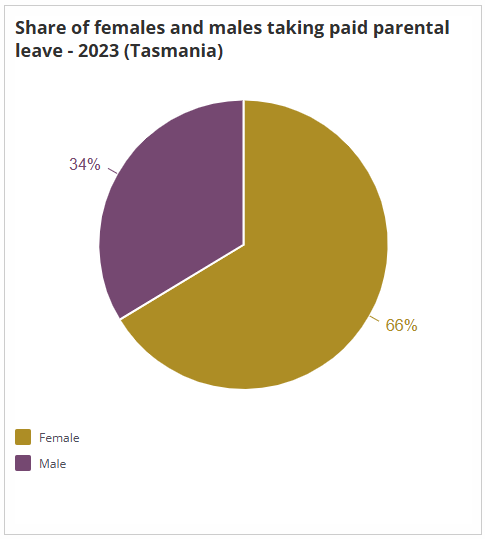
- In 2023, two-thirds of paid parental leave claims in Tasmania were made by women. While uptake by fathers is slowly increasing, in Tasmania and nationally uptake remains low, limiting women's full-time workforce participation.
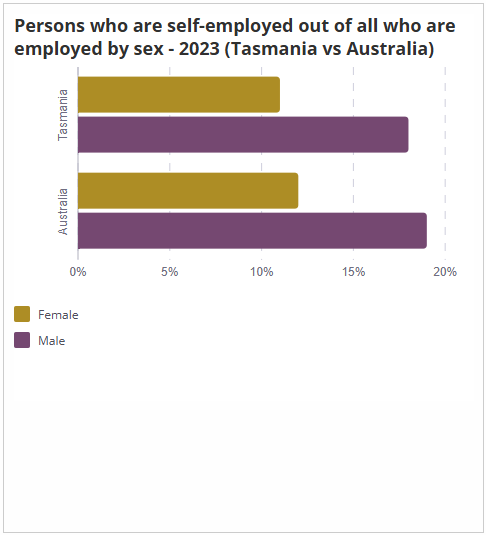
- Women in both Tasmania and Australia remain underrepresented in self-employment, often due to barriers such as limited access to capital and flexible conditions.
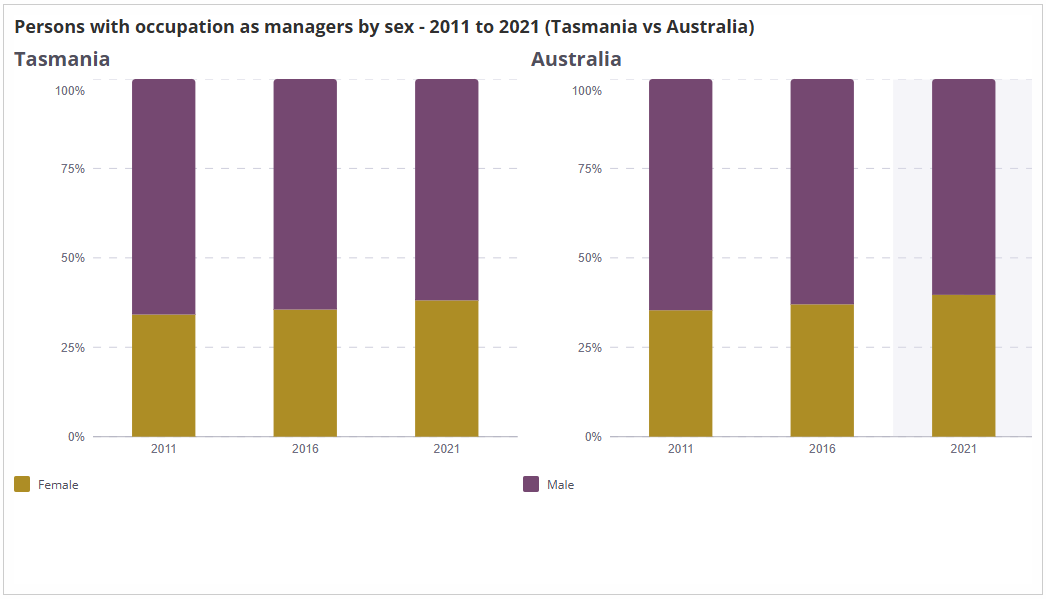
- Women continue to be underrepresented in managerial roles in Tasmania and Australia, despite modest growth, highlighting persistent barriers to leadership.
Women's leadership and participation checklist
These are suggested starting points to consider. You can use your selections in the gender impact assessment tool in step 3.