
Contributing factors to economic inequality
Despite some progress, women in Tasmania continue to face significant economic inequality. They take on a disproportionate share of unpaid labour and are overrepresented in lower-paid, undervalued care and community roles. Many also experience insecure job conditions and limited access to affordable, high-quality childcare.
These factors contribute to long-term financial insecurity. Women often have less superannuation, are more vulnerable to poverty and housing stress, and may lack the economic independence needed to leave violent relationships.
"When I returned to work after having my last child, a male colleague said: what are you doing at work, don’t you have a partner who has a job?" Community member, northern Tasmania
“I was lucky to have a job and get promotions in my workplace while I had a young family. I had help from my parents with childcare, but without that I don’t think I would have been able to work and have a baby. More women should have that kind of support, so they don’t need to leave work.” Community member, northern Tasmania
Personal stories of Tasmanian women
What a lack of financial control has meant for me
Throughout my life a lack of financial control has been a constant worry for me.
When I wasn't working and I had young children, my partner and I were in a bad financial situation. I would go without meals, or only eat smaller meals to make sure my partner and children had enough. I pretended I would eat as I prepared the meal so that they wouldn't protest, and this was how I managed the costs of food. I didn't want my other family members to go without.
I was not taking in adequate nutrition, even though I was the one actively raising our little babies. I needed all the help I could get but also felt like I could not ask my partner to go without as he was the one bringing in the income. It was a precarious situation to be in.
Once my babies were old enough to go to school I went back to work, and I've had steady job security throughout my working life since. Now that I'm older I'm learning from personal experience that superannuation is a huge problem for women over a certain age. When I was working, back in my day, women were actively encouraged not to take up superannuation. This was in the 1970s and 1980s and we were told that we could rely on our husband's super when the time came.
Fast forward and I now know many women who are now of retirement age, and times have changed. We are leaving unhappy relationships, but for many, we have nothing to show for it. We didn't talk about it enough as young women, and we were young during a time where separation was rarer. Good friends of mine have had periods of homelessness.
I know from my experiences that we need to talk more. We need to encourage financial conversations to ensure that women can be financially free, and not be fearful of the choice between poverty in later life and staying in relationships that are unhappy for whatever reason.
A quiet restart: returning to work after years of care
For eight years, I was a full-time carer for my elderly father and two young children. During that time, I did everything: managed medications, appointments, meal prep, budgeting, school drop-offs, all the emotional labour that keeps a household running. I was proud of that, but when my caring responsibilities ended, I was left asking, "now what?".
I had not been in paid work since my late twenties. My resume felt outdated, and I had no recent references. Every job ad I looked at asked for "recent experience", but what about the skills I used every single day? Problem-solving, time management, communication, I had all that. But it did not seem to count.
What changed was reconnecting with an old friend who owned a local retail business. She offered me a casual role, knowing I was nervous about re-entering the workforce. The hours were flexible, and the environment was supportive. Over time, I rebuilt my confidence, learned new systems, and began thinking about what kind of career I actually wanted. Not just what I could settle for.
The story in data
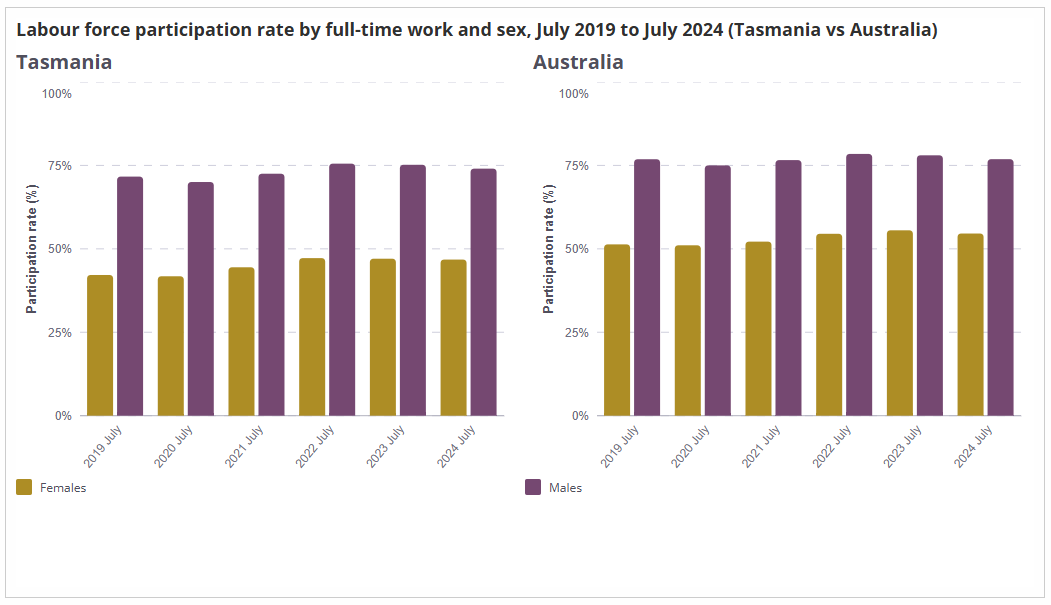
- Full-time work in Tasmania and Australia is still dominated by men, despite more women joining the workforce. These trends reflect gendered expectations around care.
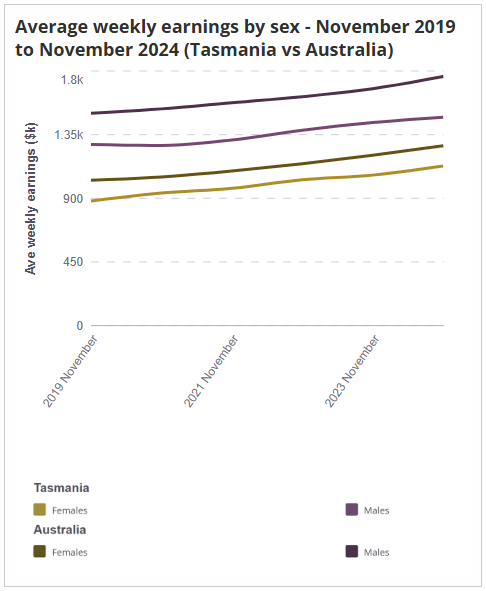
- Women's earnings in Tasmania and Australia remian lower than men's. This gap is driven by concentration in lower-paid industries and greater unpaid car, leading to long-term financial insecurity.
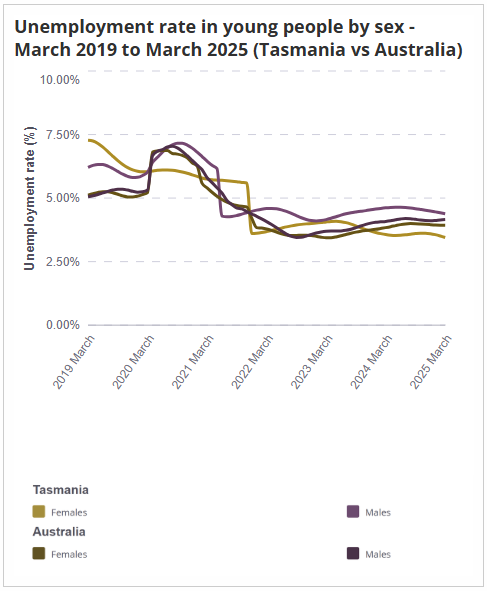
- Youth unemployment is higher in Tasmania and Australia, with young women facing greater barriers to workforce entry.
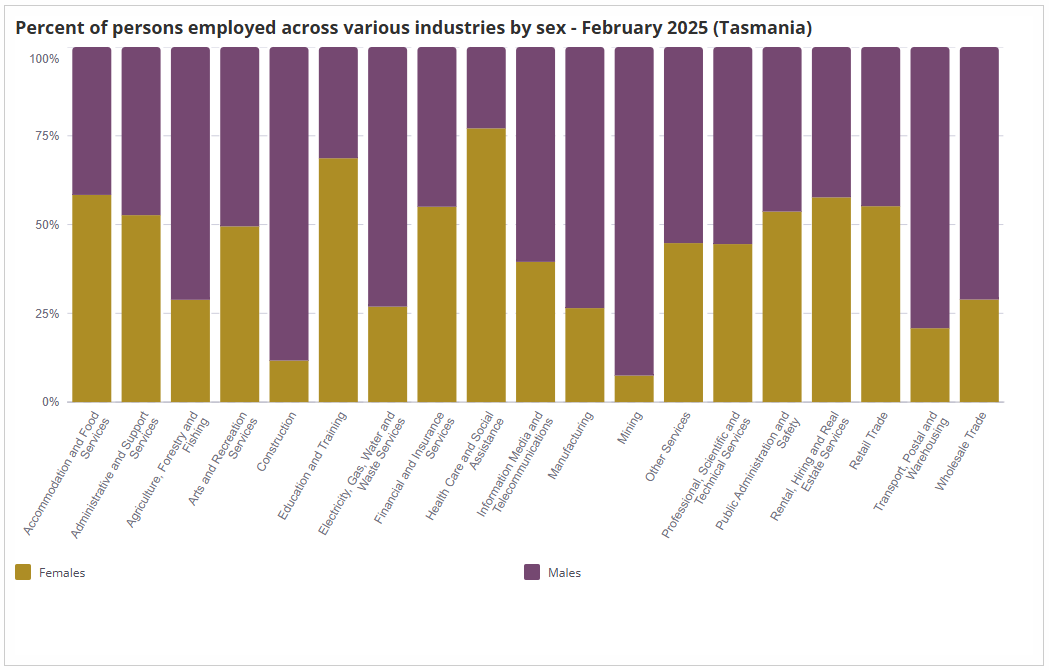
- Women in Tasmania are overrepresented in sectors like healthcare, education and retail, while men dominate construction, mining and transport. These patterns contribute to pay inequality and economic insecurity for women.
Women’s economic security checklist
These are suggested starting points to consider. You can use your selections in the gender impact assessment tool in step 3.