
The following 26 members of the Tasmanian Honour Roll of Women were inducted in 2011.

Australian Women's Land Army (Tasmanian Division)
Inducted in 2011 for services to:
- Defence
Australian Women's Land Army (Tasmanian Division)
Inducted in 2011 for services to:
- Defence
Founded: 27 Jul 1942
(disbanded 1945)
The Australian Women’s Land Army (AWLA) was formed as a national organisation in 1942. Women in the AWLA were commonly referred to as ’land girls’.
The AWLA comprised young women who volunteered to work as rural labour to offset the labour shortage on farms created by men leaving to either join the armed services or take up essential war work during World War II.
Female recruits had to be British subjects and between the ages of 16 and 50 years. AWLA was largely made up of women from city areas who had little knowledge of rural life.
The AWLA recruits initially faced reluctance and scepticism from the farming community. However, after formal farm training, the women valiantly took on exhausting dawn-to-dusk work, eventually earning great respect from the farmers they assisted.
The women of the AWLA took on hard physical farm work such as animal raising, sheep and wool work, ploughing fields and crop work. This back-breaking work was often performed in adverse conditions and they were paid much less than their male counterparts. The average working week for an AWLA member was in excess of 48 hours.
The AWLA was a voluntary group and not an enlisted service. Although the organisation was to be officially constituted under the National Security Regulations, this was not completed before the end of the war. Therefore, women of the land army were not officially accorded the same rights and benefits of other women’s services. Until 1985, AWLA members were denied the opportunity to march on ANZAC day.
In recognition of their considerable war contribution, AWLA members became eligible for the Civilian Service Medal in 1995, which recognises the service of eligible civilians who served in arduous circumstances in support of the WWII effort.
Photo Credit: Women’s Land Army, Join the Women’s Land Army, 1943, AWM ARTV01062.
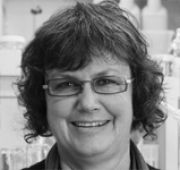
Susan Irene Blackburn
Inducted in 2011 for services to:
- Science, technology, mathematics and research
Susan Irene Blackburn
Inducted in 2011 for services to:
- Science, technology, mathematics and research
Born: 27 Jul 1953
(Hobart, Tasmania)
Susan attended the University of Tasmania (UTAS) where she gained her Bachelor of Science in botany and zoology, achieving First Class Honours in limnology and phycology. She was awarded her PhD in the biodiversity of global populations of microalgae in 1981.
Susan is recognised internationally for her research and expertise in microalgae, microscopic plants that are critical to the health of marine and freshwaters. Susan heads the Australian National Algae Culture Collection (ANACC) and leads related research on microalgal diversity, life cycles, ecophysiology, population dynamics, harmful algal blooms, culturing and bioapplications including biofuels and omega-3 oils at CSIRO Marine and Atmospheric Research (CMAR) in Hobart.
In 26 years with CSIRO, Susan has developed the ANACC from a fledgling bank of 150 living microalgae strains to include more than 1 000 strains sourced from tropical Australia to Antarctic waters. Promoting applications of microalgae, the CSIRO Microalgae Supply Service provides cultures to 60 countries. Susan presents on the ANACC and its research at conferences, symposia and workshops and she is currently President Elect of the International Society for Applied Phycology.
Susan has supervised post graduate students with UTAS during the past 15 years and supported their early research careers. Her international reputation as a leader in microalgae research attracts overseas students to UTAS. Susan also participated in the Women in Science in Secondary Schools initiative to encourage girls to participate in science in southern Tasmania.
Susan has written more than 100 publications, including peer-reviewed manuscripts, and invited book chapters and she is an inventor on successful patent applications. She has given hundreds of conference presentations. Susan is part of the team that was awarded the CSIRO 2010 Research Achievement Medal for research on alternative and sustainable source of omega-3 oils using microalgal genes.
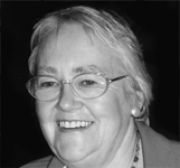
Elizabeth Mabel Clark
Inducted in 2011 for services to:
- Community, advocacy and inclusion
Elizabeth Mabel Clark
Inducted in 2011 for services to:
- Community, advocacy and inclusion
Born: 29 Nov 1947
(Launceston, Tasmania)
"I don’t know what we would do without the CWA… they are the quiet achievers who are the backbone of rural life in Tasmania. They are the unsung heroines who are always there when the going gets tough." - Tasmanian Farmers and Graziers Association Chief Executive Chris Oldfield, 2009
Elizabeth Clark attended Cressy District High School and Launceston Technical College.
Elizabeth has had a long history of service to her community. She has been involved with the Girl Guides, Rural Youth Organisation, Cressy Progress and Improvement Association, Cressy Indoor Bowling Club, Cressy Amateur Swimming Club, Howard Hill Support Group, Cressy Anglican Women’s Fellowship and has been a Sunday School Teacher.
The voluntary work for which she is most well known has been with the Country Women’s Association (CWA). Elizabeth joined the Cressy branch of the CWA in 1982 and since then she has risen through the ranks to serve as State Vice President (2003-2006) and State President (2006-2008).
As a sheep farmer herself, Elizabeth is well aware of the issues faced by the farming community. She has sat on various drought advisory bodies and regularly attends beyondblue workshops held in Tasmania to address issues of depression associated with the drought.
Elizabeth’s activities for the CWA include fund raising for a variety of causes, such as Lymphoedema sufferer support. Elizabeth developed Lymphoedema in the 1980s, which resulted in the amputation of her right hand. She has since learnt to write with her left hand, drive a car and continues to make jam for the CWA shop.
In 2004, Elizabeth was an organising member of the world conference of the Associated Country Women of the World, the largest international organisation for rural women. She was also a Queen’s Baton Relay Runner in the Commonwealth Games of 2006.
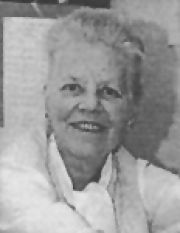
Johanna Coy
Inducted in 2011 for services to:
- Health
Johanna Coy
Inducted in 2011 for services to:
- Health
Born: 1 Apr 1922
(Holland)
Johanna Coy first came to Tasmania in 1953 and was appointed as Tasmanian Nutrition Officer in the Department of Health Services, a position she held for 34 years. During this time, Johanna was the only nutritionist in Tasmania.
Johanna had a pioneering role in this field, and lifted the profile and understanding of nutrition. As well as educating the public on the importance of nutrition, she also promoted its importance as a scientific discipline amongst health professions.
She published over 50 papers, working on these in her own time. Papers included: Dietary Survey of Tasmanian School Children (1957); Food – Problems of Pollution (1977); and the Comparative Study Over a 12 Year Period of the Weights of Tasmanian Children from Birth to 3 Years of Age (Coy and Robert Lowry, 1984).
Importantly, Johanna was conscious of the community, and provided ideas and advice in order to empower people to take responsibility for their own nutritional needs.
Johanna’s endeavour to promote an understanding of nutrition continued into her retirement. Johanna kept her knowledge in this area up-to-date, continually attending meetings and conferences, and supporting and inspiring her younger colleagues. She held the honorary position as nutrition adviser to the National Council of Women in Tasmania for many years.
Having largely worked without support throughout her career, in her retirement, Johanna made sure that her colleagues had her support, professionally and practically, as she remained active in her field.
Johanna’s contribution to the Tasmanian community in the area of nutrition was significant. She ensured that the science of nutrition was taken seriously, while also promoting an understanding of nutrition in the community.
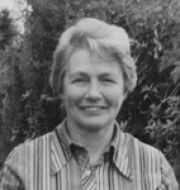
Constance (Connie) Marie Curtain
Inducted in 2011 for services to:
- Community, advocacy and inclusion
Constance (Connie) Marie Curtain
Inducted in 2011 for services to:
- Community, advocacy and inclusion
Born: 17 Sep 1924
(Sydney, New South Wales)
Passed: 26 Feb 1989
Constance (Connie) Marie Curtain moved from Sydney to Maydena in 1949. She married Felix Curtain and became an active member of the Derwent Valley community while raising six children including their eldest (Margaret) who was born with Down’s Syndrome.
A considerable proportion of Connie’s life was spent working for the betterment of services and recreational activities for people with disabilities in Tasmania.
While supporting her husband in his role as a long-term serving Councillor on the New Norfolk Council, Connie was involved with many organisations including the Parents and Friends Association; the Catholic Women’s League; and the Country Women’s Association.
In the early 1970s, following the death of her husband and birth of their seventh child, Connie became involved with the Talire Special School which her daughter, Margaret, had attended. She also became actively involved with the Retarded Citizen’s Welfare Association (RCWA). Connie undertook fundraising activities and committee roles for many years.
In 1978, Connie was recognised for her hard work and was awarded the title of the RCWA Tasmanian Woman of the Year. This title saw her travel the State for the next year in order to raise community awareness around issues for those living with disabilities.
Connie went on to become a founding member of COSMOS Inc in the early 1980s. This was the first recreational service for people with disabilities in Tasmania.
During the 1980s, Connie accompanied Southern Tasmanian teams to Special Olympics’ intrastate, interstate and overseas events helping out with team coordination. Connie was also associated with Riding for the Disabled.
Connie worked on the COSMOS Committee of Management until her cancer diagnosis in 1988. Connie died in 1989 shortly after being diagnosed with cancer. Connie is well-remembered for her commitment and perseverance in enhancing the lives of people with disabilities.
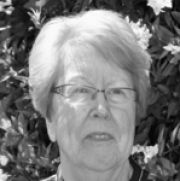
Kay Janet Denman
Inducted in 2011 for services to:
- Community, advocacy and inclusion
Kay Janet Denman
Inducted in 2011 for services to:
- Community, advocacy and inclusion
Born: 22 Jul 1937
(Latrobe, Tasmania)
"Although my election to this place was not anticipated, I did arrive here with some fairly definite aims and objectives in mind. Then, as now, I was absolutely committed to the implementation of social justice and a more equitable society." - Kay Denman, Valedictory Speech, June 2005
Kay Denman attended Railton Primary and Devonport High Schools. She graduated from Launceston Teachers College and started teaching in 1958. Kay left teaching between 1961 and 1965 during which time she had her two children, Paul and Janet.
In the late seventies in conjunction with teaching and her family commitments she became a volunteer member of the Mersey Leven Community Welfare Planning Group. The group had an extensive brief focussing on social welfare issues. This led to her involvement with the inaugural committee of Mersey Leven Family Day Care and she fought for children with disabilities to be cared for in day care facilities. Kay also became involved with Family Planning Tasmania at that time.
This voluntary work opened up Kay’s interest in social justice issues and her Senate career reflects her concern for justice, an example being her support of gay and lesbian rights during the mid-1990s.
Kay has also been a staunch advocate for those suffering from mesothelioma and other asbestos-related diseases. Having grown up in Railton, she has seen first-hand the devastating effect these diseases have on the community. Kay’s Senate Valedictory Speech reflects her concern that those suffering asbestos-related diseases be looked after.
Since leaving the Senate in 2005, Kay has been a Board Member of Devonfield Enterprises, was a Member of the Tasmanian Community Advisory Group (TasCAG) Mental Health Advisory Committee before it ceased operation in 2009, is on the inaugural North-West Area Health Services Network Advisory Group and is a Life Member of the Tasmanian Council for AIDS and Related Diseases (TasCARD).
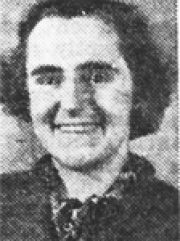
Margaret Keitha Findlay
Inducted in 2011 for services to:
- Architecture
Margaret Keitha Findlay
Inducted in 2011 for services to:
- Architecture
Born: 1916
(Scottsdale, Tasmania)
Passed: 2007
"As an architect, I am interested deeply in the beauty and sound construction of adequate homes, but as a woman architect I urge that the utmost consideration be given to the thousands of women who today, within their homes, walk in a year, scores of unnecessary miles, and make thousands of unnecessary movements in doing their normal household duties. The cumulative amount of wasted work is appalling." - Margaret Findlay, The Mercury, 20 January 1944
Margaret Keitha Findlay was born in Scottsdale and moved with her family to New Norfolk in the 1930s. On leaving school Margaret was articled to an architect in Hobart, Mr A.T. Johnston.
A year after the completion of her articles, Margaret joined Australian Newsprint Mills (ANM) Pty Ltd as an architectural draughtswoman. Fifteen months later, the architect at ANM left the company and from that date Margaret carried the full architectural responsibility. She personally designed more than 60 residences to suit the requirements of ANM staff in New Norfolk.
Margaret was the first woman in Tasmania to qualify as an associate of the Royal Australian Institute of Architects (RAIA), and was the first registered female architect in Tasmania. In 1944, Margaret became the first female architect employed by the Public Works Department in Tasmania.
By 1945, Margaret was appointed Instructor in Architectural Draftsmanship at the University of Sydney, the only female instructress at the school. In an interview with The Mercury in 1944, Margaret talked of the need for proper town planning. In 1951, she received her Diploma in Town and Country Planning from the University of Sydney.
In an interview with The Mercury in 1945, Margaret stated “never was there such an opportunity for girls to take up architecture.” Throughout her career, Margaret stressed the importance of domestic architecture to women’s health and happiness.
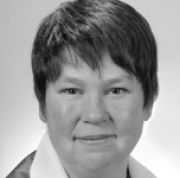
Amabel Fulton
Inducted in 2011 for services to:
- Agriculture/Primary industries
Amabel Fulton
Inducted in 2011 for services to:
- Agriculture/Primary industries
Born: 15 Oct 1964
(Hobart, Tasmania)
Passed: 15 Aug 2009
Amabel’s contribution is substantial because she has been part of a movement in Australian agriculture circles that has advocated a new way of understanding farms and farming, and the way farms might be encouraged to innovate. (Professor Frank Vanclay at the ceremony to confer a PhD to Amabel Fulton, 2009)
Amabel Fulton attended Hobart Matriculation College and excelled in her studies. She graduated from the University of Tasmania with an Agricultural Science degree in 1987, with a major in animal production, and was awarded First Class Honours for her thesis on the genetics of footrot in sheep.
Amabel became a rural journalist with Tasmanian Country before working for the Department of Primary Industries, Water and Environment.
In 1999, Amabel and her husband David started the successful consultancy company Rural Development Services (RDS). RDS provides research development and education services to the agriculture and seafood industries, with a focus on supporting rural industries to be sustainable and internationally competitive.
In recognition of her work, Amabel was awarded the Telstra Tasmanian Business Women's Award in the innovation category in 2008 and was the Rural Industries Research and Development Corporation Rural Women’s Award runner up in 2008.
Amabel continued her studies over a long period while raising her three children, Tom, Ben and Sarah. Her studies focussed on issues related to helping farming communities manage change, especially farming families. Amabel believed that instead of seeing the farm as a singular entity under the management of a male farmer, farms should be appreciated for what they usually are - family farming businesses. She was a champion of women’s role in agriculture and a member of the Australian Government’s Regional Women’s Advisory Council. Amabel was awarded her PhD in rural social research in 2009.
Amabel passed away in August 2009 after a long battle with breast cancer.

Elizabeth (Beth) Ann Fulton
Inducted in 2011 for services to:
- Environment
- Science, technology, mathematics and research
Elizabeth (Beth) Ann Fulton
Inducted in 2011 for services to:
- Environment
- Science, technology, mathematics and research
Born: 27 Mar 1973
Beth Fulton grew up on a farm near Goulburn, New South Wales. Beth’s curiosity about the natural world, combined with a keen interest in maths from an early age, led her to become the brilliant, dedicated and inspiring scientist she is today.
Beth is recognised internationally as a world leader in marine ecosystem modelling which is a relatively young field of science that she helped to conceive. Her work is based on the balanced management of fisheries and marine ecosystems.
Beth is the developer of Atlantis, an ecosystem model which in 2007 was rated by the United Nations Food and Agriculture organisation as the best of its kind in the world. Her modelling framework is the first in the world that gives equal attention to the biophysical and human components of the system, and is used by the Australian Fisheries Management Authority and other fisheries managers. Other users include universities and resource management agencies in the United States, Mexico, Canada, the North Sea, Scandinavia and South Africa.
Beth also co-developed the InVitro modelling framework, which allows simultaneous consideration of multiple uses of the marine environment.
Beth leads a marine ecosystem modelling team based at CSIRO in Hobart. As well as supervising post-graduate students and post-doctoral fellows, Beth is an Honorary Associate at the University of Tasmania Centre for Marine Science where she lectures in the field of quantitative marine ecosystem modelling.
In 2010, Beth was awarded a prestigious Pew Fellowship in Marine Conservation. She has also been awarded: the Science Minister’s Prize for Life Scientist of the Year in 2007, the 2004 Royal Society of Tasmania’s PhD award, the 2002 Dean’s Commendation for outstanding PhD by research, and the 1997 James Cook University Medals in Marine Biology and Mathematics and Statistics.
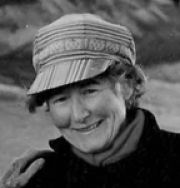
Helen Gee
Inducted in 2011 for services to:
- Environment
Helen Gee
Inducted in 2011 for services to:
- Environment
Born: 9 Nov 1950
(Launceston, Tasmania)
Passed: 19 Dec 2012
Helen Gee was born in Launceston and spent her childhood at Westbury.
Helen was widely recognised as one of the leading conservationists in Tasmania and had been an activist since the campaign to save Lake Pedder from 1967 to 1972. She was a founding member of the Wilderness Society and was the Convenor of the Lake Pedder Restoration Committee. Helen was a campaign officer for the Tasmanian National Parks Association, a Convenor of the South East Forest Protection Group, a Councillor with the Australian Conservation Foundation, and member of the Tasmanian Wilderness World Heritage Consultative Committee.
Helen was involved with many environmental struggles over the past 40 years and was a crucial contributor to the declaration of the Douglas-Apsley National Park in 1989. She spear-headed campaigns to gain broader recognition of the biodiversity significance of Tasmania's dry eucalypt forests on the east coast in particular the Wielangta Forest of South East Tasmania.
Helen compiled and edited a number of books which have documented the struggles to conserve Tasmania's natural heritage including The South West Book: a Tasmanian wilderness (1978), The Franklin: Tasmania's last wild river (1978) and For the forests: a history of the Tasmanian forest campaigns (2001).
In 2003, Helen was a part of the group of conservationists and historians involved in the discovery of the Recherche Bay gardens which were established by the d'Entrecasteaux expedition in May 1792.
Helen's editorial endeavours include the Rivers of Verse: A Tasmanian Journey 1800-2004 (2004) and Ronnie: Tasmanian Songman (2009).
Despite this impressive record of activity, Helen also managed to spend decades assisting her partner Bob on their east coast grazing property where they raised two children.
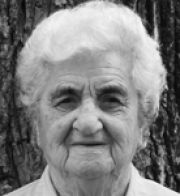
Dulcie Greeno
Inducted in 2011 for services to:
- Aboriginal or Torres Strait Islander affairs
- Arts and media
Dulcie Greeno
Inducted in 2011 for services to:
- Aboriginal or Torres Strait Islander affairs
- Arts and media
Born: 1923
(Cape Barren Island)
"My grandmother used to do shell necklaces and a couple of my aunties... we’d go around with them on the beach and collect shells with them." - Dulcie Greeno
Auntie Dulcie Greeno spent her childhood on the beaches of the Furneaux Island Group.
Auntie Dulcie is an elder of the Tasmanian Aboriginal community and the knowledge and skills of shell stringing has been passed down through generations of her family. She is considered a senior custodian of necklace-making and has developed a distinctive approach to making shell necklaces, constructing subtle variations of gull shells, rice shells, crow shells and the rare blue and green mother-of-pearl Maireener shells, which are all collected, washed and strung by hand. Dating back thousands of years, necklace-making is one of the few Palawa traditions that has remained intact, conferring iconic status on them.
During her time living on Flinders Island, Auntie Dulcie made shell craft objects, using a garage converted into a studio/shop to sell to visitors to the islands.
Auntie Dulcie’s work has been exhibited widely including an international exhibition developed between the National Museum of Australia in 2002, Stories from Australia, and the Guangzhou Museum of Art in China. Her traditional shell necklaces can also be seen at the Tasmanian Museum and Art Gallery and Queen Victoria Museum and Art Gallery in the permanent Strings Across Time exhibition.
Auntie Dulcie’s basketwork is also represented in the Tayenebe Tasmanian Aboriginal women's fibre work exhibition, which tours nationally in 2010 and 2011. This exhibition is the result of Tasmanian Aboriginal women journeying together across Tasmania in a determined process of cultural revival.
Auntie Dulcie lives in Launceston and regularly travels to the Furneaux Islands to collect shells for her necklaces.
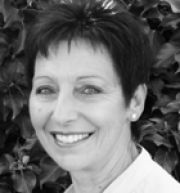
Karen Naree Hall
Inducted in 2011 for services to:
- Business
Karen Naree Hall
Inducted in 2011 for services to:
- Business
Born: 5 Jul 1955
Karen Hall is a passionate and inspiring woman who displays courage and determination in assisting a range of community groups in North-East Tasmania. Karen is a wife, mother, grandmother and significant employer, volunteer, mentor and sportsperson within the Dorset region.
Karen, with her husband Ken, operate a successful family timber harvesting business, are farmers, and Karen owns and operates a hairdressing salon in Scottsdale. In 2004, they purchased the North Eastern Advertiser, the local 100 year old community newspaper and printing business, saving it from closing.
Although a predominately male industry, Karen has embraced their 30 years in the timber industry with passion and pride. She has been a lobbyist and promoter through many means – the Women’s Timber Support Group, Forest Industries Trauma Support Group, Tasmanian Forestry Week, is a board member of Tasmanian Forest Contractors Association and is a founding and current active member of the North-East Tasmanian Branch of Timber Communities Australia. Twice she has been a finalist in the Trevor Cederman Memorial Award, which honours the unsung heroes of forestry. Karen has strongly promoted the importance of women working within the forestry industries and has created avenues to support them.
Karen has an impressive history of community involvement spanning over 30 years. Her past and present voluntary roles have included Child Health Association, Sudden Infant Death Syndrome, Tasmanian Breastfeeding Association, Scottsdale Football Clubs and Business and Professional Women. She is currently President of the North-East Tasmania Chamber of Commerce and an active participant in the Scottsdale Show and Christmas parade.
An accomplished sportswoman, Karen is a Life Member of Scottsdale Netball Club, a past board member of the North-East Netball Association and has represented them for many years in Masters Games throughout Australia.
Her tireless fundraising efforts have benefited many worthwhile causes and she has touched the lives of many people.

Hobart Women's Health Centre
Inducted in 2011 for services to:
- Health
- Human rights, justice and corrections
Hobart Women's Health Centre
Inducted in 2011 for services to:
- Health
- Human rights, justice and corrections
Founded: 1987
The 1970s were a time of great social activism and change for women. This activism led to the establishment of feminist, community-based, women’s health centres throughout Australia. However, it was not until 1987, after much lobbying, that Tasmania received a small grant to organise a Women’s Health Forum, followed by 18 months funding to do research on cardiovascular issues for women. This work led to the establishment of the Hobart Women’s Health Centre.
The Centre initially operated from the Women’s Health Foundation building in Moonah, moving to ‘Weroona’ in Elizabeth Street in 1991 where it remained until November 2002. The Centre is now located in Lefroy Street, North Hobart.
Since its establishment, the Hobart Women’s Health Centre has taken a holistic approach to women’s health and has been at the forefront of taking health out of surgeries and into the community. The Centre acknowledges the impact of societal influences such as income, education, gender, sexual orientation and isolation on health outcomes for the individual.
The Centre has continuously lobbied for improved services and programs that meet women’s needs. Nutrition and body image programs; the Encore breast cancer program; support groups for endometriosis and lymphoedema sufferers; social groups for same-sex attracted women; and, programs for older women are just some examples of the breadth of the Centre’s work.
The Centre has also been a key advocate on issues such as a woman’s right to make informed choices about her own body, migrant and refugee women’s health, and the arts in health. The Centre has continued to lobby both State and Commonwealth governments on a range of policies that impact on women’s health.
The Hobart Women’s Health Centre continues to uphold the Women’s Health Services Principles with a commitment to providing outstanding women’s health services.
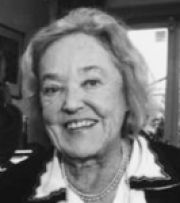
Eileen Johnson
Inducted in 2011 for services to:
- Education and training
Eileen Johnson
Inducted in 2011 for services to:
- Education and training
Born: 27 Aug 1923
(Launceston, Tasmania)
Passed: 6 Jul 2009
Eileen Johnson learned music from Joyce Ball and regularly took part in competitions and Eisteddfods, winning many awards and prizes. Eileen later moved to Hobart and studied with Anne McGarry OAM as a student and as a colleague teacher.
Eileen enrolled by correspondence at the University of Melbourne to continue her studies in music theory. Throughout her life she continued to enhance her professional learning and her musical knowledge in all its form was extraordinary. Eileen was acknowledged by the Australian Music Examination Board as one of its senior examiners with particular expertise in theory.
Eileen was a Life Member of the Tasmanian Music Teachers’ Association, the Hobart Eisteddfod Society, and the City of Clarence Eisteddfod. These honours, bestowed by her peers, acknowledge her work as a committee member who gave countless hours of voluntary service to these organisations to promote musical excellence.
Eileen’s great talent as a teacher meant that her students excelled and were prominent winners at Eisteddfods. She found great pleasure in assisting her students in any way possible. She voluntarily provided thousands of hours of free tuition and on many occasions paid for entry fees to competitions, and provided music books and other requirements for her students.
Eileen taught at The Friends’ School for over 25 years. She was also asked to provide specialist teaching for scholarship piano and music theory students at Ogilvie High School and the Hobart College. When ‘almost’ considering retirement, Eileen was persuaded to teach at St Michael’s Collegiate School where she actually ended up spending a further 25 years teaching piano.
Eileen was an inspirational and devoted teacher in a career that spanned 70 years. She officially retired on her 85th birthday but continued to work with her much loved students up until the week of her death in 2009.
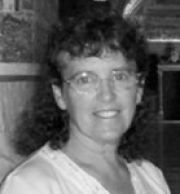
Mary Carmel Knowles
Inducted in 2011 for services to:
- Community, advocacy and inclusion
Mary Carmel Knowles
Inducted in 2011 for services to:
- Community, advocacy and inclusion
Born: 6 Mar 1952
(Port Lincoln, South Australia)
Mary was educated in Melbourne and moved to Rossarden with three of her four children in 1988, escaping domestic violence so severe she had to disappear, changing her name and birth date in order to stay safe.
She soon became involved with the local school, initiating a playgroup which continued beyond the closure of the school in 1992.
Mary has been and enthusiastic volunteer for her community over many years. In 1989, after moving to Gipps Creek, she became and ‘Avoca Angel’ – the female volunteer ambulance officers serving the Fingal Valley. Mary was State President of the Volunteer Ambulance Officers Association of Tasmania for five years and coordinated the Agfest ambulance volunteers for eight years.
Mary was an Executive Member of the Distance Education Parent Association for 13 years with five years as State President, a member of the Cancer Screening Consumer Reference Group for seven years and has been involved with Greater Esk Tourism as President and currently as Secretary, successfully applying for $180 000 to restore a heritage building as the Avoca Tourist Centre. Mary is a member of the Rossarden Kids Christmas Group, the Avoca / Rossarden / Royal George District Committee, Treasurer for the Rossarden Progress Association and Coordinator for the Tasmanian Women in Agriculture South Esk Group.
While on-call ambulance duty, Mary volunteered at Avoca Primary one day a week for ten years, mentoring a Junior Red Cross Group and as a classroom help, gaining employment five years ago to coordinate the 0-4 years Launching into Learning program and the school garden where the children plant, harvest, cook and sell their produce.
In 2008, Mary was a finalist in the Community Achievement Awards, and a member of the winning Rossarden Kids Christmas Group.
Mary was elected as a Councillor to the Northern Midlands Council in 2009.
Mary Lodder
Inducted in 2011 for services to:
- Cultural heritage
Mary Lodder
Inducted in 2011 for services to:
- Cultural heritage
Born: 1853
(England)
Passed: 1911
Mary Lodder, along with her parents and two siblings, arrived in Tasmania in 1875. Mary remained at home with her parents after her siblings married.
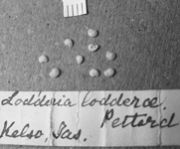
The collection and classifications of shells was a hobby and ‘respectable pursuit’ for many Victorian ladies. Mary possessed great expertise not only as a collector, but in her grasp of taxonomic recording, ensuring her own collections were meticulously researched, labelled and later placed in public institutions.
Largely self-taught, Mary began to correspond with renowned malacologists overseas. Her interest led to an association with the Tasmanian Museum and Art Gallery and the Queen Victoria Museum and Art Gallery. She gave her time voluntarily to classify and manage their collections. She also published many papers for the Royal Society of Tasmania.
After the death of her parents, Mary relocated from North-West Tasmania to Launceston, to work with the Queen Victoria Museum and Art Gallery and to devote her spare time to charitable organisations. Mary actively supported many charities including the Children’s Protection Society, the Ministering Children’s League, and the Girls Friendly Society. Mary also shared her great knowledge of malacology by conducting evening classes at the Museum.
At the time of her death, Mary bequeathed her collection of shells and display cases to the Museum in Launceston and left generous bequests to the various charities she had supported.
On her death the obituary in The Examiner (6 March 1911, p5) stated:
A member of many learned societies, and known to almost every shell collector in Australia, as well as in many foreign countries, her scientific attainments would have made many a smaller character more widely known. But so quietly was her work done that…few grasped the scientific possibilities she possessed.
Photo credit: Supplied by the Queen Victoria Museum and Art Gallery, Specimens from The Lodder Collection
Jessie Sheila Luckman
Inducted in 2011 for services to:
- Arts and media
- Environment
Jessie Sheila Luckman
Inducted in 2011 for services to:
- Arts and media
- Environment
Born: 7 May 1910
(Sydney, New South Wales)
Passed: May 2014
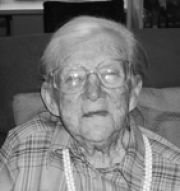
Jessie Luckman moved to Tasmania when she was four years old. Jessie's love of music was nurtured from an early age by family sing-a-longs around the piano. She became an exemplary pianist and cellist and went on to play with the Tasmanian Symphony Orchestra.
Radio transmission began in Hobart in the 1920s, and from a very young age, Jessie performed piano pieces for radio. By the 1930s, she was employed by the ABC as a concert pianist. During World War II, Jessie became a member of the Education Unit of the Australian Women's Army Service, making long trips to remote army camps to play piano for the troops.
She joined the Hobart Walking Club in 1936, became President of the Club in 1952 and was made an Honorary Life Member in 1963. She also served on numerous committees. Jessie, and later her husband Leo Luckman, regularly embarked on long expeditions to rugged and uncharted parts of Tasmania.
Her love of the natural world led Jessie to become one of Tasmania's first conservationists. She was a key protestor against a Bill to separate part of the Mt Field National Park for the forest industry in the 1940s. She was outspoken over the proposed recommencement of the Macquarie Island sealing industry. She became a foundation member of the Tasmanian Conservation Trust, supporting the protection of South-West Tasmania during the dams struggle from 1963 to 1983.
Jessie Luckman was awarded a Medal of the Order of Australia in 1997 for her service to the community and to music as a performer and broadcaster.
On 7 May 2010, Jessie celebrated her 100th birthday at the Tasmanian Museum and Art Gallery where she was recognised as an early and staunch supporter of the Museum.
Jessie died in May 2014, a week after turning 104.
(Thanks to the Tasmanian Conservation Trust for the use of information in their Newsletter No. 320, printed August 2010, Jessie Luckman, Conservationist - 100 years young by Bruce Davis)
Margaret Annette Rose Mack
Inducted in 2011 for services to:
- Community, advocacy and inclusion
- Health
Margaret Annette Rose Mack
Inducted in 2011 for services to:
- Community, advocacy and inclusion
- Health
Born: 25 Jan 1915
(Geelong, Victoria)
Passed: 19 Jun 2005
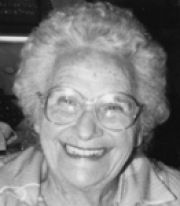
Margaret Mack decided from a young age that she wanted to be a physiotherapist after one of her sisters contracted polio. Margaret graduated from the University of Melbourne in 1936 and was appointed Physiotherapist in Charge at the Launceston General Hospital in 1937. Margaret and her nine staff mainly dealt with the treatment of polio patients.
Margaret was a Board member of the newly opened St Giles Home for Crippled Children for 35 years and worked to ensure a high standard of physiotherapy throughout Northern Tasmania. Internationally Margaret became respected as an expert in the therapeutic treatment of polio.
Margaret enlisted for duty in World War II, serving in the Middle East before returning to the Launceston General Hospital in 1946.
Margaret was a founding member of the Tasmanian Branch of the Australian Physiotherapy Association and a committee member from 1952-1981, and President in 1978-79. Margaret was also the Australian delegate to the World Council of Physical Therapy from 1959-1967, and Vice President in 1967.
Margaret held administrative positions with numerous organisations, including President of the Tasmanian Region for Soroptimists International. She is fondly remembered by her fellow Soroptimists as a “loyal, astute, modest, forthright person with a wonderful sense of humour”.
Margaret’s devotion to children with disabilities continued through her working life. She was awarded a Medal of the Order of Australia in 1984 and a Governor’s Commendation in 1992 for her long devoted service to children with disabilities.
In 2005, St Giles established an annual donation to the Tasmanian Post Polio Network in honour of Margaret’s service and in 2007 they established the Margaret Mack Centre in her honour.
Beatrice (Bea) Louise Maddock
Inducted in 2011 for services to:
- Arts and media
Beatrice (Bea) Louise Maddock
Inducted in 2011 for services to:
- Arts and media
Born: 1934
(Hobart, Tasmania)
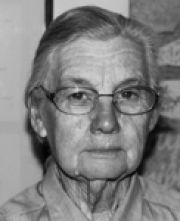
Beatrice (Bea) Maddock was educated in Hobart and later studied art at the Hobart Technical College and Slade College of Art in London.
Bea travelled extensively throughout Europe, returning to Tasmania before taking up a position as printmaking lecturer at the Victorian College of the Arts from 1970. Following this she was Creative Arts Fellow at the Australian National University in Canberra in 1976. Bea then worked and lived in Mt Macedon until the Ash Wednesday fires of 1983 where her studio, house and artwork were destroyed by fire. She then returned to Tasmania as the Head of the School of Art in Launceston.
Throughout her career, Bea has experimented with sculpture, photography and drawing, but is best known as one of Australia’s finest printmakers exploring the natural environment, Aboriginal Australia and Australian history. Her body of work is an inspiration to emerging artists, especially printmakers.
Bea rose to prominence for her multi-panelled landscape paintings, inspired by a visit to Antarctica and the coastline of Tasmania. The latter, Terra Spiritus has been described as a ‘complex, mystical work…a profound and symbolic statement about co-existence’.
Bea has held over thirty solo exhibitions in Australia and participated in over 60 group exhibitions both nationally and internationally. She has won numerous prizes and her work is represented in all major galleries in Australia including the National Gallery of Australia. Her work is also shown at the National Gallery in Washington and the Museum of Modern Art in New York.
In 1991, Bea was awarded a Member of the Order of Australia for her services to art and art education.
Today, Bea divides her time between studios in Oatlands and Launceston, and is widely considered one of Australia’s finest artists.
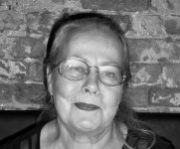
Austra Maddox
Inducted in 2011 for services to:
- Human rights, justice and corrections
Austra Maddox
Inducted in 2011 for services to:
- Human rights, justice and corrections
Born: 4 Feb 1945
(Berlin, Germany)
Austra Maddox and her family came to Australia in 1950, initially settling in outback Queensland and later in Tasmania. Austra attended Hobart High School and the University of Tasmania, where she gained a Bachelor of Arts.
While studying part-time, Austra took a job as a typist/clerk. She realised that workers in these positions had no say over their own work and no say over how the work was organised. These observations caused Austra to think about how work should be organised and what makes a good workplace and a bad workplace.
Austra joined the Commonwealth Public Service as the first female Graduate Clerk in Tasmania in 1969, working in the Departments of Social Services, Employment and Industrial Relations and Community Services. It was while working in the Commonwealth Public Service that Austra became involved in the union movement, an area where few women had been actively involved.
In 1985, Austra was the first female elected as Branch Secretary of the Administrative and Clerical Officers’ Association. She continued to be re-elected as the union grew through various amalgamations into the Community and Public Sector Union.
Throughout her time in unions, Austra has pursued many issues and was instrumental in having flexitime started in the Public Service. Of this achievement Austra said “I thought that was something really important because it was particularly of benefit to women … obviously women with hassles about child care would particularly benefit”.
Austra became the first female President of the Tasmanian Trades and Labor Council in 1993, and continues her union involvement as a Life Member of the Community and Public Sector Union. She is also a member of the Unions Tasmania Women’s Committee and the Union Choir. Austra has a long-term commitment to a social justice agenda and women’s issues.
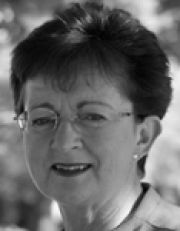
Suzanne (Sue) Deidre Napier
Inducted in 2011 for services to:
- Government (Public services and politics)
Suzanne (Sue) Deidre Napier
Inducted in 2011 for services to:
- Government (Public services and politics)
Born: 1 Jan 1948
(Latrobe, Tasmania)
Passed: 5 Aug 2010
"Sue’s integrity, determination and steadfast commitment to improving the lives of Tasmanians was unflinching. During her time as a member of Parliament, Sue was a pioneer, a trail-blazer and one of the most remarkable women ever to serve the Tasmanian community." - Tasmanian Liberal Leader, Will Hodgman MP
Sue Napier was the daughter of Tasmanian Legislative Council member, Harry Braid. Her early years were spent on a farm near Lake Barrington where she grew up with her sister Debbie and brother Greg.
Sue obtained a Bachelor of Education from the University of Tasmania (UTAS) and a Master of Arts from Leeds University in the United Kingdom.
Before entering political life, Sue was a lecturer at the Tasmanian College of Advanced Education and later at UTAS. She married Drew and had two sons, Alex and James.
Sue was first elected to the Tasmanian House of Assembly in 1992 when she suggested the slogan, ‘the best man for the job is a woman’. Sue was that woman, going on to spend 18 years in politics.
Sue made an outstanding contribution, not only to the Liberal Party, but to the Tasmanian Parliament. During her career she served in many portfolios including youth affairs, education and transport and opposition portfolios of tourism, health, women and infrastructure.
Sue was the first woman to be Deputy Premier of Tasmania and Opposition Leader and Leader of the Liberal Party in Tasmania.
Sue was diagnosed with breast cancer in late 2008 and passed away in August 2010. She is remembered as a woman of integrity who fought against discrimination and championed the cause of the disadvantaged.
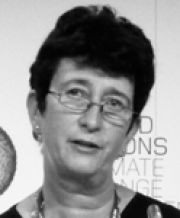
Margaret (Peg) Ann Putt
Inducted in 2011 for services to:
- Environment
Margaret (Peg) Ann Putt
Inducted in 2011 for services to:
- Environment
Born: 5 Jun 1953
(Sydney, New South Wales)
"My parents imbued me with a love of the bush from an early age. Photographs show me perched in the top of Dad’s rucksack long before I could walk and I spent a large part of my childhood in the bush." - Peg Putt, 1993
Peg Putt was born to parents who loved the outdoors and the challenges it presents.
Prior to moving to Tasmania, Peg worked with Aboriginal communities on Elcho Island in the Northern Territory. She moved to Tasmania in 1986 with her two daughters, and quickly became spokesperson for the Huon Protection Group, voicing concerns about the proposed Huon Woodchip Mill.
In 1990, Peg established the Threatened Species Network in Tasmania which has done much to identify and retain our unique endemic fauna and flora. Prior to her election to State Parliament in 1993, Peg was the Director of the Tasmanian Conservation Trust.
As a politician, Peg spear-headed campaigns around Aboriginal rights, gay and lesbian rights, women’s rights and the need to preserve Tasmania’s natural heritage. From 1998 to 2002, Peg was the sole elected Tasmanian Greens representative in the Tasmanian House of Assembly. Peg’s contribution to the Tasmanian Parliament was recognised by voters in the 2002 State election when four Tasmanian Greens were elected, gaining the Tasmanian Greens official Parliamentary Party status.
Since her retirement from State Parliament in 2008, Peg has continued to represent the Tasmanian community and environment nationally and internationally in her capacity as a Wilderness Society campaigner on climate change.
Peg has been a tireless advocate for many who felt they did not have a ‘voice’ in the Tasmanian political system, as well as an advocate for our natural environment and biodiversity. Peg continues to be an outstanding role model for women from all walks of life.
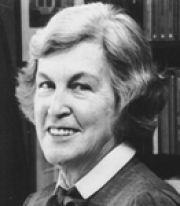
Ratcliff, Patricia Margaret Fitgerald OAM
Inducted in 2011 for services to:
- Cultural heritage
Ratcliff, Patricia Margaret Fitgerald OAM
Inducted in 2011 for services to:
- Cultural heritage
Born: 14 May 1928
(Victoria)
Passed: 31 May 2010
Patricia Ratcliff attended school at Dandenong until the age of 13 and then attended Stott’s Business College. She later gained matriculation to the University of Melbourne.
Patricia married Dr Eric Ratcliff in Brisbane in 1964 before they settled in Tasmania for his work.
Patricia was a passionate protector of heritage buildings and an historian.
During the 1960s, Patricia became a Member of the Southern Regional Committee of the National Trust. She and her husband were responsible for the establishment of the Derwent Valley Group and, after moving to Flinders Island, were responsible for the formation of the National Trust Furneaux Group.
The Furneaux Group set about saving and restoring the significant heritage building, Wybalenna Chapel. The Chapel was restored and is now a historic site. She wrote its history, The Story of Wybalenna.
Patricia was also responsible for organising a petition with over 4 000 signatures to save Macquarie House which now stands as an elegant Georgian building gracing Civic Square, Launceston.
In 1984, the owner of the C H Smith Building decided to have it demolished, despite it being listed on the National Trust Register. Patricia led a group of supporters who stood in front of the excavators to protect the building. The building is now to be restored and its historical value retained.
Patricia was a founding member and inaugural Secretary of the Launceston Historical Society. She also introduced the John West Memorial Lecture in conjunction with The Examiner newspaper at this time.
Patricia produced a number of historical publications. Of particular note, and twenty years in the making, is The usefulness of John West: dissent and difference in the Australian colonies, (2003).
Patricia was awarded a Medal of the Order of Australia in 2004 for service to the preservation of heritage buildings and to the recording of historical events in Tasmania.
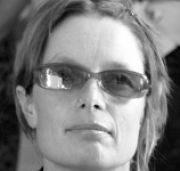
Kim Michelle Schneiders
Inducted in 2011 for services to:
- Arts and media
Kim Michelle Schneiders
Inducted in 2011 for services to:
- Arts and media
Born: 16 Aug 1966
(Ulverstone, Tasmania)
Kim Schneiders was taken ‘home’ to the Netherlands by her Dutch parents when she was quite young, where they visited galleries and saw Dutch masterpieces.
Kim worked as an arts teacher, arts education consultant and arts project manager who has dedicated an extraordinary amount of time and energy to ensuring the arts vision – particularly for young people and those with disabilities – comes to life.
She began developing arts programs for students with disabilities at St George’s Special School, for which she won a National Excellence in Teaching Award. Kim used the $5000 award to establish the Interweave Arts Association.
Interweave is a not-for-profit community arts organisation with a strong educational and community focus. Interweave has provided a vehicle for numerous arts projects and events in the Launceston area.
After Interweave, Kim instigated the Esk Market, a weekly market for promoting arts and culture in the community. She also co-founded the Streets Alive Youth Arts Festival.
In 2008, as part of the Community Achievement Awards, Kim won the Qew Orchards Outstanding Achiever Award. Kim received $1000 which she again returned to community arts projects. Up until this point, Kim had volunteered more than 9000 hours to the arts and community.
Kim has supported numerous arts projects including: Stompin Youth Dance Company; Tasmanian Regional Arts; Art in Public Spaces; Arts Tasmania, Arts Alive and Arts Roar, an arts access and support program for artists with disabilities. Many of these projects have involved hundreds and even thousands of participants and provided employment for local artists and arts workers.
Kim has developed broad networks in various sectors to bring people together to creatively address community issues. In 2009, Kim was a Local Hero Award finalist in the Australian of the Year Awards.
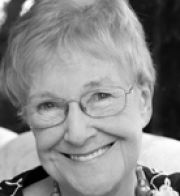
Joan Webb
Inducted in 2011 for services to:
- Arts and media
- Community, advocacy and inclusion
Joan Webb
Inducted in 2011 for services to:
- Arts and media
- Community, advocacy and inclusion
Born: 1926
(England)
Passed: 6 Jan 2022
Honour Roll presentation video transcript (Word 12.6KB)
Joan Webb began her working life teaching and fostering children with special needs, before moving to the Tamar Valley in 1983. Joan taught at the Mount Arthur Family School in Lilydale. She also designed and taught individual programs for the long-term unemployed and intellectually challenged adults at Adult Education.
Joan’s long involvement with the hospitality and tourism industries involved creating tourism groups to mutually promote the Tamar Valley. In the late 1980s she opened the first Wine Centre with restaurant and several bed and breakfast facilities in Northern Tasmania. In 1990, Joan organised the West Tamar ‘Exhibition of Excellence’, now known as the Beaconsfield Gold Festival.
A member of the Northern Tasmanian Women Writers, Joan has been published in The Examiner and in journals and anthologies of short stories and poetry. She has read her poetry at community events including the Tasmanian Poetry Festival and the West Tamar Council celebration of Australia Day, 2010. Her published works include a novel, The Controlling Factor (2006), based on her knowledge of children with special needs, and two books of poetry, A Twist in the Tale (2006) and Hanging by my Toe (2008). Joan’s writing draws on her experiences with traumatised teenagers and adults reflecting “those with a persecuted past” and their “determined struggle against being victims”.
Elected to the West Tamar Council in the early 1990s, Joan has been outspoken on a number of environmental issues. She was active in changing the Exeter tip to a transfer station and in preserving the Supply Mill Ruins as a community park. Joan has also been a mentor to people wishing to stand as candidates in local government.
Joan, at the age of 84, completed a Graduate Certificate in Education and then embarked on a Masters degree.
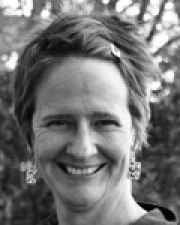
Susan Elizabeth Anne Wijffels
Inducted in 2011 for services to:
- Science, technology, mathematics and research
Susan Elizabeth Anne Wijffels
Inducted in 2011 for services to:
- Science, technology, mathematics and research
Born: 3 Aug 1965
(Bourke, New South Wales)
Prior to joining the Commonwealth Scientific and Industrial Research Organisation (CSIRO) in 1994, Susan Wijffels was a postdoctoral investigator with the Woods Hole Oceanographic Institution in Massachusetts, United States.
Susan has made fundamental advances to the measurement and understanding of the role of the ocean in climate change and the climate of Australia. Her focus is an observationally based understanding of large-scale ocean processes and change, and their role in climate change and variability.
Susan is internationally recognised as an expert on the Indonesian Throughflow, ocean warming and freshwater changes and transport, and our regional boundary currents. She led and organised an international team to successfully carry out the first comprehensive field program to measure the Indonesian Throughflow, a critical component of global ocean overturning circulation. Her quantification of this has provided key knowledge for the development of ocean and climate models.
As a research leader at CSIRO, Susan was the CSIRO coordinator for the Quantitative Marine Science Joint PhD Program with the University of Tasmania. She also hosted CSIRO’s first Fulbright Scholar.
Susan’s leadership is internationally recognised through invited talks and membership of international panels and advisory committees including the Australian Antarctic Science Advisory Committee, the Australian Academy of Sciences Earth Systems Science Committee and the Science Advisory Committee for the high profile International Pacific Research Centre. Susan was also a founding member of the international Argo Program, helping in the design of the global measurement system. She was appointed co-chair of the International Argo Program in 2010.
Susan has received numerous awards in her field, including the Australian Academy of Sciences Dorothy Hill Award for excellence in earth sciences, the M R Banks Medal from the Royal Society of Tasmania and the Australian Meteorological and Oceanographic Society Priestley Medal for personal excellence in oceanographic research.