
Making respectful connections
Engaging and building partnerships with Aboriginal organisations and people helps governments get it right when planning and delivering services and programs for Aboriginal people.
The Guide to Aboriginal Engagement in Tasmania supports the Tasmanian Government’s commitment to engage with Tasmanian Aboriginal people in fair, respectful, meaningful and consistent ways. It will assist staff and contracted service providers to engage and work in partnership with Aboriginal people through a set of guiding principles and tools.
The guide was developed with extensive input from Aboriginal people and Aboriginal community-controlled organisations throughout Tasmania. Thank you to everyone who generously shared their time, knowledge and expertise.
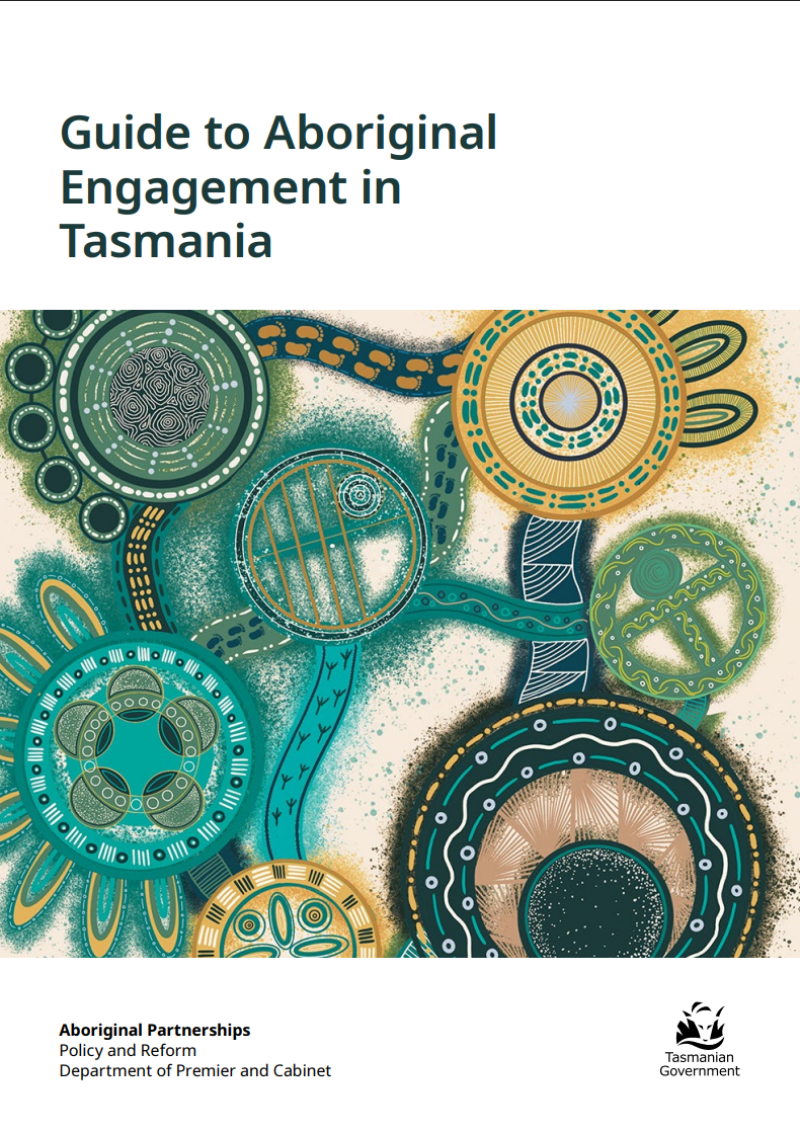
Cultural muttonbirding
Muttonbirding is an important Tasmanian Aboriginal cultural practice that supports gatherings of people, yarning and cultural health and wellbeing. The Tasmanian Government recognises the importance of this cultural practice and issues permits to Aboriginal people to undertake muttonbirding at Fort Direction if muttonbird (short-tailed shearwater) populations are assessed as sustainable.
The Nature Conservation Act 2002 allows cultural practices such as muttonbirding without a permit or licence on Aboriginal land (as specified under the Aboriginal Lands Act 1995). Various permits are issued under the Conservation Act for cultural practices on other land. Special Purposes Wildlife Permit to Possess Protected Wildlife to take muttonbird are issued under the Nature Conservation (Wildlife) Regulations 2021 by the Department of Natural Resources and Environment Tasmania.
Aboriginal heritage
Tasmania’s Aboriginal cultural heritage provides a spiritual connection for Tasmanian Aboriginal people today and valuable information about one of the oldest living cultures in the world.
Find out more at Aboriginal Heritage Tasmania or Aboriginal Heritage Council of Tasmania.
Aboriginal and dual naming
The Tasmanian Government's Aboriginal and Dual Naming Policy allows geographical features and places to be given both an English and Aboriginal language name.
The policy provides for the preferential assignment of Aboriginal names for previously unnamed natural features or places (such as rivers and mountains) as well as allowing for the addition of Aboriginal names to existing official names of natural features or places.
This policy is administered by the Department of Natural Resources and Environment Tasmania.
Flags
Australian Aboriginal flag
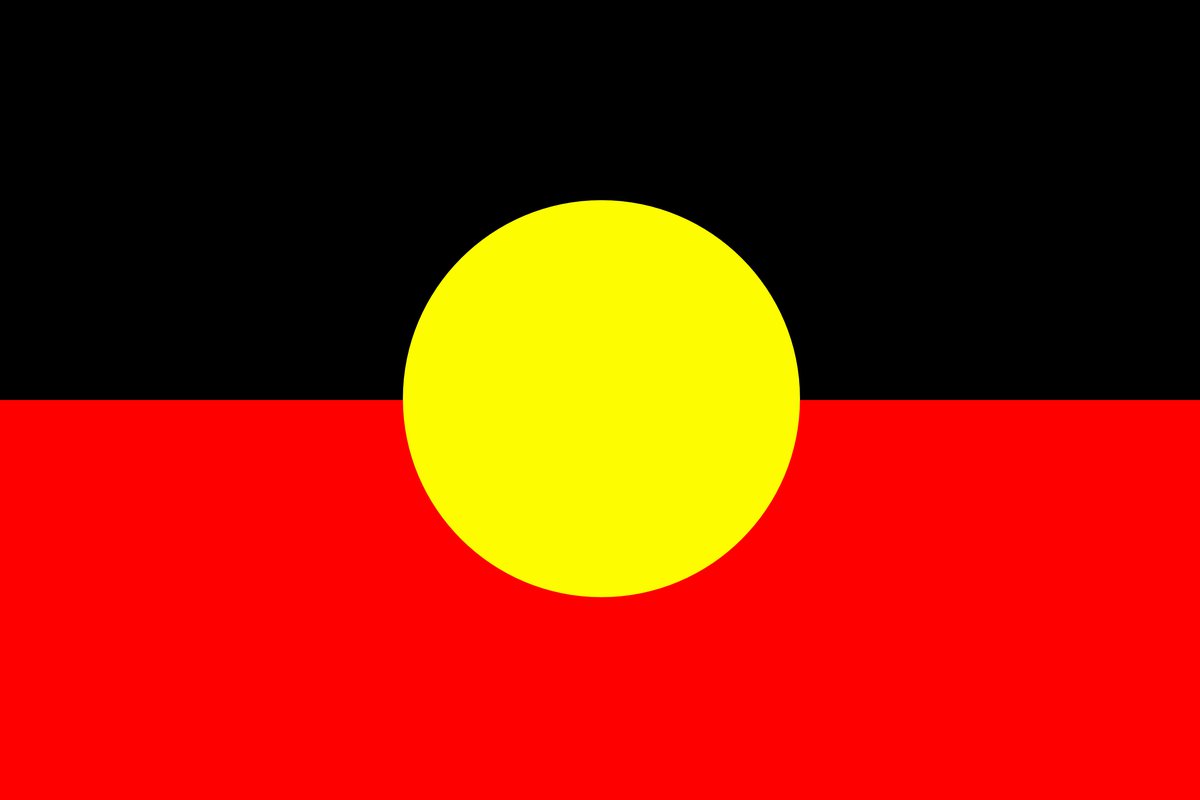
The Australian Aboriginal flag was first raised on 12 July 1971 at Victoria Square in Adelaide. It was also used at the Aboriginal Tent Embassy in Canberra in 1972.
The top half of the flag is black to symbolise Aboriginal people. The red in the lower half stands for the earth and the colour of ochre, which has ceremonial significance. The circle of yellow in the centre of the flag represents the sun.
The Australian Aboriginal flag is displayed at Aboriginal centres and is well recognised as the flag of Aboriginal peoples of Australia.
Times when the flag is flown include:
- During NAIDOC Week to celebrate and promote greater understanding of indigenous peoples and culture.
- During National Reconciliation Week in recognition of 27 May as the anniversary of the 1967 referendum that removed clauses from the Australian Constitution that discriminated against indigenous Australians.
- On 3 June as the anniversary of the High Court of Australia's decision in the Eddie Mabo land rights case of 1992.
Colour references for the Australian Aboriginal flag are:
- red (PMS 179)
- yellow (PMS 123).
Mr Harold Thomas from northern Australia designed the flag. The Australian Aboriginal flag was proclaimed on 14 July 1995. Permission is not required to fly the Australian Aboriginal flag.
Torres Strait Islander flag
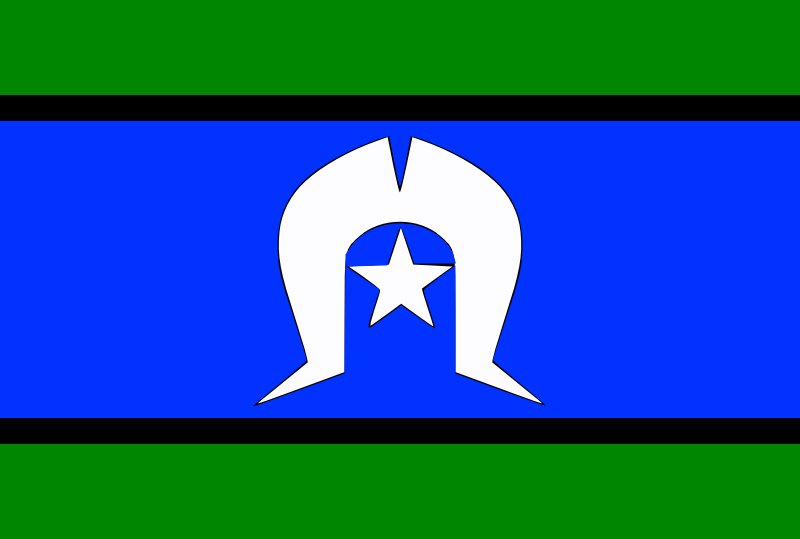
The Torres Strait Islander flag was adopted in May 1992 during the Torres Strait Islands Cultural Festival.
The green panels at the top and bottom of the flag represent the land and the central blue panel represents the sea. The black lines dividing the panels represent the Torres Strait Islander people.
The centre of the flag shows a white dhari (dancer’s headdress) and is a symbol for all Torres Strait Islanders. Underneath the dhari is a white five-pointed star. The star is an important symbol for navigating the sea. The points of the star represent the island groups in the Torres Strait and white symbolises peace.
Colour references for the Torres Strait Islander flag are:
- blue (PMS 301)
- green (PMS 3288).
The design of the Torres Strait Islander flag was the winning entry in a competition organised by the Island Coordinating Council. The Torres Strait Islander flag was proclaimed on 14 July 1995. Permission is not required to fly the Torres Strait Islander flag, however the Island Coordinating Council holds copyright of the Torres Strait Islander flag.