
Dangerous and restricted breed dogs
Protecting the community from harmful dogs
Some dogs must be controlled more strictly because of their behaviour or breed. These rules help prevent injury or death to people or animals, and help owners understand their responsibilities.
There are two types:
- Dangerous dogs, which are declared based on behaviour.
- Restricted breed dogs, which are declared based on breed.
Dangerous dogs
Under the Dog Control Act, a dog can be declared dangerous. This places strict legal responsibilities on the owner to ensure community safety.
How a dog is declared dangerous
A dangerous dog declaration can happen in one of the following situations:
- By a council: A council’s general manager may declare a dog dangerous if it has caused serious injury to a person or another animal, or if there is reasonable belief that it is likely to do so. The owner must be notified in writing and may appeal the decision to the Tasmanian Civil and Administrative Tribunal within 14 days.
- As a guard dog: A dog used to guard non-residential premises (such as a business or factory) is automatically declared dangerous once the council is notified of its role.
Requirements for owning a dangerous dog
Control and housing
In public: The dog must be muzzled, on a lead no longer than 2m and handled by a person over 18 years old.
On the property: The dog must be kept in an enclosure meeting prescribed safety requirements. The only exception is when it is muzzled and on a short lead held by an adult.
Warning signs and collars
Approved warning signs for dangerous dogs must be displayed at every entrance to the property. Dangerous dogs must wear the approved dangerous dog collar at all times.
Dangerous dog warning sign and collar
Desexing and microchipping
A dangerous dog must be desexed and microchipped within 28 days of the declaration, with a vet’s certificate provided to the council (guard dogs are exempt from the desexing requirement).
Notification requirements
The council must be notified within certain timeframes if one of the scenarios below happen.
- The dog goes missing, strays or dies: As soon as practicable.
- The owner moves to a new council area: Within 14 days.
- The dog is transferred to a new owner: Written council approval is required before the transfer and the council must be notified within 24 hours once transferred.
Restricted breed dogs
The Dog Control Act places strict legal responsibilities on the owner of any dog declared to be a restricted breed.
How a dog is declared a restricted breed
This declaration is based entirely on the dog’s breed, not behaviour. A declaration is made by an authorised person if the dog is identified as belonging to one of the following breeds in the Act:
- American pit bull terrier (pit bull terrier)
- Dogo Argentino (Argentinian mastiff)
- Fila Brasileiro (Brazilian mastiff or Brazilian guard dog)
- Perro de presa canario (Presa Canario)
- Japanese Tosa (Tosa inu or Japanese fighting dog).
Councils and vets use the Guidelines for the Identification of Restricted Breed Dogs when assessing a dog’s breed.
The owner is served with a formal notice of the declaration and has 28 days to appeal to the Tasmanian Civil and Administrative Tribunal.
Requirements for owning a restricted breed dog
Control in public
The dog must be muzzled so it cannot bite a person or animal. When on a lead, the lead must be no longer than 2 metres and held by a person over 18 years old who is capable of control.
No more than two restricted breed dogs may be in the control of one person in public at the same time.
Other legal requirements
The dog must be desexed and microchipped within 28 days of the declaration, with a vet’s certificate provided to the council.
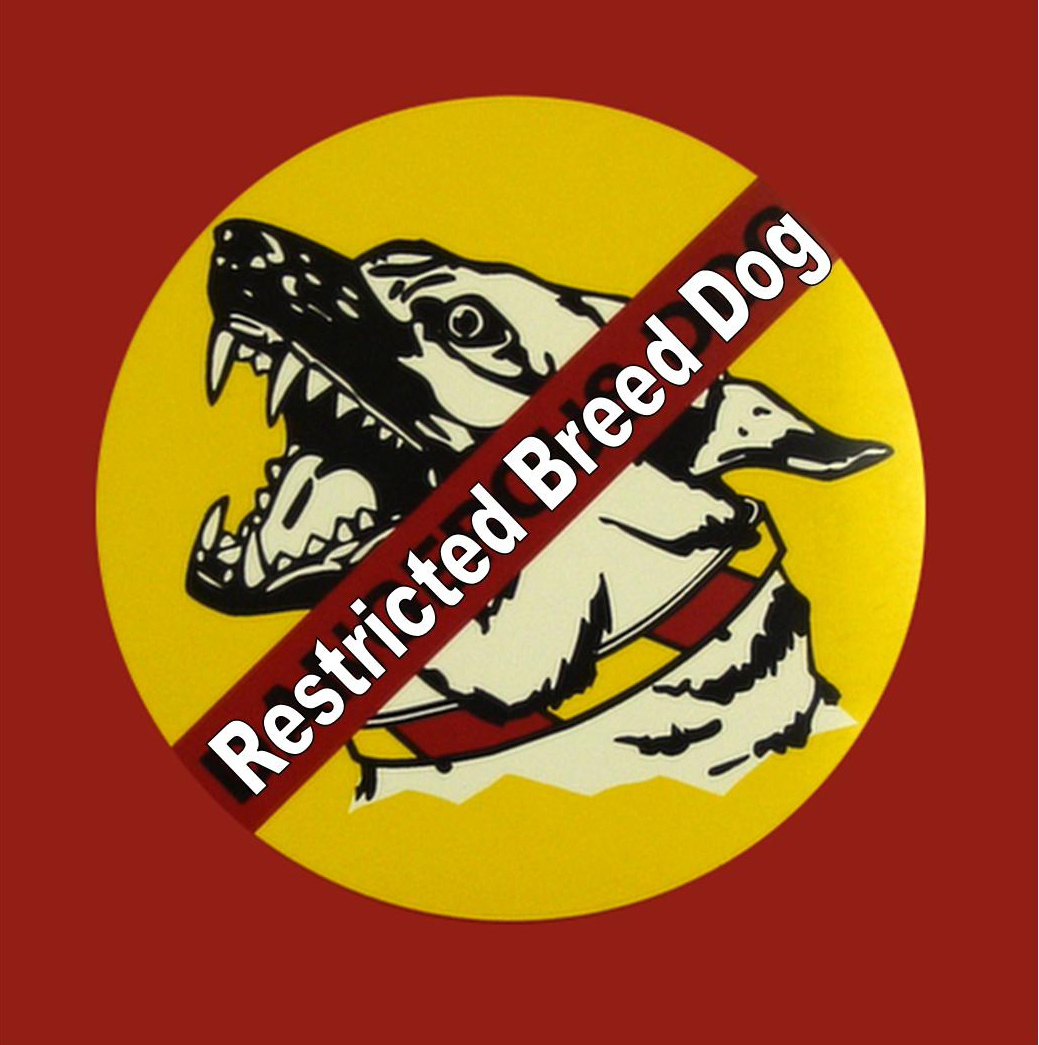
Approved restricted breed dog warning signs must be displayed at every entrance to the property. The dog must wear the approved restricted breed dog collar at all times.
No more than two restricted breed dogs may be owned or kept by one person.
Restricted breed dog warning sign and collar
Notification requirements
The council must be notified within certain timeframes if one of the scenarios below happen.
- The dog goes missing, strays or dies: As soon as practicable.
- The owner moves to a new council area: Within 14 days.
- The dog is transferred to a new owner: Written council approval is required before the transfer and the council must be notified within 24 hours once transferred.
- A restricted breed dog is brought in from interstate: Within 7 days.