
The following 30 members of the Tasmanian Honour Roll of Women were inducted in 2019.

Donna Louise Adams
Inducted in 2019 for services to:
- Community, advocacy and inclusion
- Defence
- Emergency services
- Police
Donna Louise Adams
Inducted in 2019 for services to:
- Community, advocacy and inclusion
- Defence
- Emergency services
- Police
Born: 28 Jun 1968
Working for the professional development and promotion of women
Donna Adams became the highest ranked woman in Tasmania Police’s 114-year history when she was the first woman appointed to the rank of Assistant Commissioner in 2011.
In 2016, Donna was appointed Deputy Secretary of the Department of Police, Fire and Emergency Management, making her the Agency’s most senior woman.
Donna joined Tasmania Police at age 19 in 1987, and at this time it was rare to work with another policewoman.
Donna embraced opportunities and worked in uniform, criminal investigations and training, and was promoted to the rank of Sergeant in 1998, Inspector in 2004, and became the first female promoted to the rank of Commander in 2009.
Donna’s service to policing has been recognised with awards and commendations including an Award for the Most Consistent Recruit; Commissioner’s Commendation for service after the 1996 Port Arthur Massacre; an Australian Police Medal for Distinguished Service; and a Tasmania Police Service Medal for diligent and ethical service.
Donna was recognised by the Australasian Council of Women in Policing for an internal investigation into three police officers involved in drug use and trafficking.
Donna is a strong advocate for women in government and also within Tasmania Police. In 1997, Donna was a member of the Women in Uniformed Services Workplace Committee established by the State Government to investigate barriers to recruitment, retention and development of women in the uniformed services. From 2007, Donna was a member of the Commissioners’ Australasian Women in Policing Council. Donna is also a member of the Women Supporting Women Steering Committee, supporting women to overcome barriers to career progression.
Donna’s strategic vision was behind her being named as 2014 Telstra Tasmania Business Woman of the Year and jointly winning the national Business Innovation Award. Donna donated the prize money to the Menzies Institute for Medical Research and the Tasmania Police Charity Trust.
Donna, who had been told by her mother to make the most of opportunities, saw the prize money as a chance to join a fight against a disease that took her mother’s life.
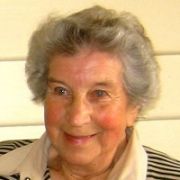
Josephine Marie Denne
Inducted in 2019 for services to:
- Community, advocacy and inclusion
Josephine Marie Denne
Inducted in 2019 for services to:
- Community, advocacy and inclusion
Born: 24 Nov 1923
Passed: 29 Feb 2016
"A gracious woman with enormous strength of character, a wise elder and very dear friend” - Dr Sally Bryant
Josephine Denne was a much loved member of the Bruny Island community who has left lasting legacies.
In 1942, while teaching in Hobart, Josephine returned to Barnes Bay every weekend to devote much of her leisure time to the Red Cross and the Country Women’s Association (CWA). Josephine’s association with the CWA started at the age of 16 and continued for life – 76 years.
Josephine was a long-serving member of the Royal Hobart Hospital Auxiliary and was recognised with life membership and a long service medal. She was a regular blood donor until she reached the maximum age for donating.
Josephine was also a volunteer weather observer for the Bureau of Meteorology for over 30 years.
In 1944, Josephine married Sefton Bottomley. The couple farmed the “Lauriston” property on North Bruny and had three sons. After just seven years of happy marriage, Sefton tragically died from liver cancer.
Josephine remarried Ross Denne and continued to farm. To make ends meet, Josephine sold over 5,000 homemade butter and fruit cakes to the local shop. In 1991, Josephine and Ross gifted part of “Lauriston” to form the Denne’s Hill Nature Reserve to help protect a colony of forty-spotted pardalotes, one of the few surviving colonies of this critically endangered bird species.
Josephine (and her brother, Robin Paton) were founding members of the Bruny Island Historical Society. The family’s farming diaries, early account books and weather records now form part of the Australian Bicentennial Historical Records Register.
Josephine was a substantial benefactor towards the community purchase of the Bruny Island Chapel and Cemetery, at Barnes Bay, from the Anglican Church in May 2015, thus enabling the site to remain in community hands.
Josephine’s legacy continues through a bequest in which she donated a significant portion of her estate to liver cancer research, resulting in the establishment of the Sefton Bottomley Liver Cancer Bequest for the Menzies Institute for Medical Research.
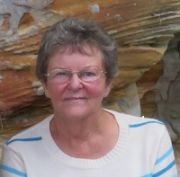
Kathleen Duncombe
Inducted in 2019 for services to:
- Community, advocacy and inclusion
Kathleen Duncombe
Inducted in 2019 for services to:
- Community, advocacy and inclusion
Born: 2 Dec 1948
(Lidcombe, New South Wales)
Transmitter of history
Bruny Island’s history is being preserved and presented thanks to Kathleen (Kathy) Duncombe’s love of research.
For over 40 years, Kathy has made a generous contribution to Bruny Island as a volunteer, researcher and author, by publishing works, cataloguing the history of Bruny Island, photographing and transcribing tombstones, researching the history of homesteads and delving into convict connections.
During this time Kathy also created four businesses, from hairdressing to hospitality.
Kathy’s fascination with research started in 1970, and for over 40 years, Kathy has volunteered with the Bruny Island Historical Society, including four years as Acting Coordinator, ensuring enquiries were satisfied efficiently and accurately, and Treasurer for six years. Kathy is also a member of the Tasmanian Family History Society, and the Tasmanian Historical Research Association.
Kathy’s publishing projects include: Excursion around North Bruny Island 2nd edition (updated 2006); indexing South Bruny Island – Tasmania: A brief history of its settlement compiled by Richard Pybus; an index for F. Oliver Gray’s Recollections of North Bruny Island and Further Recollections of North Bruny Island; and an index for the Centenary of Portland 1834-1934. Kathy also transcribed Bruny Island’s Story: Tasmanian Mail 1916 by W. J. R., and On Bruny Island: Weekly 1914 by Cradoc.
Kathy compiled the Historical Overview of the Bruny Island Quarantine Station for the Conservation Management Plan in 2000 when the Australian Government transferred the land back to the Tasmanian Government.
Kathy’s most well-known publication is a book, Bruny Island’s Quarantine Station in War and Peace, about the Quarantine Station on North Bruny Island. The Quarantine Station is a site she is dedicated to as the current president of Wild Care Inc. Friends of Bruny Island Quarantine Station. This group works closely with Parks and Wildlife Service to ‘support the management, conservation and public appreciation of the site’.
At present, Kathy is researching the thousands of soldiers who returned from World War I and passed through the Quarantine Station due to the influenza pandemic.

Hina Durrani
Inducted in 2019 for services to:
- Multicultural affairs
Hina Durrani
Inducted in 2019 for services to:
- Multicultural affairs
Presenting a positive and enlightened image of Islam
As a woman from Pakistan, a country facing many challenges, Hina Durrani decided to take a bold step by coming to Australia and succeeded in countering the myths associated with gender roles.
A professional accountant with two Master’s degrees (Accounting and Public Administration) and a Graduate of the Australian Institute of Company Directors, Hina believes in economic empowerment for women, supporting resilience, adapting to change, being comfortable with vulnerability and a drive to push boundaries.
Youth leadership, employment, women’s empowerment, quality education, inclusive societies, countering racism and promoting multiculturalism have been Hina’s focus.
Through her initiatives, Hina has mobilised culturally and linguistically diverse (CALD) youth in Tasmania to build a constructive sense of harmony and self-respect, so that young people from marginalised backgrounds do not get radicalised or into any negative activities.
She has removed a lot of stereotyping against CALD individuals, and the events she has organised have been attended by politicians, dignitaries, students, staff, business owners and community members. These have helped to build connections and have created leadership, employment and volunteering opportunities.
Hina won The Mercury Pride of Australia Award 2016; the Volunteering Tasmania MyState Education, Science and Technology Award 2017; the Tasmanian Human Rights Award for Multiculturalism 2017; the Tasmanian Community Achievement Awards – "People's Choice Award" 2017; the Tasmanian Community Achievement Awards – "Outstanding Achiever Award" 2017; and she was the Regional Finalist (Tasmania) Australian Leadership Excellence Awards 2017 (Institute of Managers and Leaders).
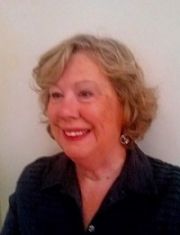
Carole Jacqueline Edwards
Inducted in 2019 for services to:
- Architecture
- Community, advocacy and inclusion
- Engineering
- Environment
- Government (Public services and politics)
- Planning
Carole Jacqueline Edwards
Inducted in 2019 for services to:
- Architecture
- Community, advocacy and inclusion
- Engineering
- Environment
- Government (Public services and politics)
- Planning
Born: 15 Nov 1949
(Wolverhampton, England)
Valuing spaces and places
Urban designer Carole Edwards enhanced public places, presented heritage and protected many areas.
Carole was the Hobart City Council’s Urban Designer from 1993 to 2011. She played a key role in transforming Hobart by overseeing the redevelopment of the central business district (CBD), North Hobart’s streetscape in Elizabeth Street and many other public areas.
Transforming Hobart’s CBD was a major capital works project in the 1990s, resulting in the city centre becoming accessible with wider pavements, new lighting, seating, planting and the showcasing of Tasmanian artists. The art included identifying the Hobart Rivulet passing underneath the city, decorative windshields in the Hobart Mall and fun pieces such as the “fish out of water” drinking fountain. Carole promoted Hobart’s heritage by installing signage, low walls with fencing, selecting light poles, telling the stories of buildings and presenting vistas from earlier times.
Carole’s urban design work on North Hobart’s business area was significant and has been transformed in the last 30 years. In 1998, Carole project managed the development of a new streetscape that included new footpath treatments, artwork, lighting and trees for this now vibrant precinct.
In 2009, Carole was highly instrumental in a project commemorating the life and times of actor Errol Flynn. Carole designed a street plaque at the State Cinema, in North Hobart, which was unveiled during Flynn’s 100th birthday celebrations.
From 2013 to 2017, Carole was a dedicated team member of the Footsteps towards Freedom project, which commissioned sculptures representing the arrival of 13,000 women convicts and 2,000 children. Carole’s understanding of local government and public art was important for locating the sculptures in Hunter Street, Hobart.
Natural environments are also valued by Carole, who was the Rosny Montagu Bay Landcare and Coastcare Group’s convenor from 1992 to 2010. In 2009, the Landcare group won a Tasmanian Landcare Award.
Carole was also a member of Kangaroo Bay Rotary Club from 2004 to 2013. As Community Director, she organised two mental health forums and organised the installation of seating around the Rosny foreshore.
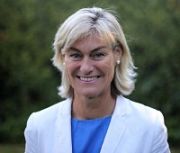
Neroli Ellis
Inducted in 2019 for services to:
- Community, advocacy and inclusion
- Health
Neroli Ellis
Inducted in 2019 for services to:
- Community, advocacy and inclusion
- Health
Born: 2 Sep 1961
Advancing nursing as a profession
Neroli Ellis advanced the profession of nursing while serving for 15 years as Tasmanian State Secretary of the Australian Nursing and Midwifery Federation (ANMF).
As an advocate for nurses, midwives and care staff, Neroli made regular media appearances and addressed forums and community meetings. Behind the scenes, she worked with politicians of all sides to lobby for legislation and improvements to health services to enable delivery of quality health care.
In her role, Neroli prepared and presented submissions for state and national enquiries. She was also an active member of the ANMF Federal Executive and Federal Council, and she represented Australian nurses at the Commonwealth Nurses Federation summit in London.
Neroli, herself a Registered Nurse, respected nurses as being in the best position to understand the needs of health care.
Neroli’s proudest achievements were improving working conditions and professional status for nurses in Tasmania by opening the Health Education and Research Centre, and increasing the membership from 1,300 to 8,000.
Leading a successful organisation requires corporate governance skills, strategic planning, managing risk and finances, and the ability to negotiate employment agreements.
Her skills lead to her being appointed a director on many boards, including Tasplan Super, Connect Financial, MyState Foundation and the Retirement Benefits Fund. Neroli advocated to encourage women to be active in their superannuation and retirement goals by addressing young women at University of Tasmania events, schools and orientation days.
Neroli is a Fellow of the Australian Institute of Company Directors, Fellow of the Australian Institute of Superannuation Trustees, a Tasmanian Leadership Program Leadership Champion for over 10 years, and she has completed a Master in Business. She has received numerous awards including the Telstra Business Women’s Award, a finalist in the Tasmanian division of the Australian of the Year, and the Gerdi Jevtic Award for prominent Fahan School alumni.
Neroli has recently been appointed to the role of Deputy President of the Tasmanian Industrial Commission. She belongs to a number of community organisations and has represented Tasmania in the National Masters Rowing Championships.
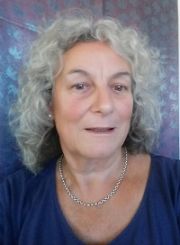
Glynis Flower
Inducted in 2019 for services to:
- Community, advocacy and inclusion
Glynis Flower
Inducted in 2019 for services to:
- Community, advocacy and inclusion
Born: 16 Dec 1952
(Broadbridge Heath, Horsham, United Kingdom)
A tireless advocate for women in Tasmania, particularly vulnerable and disadvantaged women
Glynis Flower came to Tasmania in 1990, bringing with her extensive experience in community arts and the youth sector.
Glynis managed the Tasmanian Arts Council and worked with other community organisations supporting regional development. In 2000, she was appointed the first Executive Officer of the Tasmanian Association of Community Houses, which had previously been run by a volunteer board for 15 years. Building and strengthening the network of community houses is regarded as her amazing legacy.
Today, neighbourhood houses continue to play a particularly strong role in supporting women in low-income communities, many of whom are single parents with low levels of employment and educational attainment. Glynis recognised the key role of women in achieving change in these communities.
Glynis was appointed Executive Officer of Women’s Health Tasmania (formerly Hobart Women’s Health Centre) in 2009. She was very grounded in the reality of women’s lives, particularly those living in rural and low-income communities, and those who are disadvantaged because of lack of access to services, mental health issues, disability or other vulnerabilities.
Glynis was active in promoting women’s access to reproductive choices, reducing violence against women, and upholding the rights of all women. She worked both strategically – lobbying politicians and governments, and operationally – developing services for those who are most vulnerable.
Women’s Health Tasmania thrived under Glynis’ leadership. She moved the organisation forward from its roots as a small, local collective to become a major player in the Tasmanian community sector.
Glynis is a highly skilled negotiator, equally at home in Parliament among government ministers and bureaucrats as she is around the kitchen table in a neighbourhood house. She has always managed to rise above differing viewpoints and needs, building effective relationships in a competitive environment, and to make a strong stand without causing offence.
Glynis worked above and beyond her work roles, putting in many hours of unpaid overtime and serving on boards and committees relating to social justice issues.
Glynis retired from Women’s Health Tasmania in 2018.
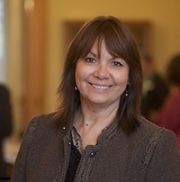
Jennifer Gale
Inducted in 2019 for services to:
- Government (Public services and politics)
Jennifer Gale
Inducted in 2019 for services to:
- Government (Public services and politics)
Born: 2 Jun 1956
(Smithton, Tasmania)
Women supporting women
Jenny Gale was educated at Smithton and Burnie high schools and has served the State of Tasmania for over 41 years.
Jenny’s distinguished career evolved from her commitment to equity: to ensure every single Tasmanian has the best possible education, irrespective of their circumstances and particularly their gender.
After graduating with a Bachelor of Education, Jenny first taught mathematics at Queechy High School. She went on to teach and hold leadership positions in the north of the State, becoming Principal of Smithton Primary School in 1998.
Jenny was appointed Director of the Office for Educational Review in 2000, and subsequent leadership positions included General Manager of Learning Services South East, General Manager Strategic Policy and Performance, and Acting Secretary of the Department of Education. These roles involved leadership of regulatory and legislative change, and significant state and national policy development and reform, including cross-government leadership of our highly successful Child and Family Centres.
In 2011, Jenny took a break from paid employment but continued public service as Chair of both the Tasmanian Teacher’s Registration Board and wayraparattee Child and Family Centre Advisory Group. Jenny re-joined the workforce in 2014, and in 2016 she was the first woman to be appointed substantively as Secretary, Department of Education.
In this role, Jenny initiated the public sector’s Women Supporting Women group, which supports women’s leadership aspirations and is also now working with non-government and local government leaders to broaden networking opportunities for Tasmanian women.
Jenny has served on a number of state and national boards, including the Australian Children’s Television Foundation, Netball Tasmania, the Australian Institute for Teaching and School Leadership, the Peter Underwood Centre for Educational Attainment and the University of Tasmania Council.
In 2017, Jenny was appointed Secretary of the Department of Premier and Cabinet and Head of the State Service, positions that enable her to make a significant contribution to policy development and implementation that will impact our State for future decades.

Siobhan Gaskell
Inducted in 2019 for services to:
- Community, advocacy and inclusion
- Education and training
- Government (Public services and politics)
Siobhan Gaskell
Inducted in 2019 for services to:
- Community, advocacy and inclusion
- Education and training
- Government (Public services and politics)
Born: 25 Jun 1955
Learn, discover and access information
Siobhan Gaskell was the Director of the State Library of Tasmania/LINC Tasmania from 1997 to 2012 and has supported building a State that encourages people to learn, discover and access information.
Siobhan saw firsthand the extent of literacy needs across Tasmania, and her initial response was to start local family literacy programs. She went on to establish a fledgling LINC Tasmania Adult Literacy Coordinator Network in 2010, and worked with other government partners to secure funding for the Tasmanian Adult Literacy Action Plan.
Since retiring in 2012, Siobhan has continued working with the 26TEN Coalition to establish 26TEN: Tasmania’s long-term Adult Literacy and Numeracy Strategy, and she gives generously of her time to advance literacy and numeracy awareness and improvement in Tasmania.
Siobhan worked tirelessly to reform the State Library into a Community Knowledge Network and then to LINC Tasmania. The reforms added adult and community education, adult literacy programs, archives and heritage, and online access centres to the traditional lending and reference library services, across 65 sites. Before this reform, Siobhan was involved in establishing online access centres.
Siobhan took an active role in planning and establishing regional hubs across Tasmania, which incorporated co-locating a range of community and government services, such as library services, adult literacy, online access, community learning, Child and Family Centres, Service Tasmania, business enterprise centres and, in one, Centrelink and a magistrates court. These sites enabled communities in regional areas to access new and expanded services at one site.
Siobhan was also a leader in the more traditional library. One of the major projects Siobhan was engaged in was digitisation of records and heritage collections. Siobhan valued the extensive collection in Tasmania of convict heritage and was pleased that it could be accessed by everyone.
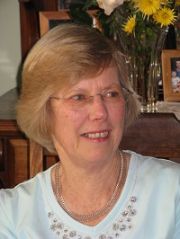
Rossalyn Giudici
Inducted in 2019 for services to:
- Community, advocacy and inclusion
Rossalyn Giudici
Inducted in 2019 for services to:
- Community, advocacy and inclusion
Born: 19 May 1939
Extraordinary input hidden from view
By quietly working behind the scenes, Rossalyn Giudici has made a significant contribution to the preservation of the history of the Catholic Church in Tasmania.
From 1988 to 2000, Rossalyn provided secretarial support to the Archbishop of Hobart, Dr Eric D’Arcy. These well-developed administration skills would prove valuable.
In August 2000, Rossalyn started volunteering with the Archdiocese of Hobart Archives and Heritage Collection where she designed a database to record entries from sacramental registers. Transcribing these records has meant all information from historic baptism, marriage and death registers could be entered onto the database, thus facilitating daily requests from individuals in Tasmania, other states and overseas for family history research without the need to handle historic and fragile registers.
The registers contain data that does not exist elsewhere, particularly information about Catholic convicts. Early entries were often in Latin, and Rossalyn worked assiduously not only with translation but difficult handwriting patterns that would stump the average reader.
Over the last 18 years, Rossalyn has entered 190,000 records onto the database and has also recorded the names and details of all the Catholic clergy who have worked in Tasmania since 1821 (a total of 946 to date); she has developed a catalogue of parishes and churches and other sites used for Catholic worship (past and present).
Rossalyn also volunteers many hours per week as Sacristan at St Mary’s Cathedral. She is responsible for preparing the Cathedral for funerals, school masses, ordinations, Easter Week ceremonies and other liturgical celebrations.
Rossalyn has always been ready to assist others. Her husband was a migrant from Italy, a ‘New Australian’, and Rossalyn is sensitive to the needs of the newly arrived in the community, and others struggling in any way, and provides practical and material support, for example, making soup for Loui’s Van.
Rossalyn is now a widow and is blessed with grandchildren and great-grandchildren.
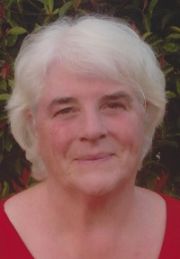
Myrtle June (Georgie) Holderness-Roddam
Inducted in 2019 for services to:
- Education and training
Myrtle June (Georgie) Holderness-Roddam
Inducted in 2019 for services to:
- Education and training
Born: 6 Nov 1950
Dedication to nurturing and educating children
Georgie Holderness-Roddam believes in promoting the individual child’s optimum wellbeing, self-esteem and development, by supporting the family as the child’s foundation stone, and treasures enduring bonds with families.
For decades, Georgie has supported children professionally and voluntarily through Sunday school and high school teaching, leading playgroups, fostering (including an intellectually challenged child), assisting home educators and as a family day-care educator.
Georgie believes in advancing social justice and advocacy. As a volunteer English tutor of migrants, Georgie discovered that one family had left a new baby daughter behind in Syria, as she was born after the official documents were finalised. A two-year battle between Georgie and immigration officials resulted in the child being reunited with her family in Tasmania.
Georgie and her husband decided to home educate one of their children who was being bullied and didn’t fit the school mould.
Georgie joined others advocating for the legalisation of home education. She became a member of the committee of enquiry that led to the creation of the Tasmanian Home Education Advisory Council.
Georgie played a key role in the home education movement, running activities, a newsletter, a resource library and camps, mentoring, and helping isolated families.
Georgie arranged for 50 Tasmanian families to participate in research spanning home educators in Australia and London, looking into whether the prodigious learning of infancy would persist if uninterrupted by formal schooling. For 10 years, Georgie kept a detailed journal of her youngest child’s home education. The books subsequently published by the researcher drew considerably on his Tasmanian research.
In 2004, Georgie became a family day-care educator, providing a rich and varied self-learning environment, especially steeping the children in art, music, nature and community.
In 2016, Georgie retired to concentrate on grand-parenting, helping with the juniors at Van Diemen Fencing Club and helping to establish sword fencing in local schools.

Frances Isabel Jackson
Inducted in 2019 for services to:
- Sport and recreation
Frances Isabel Jackson
Inducted in 2019 for services to:
- Sport and recreation
Born: 23 Jun 1902
Passed: 1 Oct 1988
"A fearless, skilful pilot, having excellent control of her machine" - The Examiner, 2 March 1931
Frances Isabel Jackson (nee Hyatt, later Nichols)
Frances Jackson was a pioneer Tasmanian aviator during the 1930s, a time when aviation captured the public imagination as an unusual, exciting and dangerous activity.
Frances Isabel Hyatt was born at Dunalley, in 1902, and married Oswald Jackson in 1919. The couple lived at Murdunna.
Women had been disallowed from learning to fly in Australia until 1927, and were not permitted to fly in Tasmania for some time afterwards.
In 1930, Frances enrolled in the Goulburn Aero Club in New South Wales and gained a Class A (private) pilot licence in December. Frances was the first woman to fly to and from Goulburn and Mascot (Sydney), and was praised for flying part of the route on instruments only due to poor visibility.
On returning to Tasmania, Frances became an active member of the Australian Aero Club (Tasmanian Section) and competed in local and interstate aerial pageants and races. She won numerous trophies with the Australian Aero Club (Tasmanian Section), including the Spot Landing in August 1931; the Tasmanian Aerial Derby Handicap (Holyman Cup) in 1932; the Tasmanian Aerial Oakes in March 1934; Head of the Air Race at Cambridge in 1937; and the President’s Challenge Shield also in 1937.
Her success in the air generated publicity about the “fearless, skilful pilot, having excellent control of her machine” (The Examiner 2 March 1931) who “thrilled the crowds, tossing her machine around with fearless ease” (The Mercury 9 December 1977). On 25 March 1937, The Mercury described Frances Jackson as “the foremost air woman in this State”.
Frances appeared to lose interest in flying after her first husband died in 1938. In the 1940s, she remarried local farmer and builder, Bill Nichols, and was again widowed in 1963. The couple did not have children but fostered two girls.
Frances’ pioneer aerial exploits were not forgotten. Several of her trophies are on display at the Tasmanian Museum and Art Gallery.
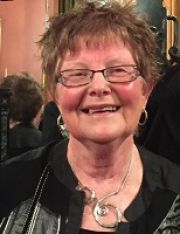
Diane Lesley Kelly OAM
Inducted in 2019 for services to:
- Community, advocacy and inclusion
- Sport and recreation
Diane Lesley Kelly OAM
Inducted in 2019 for services to:
- Community, advocacy and inclusion
- Sport and recreation
Born: 28 Aug 1946
(Melbourne, Victoria)
Serving the community
Diane Kelly moved to Tasmania as a nine-year-old and was raised by her aunt and uncle, after the passing of her mother.
As a teacher, Diane Kelly spent her career educating children on the North-West Coast. In retirement, Diane has focused on ensuring education is a lifelong process, and in 2015 she was integral to establishing the University of the Third Age at Port Sorell, where she is Vice-President, a tutor and course coordinator.
Though Diane has lived in Hawley for the past 20 years, much of her volunteer work occurred at Railton where she was President of the Railton Child and Health Clinic and a founding member of the Kentish Sugar ’n’ Spice women’s club in 1993.
Diane has been committed to Meals on Wheels for over 40 years. From 1987 to 2004 she was founding Secretary of Railton Meals on Wheels. In 1994, Diane became North-west Meals on Wheels Assessment Coordinator and, on retiring from that role, was elected to the Tasmanian Meals on Wheels Board of Directors. In 1997, Diane became a Life Member of Meals on Wheels Railton Branch.
Diane was a founding member of the Railton Squash and Racquetball Club, served as secretary for over 20 years and was awarded life membership in 1990. Diane introduced the children’s racquetball competition and said the benefits children gained made the club very special.
Diane’s volunteering continues at Hawley Beach where she is a past Patron and Life Member of the Port Sorell Tennis Club; a member of Port Sorell Lions Club; a founding member and President for 14 years of the Rubicon Ladies Club; member of the Mersey Community Auxiliary; volunteer at the Devonport Eisteddfod; member of the Devonport Jazz Festival Committee; and a cruise ship tour guide.
Diane was a recipient of the Rotary Club of Latrobe Citizenship Award in 2014, and in 2017 she was awarded an OAM for service to the community of North-West Tasmania through a range of organisations.
In 2018, Diane carried the Queen’s Baton in the Commonwealth Games Relay.
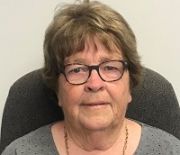
Marjory Kerslake
Inducted in 2019 for services to:
- Education and training
- Sport and recreation
Marjory Kerslake
Inducted in 2019 for services to:
- Education and training
- Sport and recreation
Born: 1 Sep 1945
Achieving goals
Marjory ‘Marj’ Kerslake (nee Cox) has given over 50 years of service to netball. She was a key player in the development of the statewide netball league, which helped lift the standard of netball played in Tasmania and gave top players opportunities to reach the national league.
Marj worked hard to ensure that young women in regional areas of Tasmania had access to sport and sporting facilities and opportunities to participate in high-level competitions. It is a fitting tribute that the Marj Kerslake Netball Centre, at Spreyton, is named in her honour.
Marj started playing and umpiring netball in Circular Head in the 1950s, playing at the ‘A’ level and in other north-west regions, depending on where her teaching career took her. Marj taught physical education, mathematics and sports science from 1965 until 1992.
From 1965, Marj was a netball coach, umpire and administrator at regional, state and national levels, and was an All Australia Netball Association (AANA) Director from 1999 to 2007. Marj received an AANA Service Award.
Marj encouraged Netball Tasmania to have programs and competitions for young people with disability. In May 2018, Marj retired from the Board of Netball Tasmania, but remains on the Devon Netball Association Committee of Management. Marj is a Life Member of the Southern Tasmanian Netball Association, the Devon Netball Association and the Tasmanian Netball Association.
Marj became an All Australia umpire in 1976 and still coaches umpires. Marj coaches and mentors Tasmanian umpire, Joshua Bowring, who officiated as an umpire at the Netball World Cup in 2015 and the 2018 Commonwealth Games, and was Netball Australia Umpire of the Year in 2017.
Marj also coached and umpired softball for many years, was a program co-ordinator for athletics in Ulverstone, and was heavily involved in public school sports committees at both a school and regional level. She was also on the organising committee for Inter High swimming, athletics, cross country and netball carnivals.
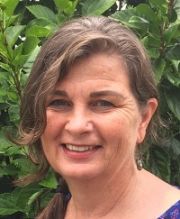
Catherine McNamara
Inducted in 2019 for services to:
- Defence
- Emergency services
- Police
Catherine McNamara
Inducted in 2019 for services to:
- Defence
- Emergency services
- Police
Born: 19 Oct 1962
First response
The career of paramedic Catherine McNamara is full of firsts.
When Catherine joined the Tasmanian Ambulance Service, in 1985, as a Student Ambulance Officer, she was the only woman employed as a paramedic in the State.
In 1988, Catherine became the first woman to qualify as a paramedic in Tasmania by completing the Certificate of Applied Science (Ambulance Officer).
Catherine was the first woman in the Tasmanian Ambulance Service to become qualified in ‘vehicular rescue and rescue from heights’, the first woman to become a Clinical Instructor and the first woman to perform operational management roles such as Duty Manager, Operations Manager, Paramedic Educator and Manager (Clinical Practice and Education).
Catherine was part of the first group of Tasmanian Ambulance Clinical Instructors to gain formal teaching qualifications by obtaining a Diploma of Teaching through the University of Tasmania in 1993.
Catherine championed the introduction of flexible work arrangements and participated in the first Tasmanian Ambulance Service job share arrangement introduced into the organisation in 1993.
In 1995 Catherine completed the first Bachelor of Prehospital Care to be made available to Tasmanian paramedics, and became one of the first paramedics nationally to hold a tertiary qualification in paramedicine.
In 2003, Catherine identified a deficit in paramedic-specific, obstetric education. Catherine studied for a Graduate Diploma (Midwifery) and went on to develop an ambulance-specific suite of obstetric education programs that continues to be taught to Ambulance Tasmania paramedics.
Catherine forged a place as one of the first paramedic academics nationally, by completing a Master of Education in 2013.
As a Paramedic Educator for over 15 years, Catherine worked at a national level to drive the transition of paramedic education into the tertiary sector that occurred in the early 2000s.
Catherine was the first female salaried paramedic in Tasmania awarded the Ambulance Service Medal (ASM) in 2010 for distinguished service.
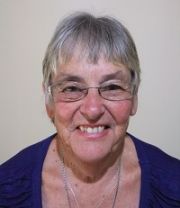
Ann Janette Millar
Inducted in 2019 for services to:
- Community, advocacy and inclusion
Ann Janette Millar
Inducted in 2019 for services to:
- Community, advocacy and inclusion
Born: 3 Oct 1952
The heart and soul of the community
Ann Millar has been dedicated to building and maintaining community in the Dunalley/Murdunna area, where devastating bushfires ravaged properties and lives in 2013.
After the 2013 fires, Ann was pivotal in community recovery and did what was needed. Ann provided local communications by going door to door, and she organised a database of residents in the Murdunna area.
Blackboards were erected at Connellys Marsh, Murdunna and Dunalley, on which information was written to keep locals informed. At one stage, Ann was writing on five blackboards, sometimes two or three times a week. Four blackboards are still operational and updated regularly.
Since the fires, Murdunna has had a monthly community barbecue, which initially Rotary organised. Ann and her husband, Graham, continue to organise the barbecue, which is highly valued and provides a chance to meet, connect, share stories and rebuild community.
The 2013 fires destroyed the Dunalley Community Hall. Ann was a member of the rebuild committee for the hall and is now on the managing committee. Often after functions, when food is left over, it is packed and then delivered by Ann to seniors and those who live alone.
Ann was pivotal in the establishment of the chaplaincy program at the Dunalley Primary School. Each year the committee provides a staff morning tea. Coordinated by Ann, the food provided also covers lunch and afternoon tea.
Ann was a valued member of St Martin’s Anglican Church and is a prominent organiser in the current campaign to save this historic church in Dunalley, as well as supporting those trying to save St Alban’s at Koonya, from being sold. Dunalley has an annual Spring and Autumn Flower Show, and over the past seven years, Ann has been the convenor.
Ann is passionate about collecting the history of Copping/Dunalley/Murdunna. She has inspired others and initiated a committee to collect the stories of older community members, which are recorded and later collated.
Ann is known as the “go-to” person for most in her community.
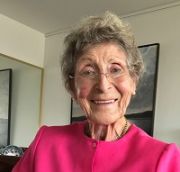
Maureen Jean Miller
Inducted in 2019 for services to:
- Arts and media
- Community, advocacy and inclusion
- Health
Maureen Jean Miller
Inducted in 2019 for services to:
- Arts and media
- Community, advocacy and inclusion
- Health
Born: 21 Feb 1933
Dedicated to volunteering from a young age
Since the age of 13, Maureen Miller (nee Gayton) has dedicated life to serving Tasmania’s public hospitals as a volunteer through the State Hospital Auxiliaries. For over 72 years, Maureen has helped raise important funds for health.
Maureen is a Life Member of one of the few remaining hospital auxiliary branches, the Claremont Branch. Maureen and her twin sister, Nadine Wise, joined the Claremont Branch in 1946.
Maureen was State President of the Hospital Auxiliaries on numerous occasions, hosted and organised state conferences, and oversaw the last state conference in 2014. Maureen is a Life Member of State Hospital Auxiliaries.
For decades, Maureen was an active member of the Red Cross, joining the Claremont Branch in the 1950s.
In the aftermath of the 1967 bushfires, Maureen spent countless days collecting, collating and delivering supplies and coordinating support for those impacted by the fires across southern Tasmania. She spent weeks helping to coordinate donations at the Hobart City Hall and distributing supplies to outlying districts; she collated data on those made homeless by visiting outlying districts from Ouse to Cygnet and beyond. She also provided support to women in the temporary camp at Snug in the months after the fires by serving hot food, setting women’s hair and making clothes for women and children.
Maureen graduated with a Bachelor of Fine Arts from the University of Tasmania, has been a practising artist all her adult life, and is a winner of the Royal Hobart Show Art Exhibition.
Maureen regularly donated artwork to organisations for fundraising, including the Royal Hobart Hospital, Heart Foundation, Sudden Infant Death Syndrome, Art Society and other charitable organisations. Maureen’s creative skills are also evident in the soft toys, sewing, knitting, crafts and colourful tea cosies she makes for charity. Maureen has also made wedding, debutante and bridesmaid dresses for women and girls in need.
Maureen received the Glenorchy City Council Australia Day 1984 Citizen Award for service to the community.
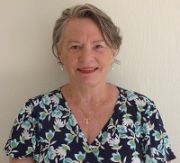
Dianne Murphy
Inducted in 2019 for services to:
- Community, advocacy and inclusion
Dianne Murphy
Inducted in 2019 for services to:
- Community, advocacy and inclusion
Born: 19 Jun 1954
Taking the lead on services for women
Early in her career, Dianne Murphy co-founded and was the inaugural coordinator of a women’s shared workspace at Sheffield. The women’s workspace was run as a cooperative and provided spaces for a number of craftswomen and a retail outlet, as well as companionship and mentorship.
In 2002, Dianne Murphy recognised the need for a range of free health services to Circular Head and was instrumental in securing funding from the Department of Health and Ageing to establish the Circular Head Rural Health Service.
As manager, Dianne navigated the early years of Circular Head Rural Health Service negotiating free services across the community that had not previously been available. These services included women’s health, youth services, cancer support and prevention, diabetes education, family planning clinics, sexual assault support services, men’s health and wellbeing forums, men’s counselling and early childhood education. The services were delivered by doctors, psychologists, social workers and other allied health professionals. Dianne also mentored community members to become leaders in community health services.
The early childhood education program was delivered directly in homes by peer mentors. The primary focus of the program was on young mothers and disadvantaged families, and while the children happily learned new skills to prepare them for school, the parents were given opportunities to socialise with other parents through group activities and regular events. This was especially valuable for isolated parents in the rural areas.
Dianne constantly secured funding for the people of the community. Her success at this resulted in the establishment of a community centre with an extensive garden and spaces to conduct courses in horticulture, nutrition and health forums as well as art and craft activities. Funding was also secured for a local respite house that was urgently needed for people with disabilities and their families.
Dianne now works at the Migrant Resource Centre (North) where she still continues to be involved in the provision of services to women and families.
National Council of Women
Inducted in 2019 for services to:
- Community, advocacy and inclusion
National Council of Women
Inducted in 2019 for services to:
- Community, advocacy and inclusion
Founded: 1899
Uniting and supporting Tasmanian women
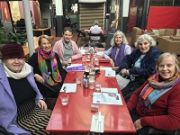
The National Council of Women of Tasmania (NCWT) has served Tasmania and the wider community for 120 years by uniting a wide range of community groups to work together to advance the welfare of women, their families and the broader community.
Established in 1899 as a Council within the International Council of Women and the National Council of Women of Australia (NCWA), it operates as an apolitical umbrella organisation. NCWT works to identify emerging issues and provide a combined voice for, and vital support to, its affiliated organisations. Delegates provide a dual service, both to their affiliated group and to demanding roles in NCWT at the local, national and international levels.
Guided by its principle of “unity of thought, sympathy and purpose” by the application of the Golden Rule to society (“do as you would be done by”), the NCWT serves the interests of all women, their families and the community by taking appropriate action on relevant issues and advocating with authorities for local, national and international reform.
NCWT has been supportive in establishing many of Tasmania’s iconic women’s services like the Ragged School, the Bush Nursing Service, the Child Health Clinics, the Country Women’s Association, the Working Women’s Centre and many others. NCWT has made submissions and representations on hundreds of issues, such as the establishment of Salamanca Market, saving the Female Factory, equal pay, human rights, family violence, anti-discrimination, drug and alcohol abuse, gaming, gun laws, privacy, health and the environment.
Through the inspiring leadership of Emily Dobson, the stewardship of 28 presidents and the committed participation of hundreds of women volunteers over a century of service, NCWT has provided a consistent voice for local women and is deeply woven into the fabric of Tasmania’s history.
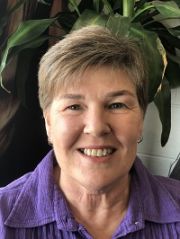
Lindy Joy O'Neill
Inducted in 2019 for services to:
- Community, advocacy and inclusion
- Education and training
- Human rights, justice and corrections
Lindy Joy O'Neill
Inducted in 2019 for services to:
- Community, advocacy and inclusion
- Education and training
- Human rights, justice and corrections
Born: 4 Mar 1960
Lindy strives to support people
Lindy O’Neill grew up in country Victoria where she witnessed the stress faced by rural families and communities, and developed an appreciation for forming partnerships and stretching resources for rapid interventions at crucial times.
In 2005, Lindy moved to Tasmania and dedicated herself to supporting and advocating for vulnerable Tasmanians.
Lindy worked in some extremely challenging and demanding roles but maintained her passion, drive and heart, often at her own personal expense. Lindy worked with and rallied the support of numerous leaders and groups to deliver basic needs and supports to the Central Highlands, and connected people with services to increase personal resilience and reduce suicide.
Lindy addressed issues of inequality and opportunity for the most disadvantaged Tasmanians as Chief Executive Officer for Cerebral Palsy Tasmania and also CEO of UnitingCare, and through her involvement with Rotary Hobart, Zonta, Women Chiefs of Enterprises International (Tasmanian Branch), the National Council of Women, and the Women Tasmania Mentoring Program.
Lindy never shied away from finding creative ways to engage and support the most marginalised and has been involved in creating and supporting services and programs for: prisons; LGBTIQ community members; women escaping family violence; children in state care; those at significant risk; the homeless; unemployed; people with disability; or people with complex and ongoing mental health issues.
Lindy served on the Boards of TasCoss, Rural Alive and Well, Carers Tasmania, Disability Professionals Tasmania and was Chair of the Tasmanian Women’s Council from 2011 to 14. Lindy was also a judge of the Tasmanian Honour Roll of Women in 2014 and 2016.
Lindy was a finalist in the Telstra Women’s Business Award in 2014 for her contribution to leadership and innovation in community services.
Although retired due to ill-health, Lindy is an active member of the Old Beach community and is one of the Southern Team Leaders for the Tasmanian Council of Churches Emergency Response Program, which provides personal support to people during and after critical incidents such as flood and fire.

Alison Overeem
Inducted in 2019 for services to:
- Community, advocacy and inclusion
- Cultural heritage
- Education and training
Alison Overeem
Inducted in 2019 for services to:
- Community, advocacy and inclusion
- Cultural heritage
- Education and training
Born: 7 Mar 1967
“We can walk together as luna rrala (strong women) in compassion and respect of our unique stories, and sharing of stories” - Alison Overeem
Alison Overeem is a proud palawa woman from South-East Tasmania who is driven by culture, family, empowerment and creating safe spaces to build hope and dignity.
Alison is passionate about raising awareness of Aboriginal culture and history and the rights of women in society. As a result, Alison has been a member of the Tasmanian Women’s Council since 2015.
While working in aged care at the age of 16, Alison studied for a Bachelor of Education (Early Childhood) and graduated in 1989.
Alison established the Aboriginal Children’s Centre at West Moonah in 1989. As Director of the Aboriginal Children’s Centre from 1989 to 2013, she helped design a state-of-the-art, award-winning, culturally inclusive children’s centre at Risdon Cove. Alison believes she was fortunate to be at the forefront of developing a multifunctional Aboriginal service, the first of its kind in Tasmania. It was, in fact, a precursor to the Child and Family Centres rolled out across Tasmania in recent years.
In 2013, Alison was appointed as the Leprena Centre Manager, Uniting Aboriginal and Islander Christian Congress (UAICC Tasmania). Alison has been instrumental in broadening Leprena’s engagement, networking and connections. On an average week, Leprena engages with about 80 young people.
Leprena offers a variety of activities such as children’s programs, family support programs, training and development, and mentoring. Leprena also acts as a conduit for the wider community seeking to connect with Indigenous people, and frequently engages with non-Aboriginal groups to provide ‘Welcome to Country’ experiences. Alison believes these experiences are vital in helping to close the gap between First and Second Peoples.
Alison has made numerous contributions to publications and resources to promote National Aboriginal and Islander Children’s Day and culturally inclusive practice models of service delivery for Aboriginal communities. Alison’s membership of the National Aboriginal and Islander and Childcare Executive enabled her to provide representations on issues impacting children and families in Tasmania.
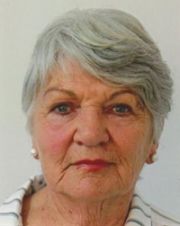
Pauline Perry OAM
Inducted in 2019 for services to:
- Community, advocacy and inclusion
- Sport and recreation
Pauline Perry OAM
Inducted in 2019 for services to:
- Community, advocacy and inclusion
- Sport and recreation
Born: 11 Nov 1939
A leading light for people with disability
Pauline Perry has been a leading light in Riding for the Disabled (RDA) in Victoria, Tasmania and Australia for 40 years, with a personal commitment stemming from her interest in equestrian and the opportunity to involve people with disabilities.
In 1980, Pauline was a founding member of RDA Peninsula in Victoria. She ran the centre on her own property for 20 years and it still operates today. In 2000, she received the Australian Sports Medal for founding RDA Peninsula.
In Victoria, Pauline held many state committee and coaching positions and rose through the RDA ranks nationally and internationally, qualifying as a coach educator, national assessor and Level 2 coach. She has been involved in rewriting and writing coaching syllabi and workbooks, has been an RDA delegate to many international conferences, and has helped develop RDA in the Pacific region.
Pauline has served as Vice-President and President of RDA Australia, President and Treasurer of Horses in Education and Therapy International, and she currently chairs the RDAA Program and Delivery Committee.
In 2002, Pauline was awarded an OAM for service to people with disabilities as a benefactor, honorary coach, administrator and fundraiser for RDA.
Pauline was involved with the acceptance and introduction of equestrian into the Paralympics and has been involved with Para-equestrian since the Atlanta Paralympics in 1994. She was a National Technical Official for Sydney Paralympics and Chair of the National Paralympic selection committee for some years.
In Tasmania, Pauline has served as President of RDA Tasmania for over a decade and was instrumental in training coaches and volunteers in the RDA Tasmania centres.
Pauline provides a model of selfless contribution for coaches and volunteers who care for horses and run the classes and sporting events in which people with disabilities can participate safely.
Pauline is recognised in Tasmania and at national and international level as having displayed expertise to promote and sustain the initiative of RDA. She continues to be a mentor, coach and source of information for RDA riders and aspiring coaches.
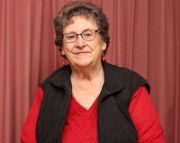
Jean Diamond Ray
Inducted in 2019 for services to:
- Community, advocacy and inclusion
Jean Diamond Ray
Inducted in 2019 for services to:
- Community, advocacy and inclusion
Born: 9 Mar 1938
Setting up groups
Jean Diamond Ray became the first female bursar in Tasmania when she was appointed Bursar at the Queenstown TAFE College, where she also tutored in accounting.
Jean emigrated from Scotland to North-West Tasmania and discovered the joy of learning as a trainee counsellor with the Marriage Council of Australia.
During the 1970s, Jean, an office assistant, became aware she could aspire to more challenging jobs and obtained a certificate of accounting at TAFE.
Accounting was an area mostly employing men. Jean eventually found employment in the community development area and worked with women and young unemployed people, where she gained skills helping local communities to set up their own groups. Setting up groups would continue through her career and into retirement.
When government funding ceased, Jean moved to Rosebery and worked as a mine clerk. In her spare time, she helped set up the Rosebery Neighbourhood Centre and volunteered as an Adult Education tutor.
When Jean moved to Queenstown, she set up the Community Youth Access Centre for the young unemployed, was a founding member of a new childcare centre, and of a family support unit in Zeehan that is now a Neighbourhood House.
Jean was an administrator for Women’s Health on the North-West Coast. She spent one year travelling the coast, spending time with local women for a research project and writing a report to the Minister of Health. While fulfilling the research project, Jean worked with committees and supported local women to set up groups and to assess needs, and she helped to access government funding.
Jean was Manager of the Wynyard Enterprise Centre, which was set up to assist people starting small businesses. She also tutored at Burnie TAFE and ran women’s classes in Waratah and Smithton and was also Registrar at Hellyer College in Burnie.
Jean is now a member of a Red Hat Group, which she also set up.

Kim Marie Roe
Inducted in 2019 for services to:
- Arts and media
Kim Marie Roe
Inducted in 2019 for services to:
- Arts and media
Born: 31 Oct 1957
Changing the way Australia encompassed highland dancing
Kim was the first Tasmanian to compete in the World Highland Dancing Championship finals, where she passed her teacher’s exam and judge’s test, allowing her to become an International Highland Dancing Adjudicator, the first Tasmanian to do so.
In 1976, at the age of 19, Kim joined the Tasmanian National Dancing Association and the Tasmanian State Committee of Highland Dancing. Kim’s membership of these organisations continues 40 years on, with her dedication extending to filling roles such as president, vice-president and technical secretary. In 2008, Kim was given life membership of the Tasmanian National Dancing Association.
It was Kim’s interest in dance that led her to complete a degree in Physical Education. Kim introduced dance into primary school education.
After many years working in schools, Kim started her own dance school with just two students in 1982. The Kim Roe School of Dance now has three studios teaching highland, national, contemporary, jazz, ballet and musical theatre.
Over the past 36 years, Kim has taught and mentored thousands of Tasmanians in dance, including the preparation for exams, individual or group eisteddfod choreography, university auditions and Higher School Certification/Tasmanian Certificate of Education tutoring.
In 1991, Kim started devising, directing and choreographing an annual Christmas pantomime, which has been entertaining local Tasmanians for 28 consecutive years.
One of Kim’s most recognised contributions was a collaboration with The Wiggles. Kim worked extensively with Anthony Field and the Wiggles cast to incorporate highland dancing and other forms of dance into their regular stage and television shows.
Since 1984, Kim has been a member of the Launceston Competitions Association, and she was granted life membership in 2017. Kim was also a founding committee member of the inaugural Festivale in Launceston.
Kim was also President of the Australian Board of Highland Dancing from 2006 to 2009, awarded International Highland Dancing Teacher of the Year 2012 – 2018, and inducted into the International Dancing Hall of Fame in 2016.

Kim Seagram
Inducted in 2019 for services to:
- Business
- Industry
Kim Seagram
Inducted in 2019 for services to:
- Business
- Industry
Born: 4 Oct 1963
(Montreal, Canada)
Building the Tasmania brand
Kim Seagram has driven community development and regional growth through her deep and enduring understanding of the importance of high quality product backed by impeccable service, that leverages off Tasmania’s reputation as a place of pristine beauty.
Kim, with her husband, Rod Ascui, and a talented team, operates two Launceston restaurants, the award-winning Stillwater Restaurant and Black Cow Bistro.
Up until 2000, Kim and Rod developed and operated Launceston’s Ripples Café, and the Lalla Gully Vineyard, which they sold in 1998.
In 1997, Kim was elected to the Vineyards Association of Tasmania Committee of Management and made a significant contribution to strategy and marketing development, both within the state and nationally over the following decade. Kim was on the working group to develop the National Wine Tourism Strategy and with the resulting Australian Wine Tourism Alliance.
Kim and Rod joined forces with winemaker Natalie Fryar in establishing the Abel Gin Company and released their first two gins in December 2016.
Kim’s passion to support local producers and build the Tasmanian brand led her to help found Harvest Launceston Community Farmers’ Market in 2011, where she still serves as a Director. Harvest Launceston was recognised as Australia’s Most Outstanding Farmers Market in the ABC Delicious Magazine Produce Awards in 2013 and 2017.
For over a decade, Kim was Deputy Chair of the Brand Tasmania Council and a Director of the Tourism Tasmania Board for over eight years, receiving a contribution to the Tourism Industry Award in 2015.
Kim was also Deputy Chair of the State Government’s Northern Regional Reference Group, and a member of the Global Advisory Group for the University of Tasmania School of Business and Economics, where she chaired the Entrepreneurships and Innovation Committee and received the Business Leader of the Year Award in 2016.
Kim was inducted into the Launceston Chamber of Commerce Hall of Fame in 2017 where she served as a Board Member.
Originally from Canada, Kim has given her time generously to her adopted home of Tasmania.
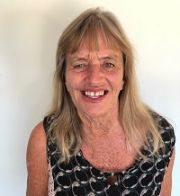
Moya Sharpe
Inducted in 2019 for services to:
- Education and training
Moya Sharpe
Inducted in 2019 for services to:
- Education and training
Born: 25 Jul 1949
Inspiring generations of students
Moya Sharpe is an inspiring teacher, local historian and volunteer.
Moya started teaching in 1968 and moved to the Sorell School in 1975 where she has inspired generations of children at the Sorell School with historical, environmental and community initiatives that have built community connectedness and created an important legacy in Sorell and the south-east.
At a time when the benefits of nature-based outdoor education and experiential learning are being rediscovered worldwide, Moya Sharpe has been a leading example for decades. She established a Pioneer Village on the school farm where children have the opportunity to be involved in living history programs. They learn about the history of the town, Aboriginal stewardship and life in colonial times.
Moya inspires the joy of learning, which shows on the faces of students and families celebrating Heritage Day in May. The day is a longstanding school and community event, with proceeds funding the Pioneer Village. She co-founded the Southern Beaches Historical Society, which has led to the recording of local history and community events to highlight and celebrate the past.
Moya is also passionate about environmental education and has encouraged hundreds of students to become lifelong environmentally responsible citizens. Sorell School has won state and national awards for their hands-on Landcare and Coastcare projects. She established a Kitchen Garden Paddock to Plate learning facility on the school farm that promotes healthy eating and provides the students with life skills of growing vegetables and preparing food.
In addition to her work at Sorell School, Moya also travels to Cambodia and volunteers as a teacher with Camkids children’s charity. She was awarded the National SchoolAid ‘Kids Helping Kids’ award for her work in encouraging her students to be involved in philanthropic activities and to develop compassion and empathy for those in need. The school also won the award for their fundraising efforts to educate Cambodian students in ‘Grade Sorell’ in the poor rural village of Chbar Chros.
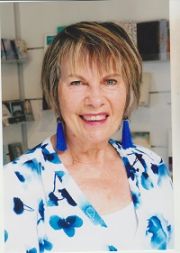
Bronilyn Smith
Inducted in 2019 for services to:
- Community, advocacy and inclusion
- Education and training
- Sport and recreation
Bronilyn Smith
Inducted in 2019 for services to:
- Community, advocacy and inclusion
- Education and training
- Sport and recreation
Born: 15 Feb 1946
Everyone has the right to feel safe in their community
Bronilyn Smith is an authority on community and personal self-protection, pioneering an innovative and internationally acclaimed approach to self-defence. She holds a sixth degree black belt in Aikido, is the founder and CEO of Defence Dynamics Pty Ltd, and in 2015 was inducted into the Australasian Martial Arts Hall of Fame.
Bronilyn’s unique programs provided community-based training and personal safety material to national and state governments, businesses and individuals for over 30 years.
Bronilyn is the first Australian self-defence author to be published internationally. Her book Defend Yourself! was showcased at the 1979 Frankfurt Book Fair with a United Kingdom launch the following year. Her bestselling book, The 3-Day Self-Defence Manual, included special print runs for Reader’s Digest Australasia and SE Asia. In 1994, the book was published in Poland; it was also transcribed into braille and published in Canberra. In 1996, her book Self-Protection for the Elderly was released in Japanese.
As well as lecturing around Australia and overseas, Bronilyn has produced videos, DVDs and audio cassettes to communicate her commonsense personal safety message. Bronilyn appeared regularly on national television as well as radio programs across Australia, particularly through the ABC, including talkback radio and packaged series.
The Australian Government appointed Bronilyn to the national committee to develop the groundbreaking Women, Sport and the Media report, which was tabled in the Senate in 1985. The report provided a framework and impetus for establishing equal rights for women in sport through the newly funded Women’s Sports Promotion Unit, in conjunction with the Australian Sports Commission.
Bronilyn was a founder and inaugural President of the Tasmanian Sportswomen's Association and a founding member of the Tasmanian Martial Arts Council and its first female Chair. Additionally, Bronilyn served as a selection committee member for the Tasmanian Sporting Hall of Fame, from its inception in 1986 to 1996.
She was a foundation member and past state president of Women Chiefs of Enterprise - International, and the Tasmanian representative for the Australian Society of Authors for over 25 years.
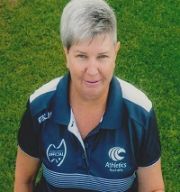
Sandra Michelle Speers
Inducted in 2019 for services to:
- Sport and recreation
Sandra Michelle Speers
Inducted in 2019 for services to:
- Sport and recreation
Born: 2 Apr 1964
Always willing to assist
Sandra Speers has been a significant contributor to the Tasmanian sporting scene since 1974 (in both athletics and netball) as an athlete, coach, official, administrator and volunteer.
Sandra’s first state championship successes were first placings in the Under-11, 80 metres and 100 metres in 1975. She was state under-age champion on 13 occasions and state champion nine times (six at 400 metres and three at 800 metres). She also won 15 minor medals in individual events at senior level. In 1979, Sandra set a state Under-15 record of 55.8 seconds for 400 metres.
Sandra enjoyed success at a national level, winning two silver and three bronze medals in Australian Junior Championships and was a bronze medallist in the national 400 metres championship in 1985.
From a young age, Sandra was active in club activities and committee responsibilities that started in 1979. Despite the training load of a top-level athlete, she always found time to help out. She began officiating as early as 1989 at local and state level, mixing competition and judging in a variety of ways. She took up opportunities to participate at a national level from 1997.
Sandra qualified as a Level 2 coach and is nationally regarded and graded as a starter, start area coordinator, track referee, start referee, out of stadium referee and umpire. Key appointments have included: 2000 Olympic Games, 2000 Paralympic Games and 2001 Goodwill Games (Starter’s Assistant), 2001 IAAF Grand Prix Final (Starter) and 2018 Commonwealth Games (Starting Panel) plus annual roles at a range of national championships.
In 2007, Sandra became the first woman to undertake the role of Tasmanian Athletic League (TAL) President, and was a driving force in delivering the formal affiliation of the TAL with Athletics Tasmania and the single registration system for athletes. She was a member of the Athletics Tasmania Board from 2012 to 2017.
Sandra received the Australian Sports Medal in 2000 and the Athletics Australia Gold Service Award for 30 years’ service in 2008.
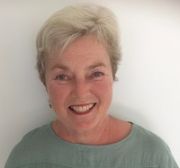
Shan Tennent
Inducted in 2019 for services to:
- Human rights, justice and corrections
Shan Tennent
Inducted in 2019 for services to:
- Human rights, justice and corrections
Born: 1952
Tasmania’s first female judge
The Honourable Shan Tennent had a distinguished judicial and legal career, being the first of only two female puisne judges of the Supreme Court of Tasmania.
Mrs Tennent graduated from the University of Queensland in 1973 and moved to Hobart in 1977. She worked with the Hobart firm Page Seager for 21 years, 15 of which were as a partner specialising in family law, before being appointed as a magistrate on 3 August 1998. Her appointment was significant, as she was just the second woman to have been elevated to this role.
From 1998 to 2005, Mrs Tennent served as a coroner. In 2001, her inquest into prisoner deaths in custody at Risdon Prison led to major changes there and contributed to the decision to completely rebuild the prison.
Mrs Tennent was sworn in as a judge of the Supreme Court of Tasmania on 15 March 2005.
Mrs Tennent enhanced her reputation as a diligent and tenacious member of the legal community through her involvement with a multitude of legal professional bodies. She was twice the President of the Family Law Practitioners Association of Tasmania; Treasurer and Vice-President of the Law Society of Tasmania; Deputy Chair of the Mental Health Review Tribunal; a Commissioner of the Legal Aid Commission; a member of the Equalising Opportunities in the Law Committee of the Law Council of Australia; and a member of the Equal Opportunities Committee and Continuing Legal Education Committee of the Law Society of Tasmania.
Mrs Tennent also assisted in the education of future members of the legal profession through her various roles with the Legal Practice Course. These included acting as a trainer in both the Magistrates and Supreme Court modules of that course, acting as coordinator of the Supreme Court module, and becoming a director on the board of the Centre for Legal Studies Inc. She was also a member of the Board of Legal Education.

Judith (Judy) Ellen Travers
Inducted in 2019 for services to:
- Education and training
Judith (Judy) Ellen Travers
Inducted in 2019 for services to:
- Education and training
Born: 8 Feb 1954
Passed: 26 May 2023
Far-reaching, positive influence
Improving student welfare and learning was a mission for Judy Travers who had a selfless commitment to public education, knowing education can transform lives.
Judy’s 48-year career encompassed policy development, teacher, principal, statewide leader of extended learning opportunities and online learning, and manager of learning.
At the age of 29, Judy was one of Tasmania’s youngest and first female principals. By 39, she was a district superintendent.
Judy initiated, promoted and oversaw significant projects and programs.
Judy was inaugural coordinator for the Hardie Fellowship that promotes study for Department of Education staff in American universities. Judy was also the recipient of travelling scholarships including Churchill, Hardie and Gandel fellowships, which enabled her to initiate middle schooling educational partnerships; build challenging environments to engage gifted and talented students; promote re-engagement of students in learning; and instigate curriculum revision to explore tolerance and prejudice through the teaching of the Holocaust.
Judy was the inaugural coordinator / chairperson of the Frank MacDonald Memorial Prize for grade nine students. Successful students travel to the Western Front, undertake research and mentor others.
Celebrating the arts across the State was a focus of many of Judy’s projects. Judy was State Manager of ‘What Matters?’ a writing competition where students publicly voice what matters to them; she supported the primary schools’ band program involving 1,500 singers and players; and she initiated the Young Archie portraiture competition for artists from kindergarten to grade 12.
Judy was recognised through a variety of awards, including the Tasmanian Telstra Business Women’s Award 2003 (Corporate), Microsoft Outstanding Education Leader of the Year 2003, Australian Lions Drug Awareness Award, and Life Membership of RSL Tasmania.
Judy served as a director on the advisory boards of the Australian Children’s Television Foundation, Kidsafe Tasmania and Hobart City Mission; she continues on the Drug Education Network, Sunshine Home and Soldiers Memorial Avenue boards.
In May 2018, Judy retired as the Department of Education’s General Manager, but continues part-time coordination of several education projects.