
The following 27 members of the Tasmanian Honour Roll of Women were inducted in 2007.
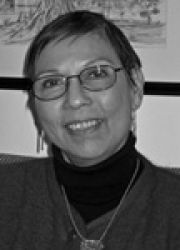
Lynette (Lyn) Anne Andersch
Inducted in 2007 for services to:
- Multicultural affairs
Lynette (Lyn) Anne Andersch
Inducted in 2007 for services to:
- Multicultural affairs
Born: 17 May 1943
(Myanmar (Burma))
Passed: 12 Mar 2009
Lyn Andersch came to Tasmania as a Burmese migrant in 1961. Lyn described herself as “a proud Australian and proudly Burmese”. She worked passionately and tirelessly in a variety of positions to make Tasmania a more culturally diverse, inclusive and vibrant place and was described as a driving force in Tasmania’s multicultural community.
While working and supporting a family, Lyn studied a number of courses at college and university to further enhance her skills, including a number of languages. She was a member and past Secretary of the German Australian Association, a member of the Australian Malaysian Singaporean Association and the Australia Japan Association.
Lyn’s career spanned more than 28 years in the public service, working within government departments and ministerial offices before retiring as the Manager of Multicultural Tasmania in November 2006.
Lyn played a leading role in developing the Tasmanian Government’s first multicultural policy. She also developed and initiated statewide programs and policies such as the Multicultural Liaison Officer network, the Tasmania Police interpreter book, cross-cultural awareness training and work placement programs for refugees.
Lyn played a significant part in overseeing the roles of the Tasmanian Advisory Council on Multicultural Affairs, the International Wall of Friendship Committee and the Multicultural Council of Tasmania. She was the instigator in the establishment of the migration exhibition at the Queen Victoria Museum and Art Gallery and helped in its planning.
Lyn represented various Premiers at many state and federal meetings including the Standing Committee on Immigration and Multicultural Affairs and the Ministerial Council on Immigration and Multicultural Affairs. Lyn was the Tasmanian Government’s appointment to the Management Committees of both Migrant Resource Centres in Tasmania from 1992. She was also a representative on the Multicultural Council of Tasmania, the Community Refugee Support Groups and the National Accreditation Authority of Translators and Interpreters.
Lyn was a tireless and well-respected advocate for refugees and migrants in Tasmania. She died on 12 March 2009 after a long battle with cancer.
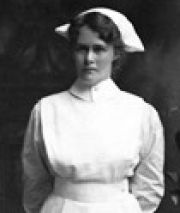
Barbara Barnett
Inducted in 2007 for services to:
- Community, advocacy and inclusion
- Health
Barbara Barnett
Inducted in 2007 for services to:
- Community, advocacy and inclusion
- Health
Born: 1879
(Hobart, Tasmania)
Passed: 1946
The death of Barbara Barnett has left with us the memory of a Friend who, in her own quiet and steadfast manner, was one of the company of those noble women who in all ages have dedicated themselves to a life of service.
This is a quote from the Testimony to the Life of Barbara Barnett, written on her death in 1946 by the Religious Society of Friends, Quakers.
Barbara Barnett was born in Hobart in 1879, the second of six children. Her parents, Alfred and Elizabeth Barnett, held strong Christian values and her mother and grandparents were Quakers. Barbara joined the Quakers in 1919 and upheld their values of equality for all, and the need to care and be concerned for others, throughout her life.
She was educated at the Friends’ School and then trained as a nurse at the Homeopathic Hospital (which later became St John’s Hospital). Although unable to complete her nursing training, she became particularly interested in the care of elderly patients during this period. She recognised the care of the elderly involved not only seeing to their physical condition, but also to their need for companionship and relief from loneliness, and conceived the idea of starting a ‘rest home’, one of the first in Australia.
In 1922, with £10 and the help of one assistant, she opened the first ‘rest home’ in Bellerive. The first night the home opened the residents were put to bed with adequate blankets, but Barbara had so depleted her resources that she and her helper had to sleep under hearth rugs. The next morning a Quaker friend, Esther Robey, delivered a number of items she felt might be needed, including extra blankets.
The Bellerive home soon became inadequate and had the added problem of a lack of water supply. In summer, water had to be purchased from Hobart and carted by ferry to Bellerive, where it was delivered to the home by bucket. Barbara moved the residents several times and by 1933 had established St Ann’s Rest Home in Melville Street.
Barbara’s financial burden was eased by a substantial contribution from her uncle, Archdeacon Barnett, who, on a trip home on furlough from Hong Kong, recognised the value of Barbara’s work with the elderly. Residents paid for their accommodation and performed light duties in return for food and care. Although pressed for funds, Barbara insisted on having at least one resident who was unable to pay anything for their place in the home. This was a far different model from the institutionalisation of the elderly in asylums that had been prevalent up to and including the early 20th Century.
In 1939, the residents were moved to 10 Tower Road, New Town, where eventually Barbara’s own health deteriorated. When Barbara died at the age of 67, Miss Ida Mather, a Quaker, carried St Ann’s financially until it was taken over by the Baptist Church.
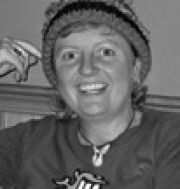
Jennifer (Jen) Barron
Inducted in 2007 for services to:
- Community, advocacy and inclusion
Jennifer (Jen) Barron
Inducted in 2007 for services to:
- Community, advocacy and inclusion
Born: 1967
(Hobart, Tasmania)
Jen Barron qualified as a teacher specialising in early education and taught in the North-East for eight years. As a teacher, Jen became frustrated at the lack of services in the region for young people. She was aware of the high unemployment rate and knew about the disturbing youth suicide rate among young people who live in country areas.
Jen decided to do something about this and she went back to university to complete a social work degree. As soon as Jen finished her degree she was given the position of Dorset’s first youth health officer, counselling young people on health issues (mental and physical) as well as working with the Dorset’s youth advisory group, which she established in 2001.
Jen has been described as ‘irrepressible’ and ‘zany’. She brings a unique exuberance and dedication to everything she does. She describes her role as “about 24 hours a day, seven days a week” and spends her time devoted to young people and their projects. Her connection with young people is extraordinary and they have been quoted as saying Jen is one of the coolest ‘chicks’ they have ever met.
Jen’s great strength lies in her ability to empower others to achieve their goals. Through facilitation, Jen encourages young people to be involved in their community, assists them in speaking up, and advocates on their behalf when necessary.
Jen’s connection with young people is not restricted to her work in the Dorset municipality. She has been an active member of Guides Tasmania for most of her life. In 2004, she took on a voluntary role as Music, Arts and Spirituality Consultant for Guides Tasmania and during 2005-06 organised MAD (Music Art and Drama), a statewide event for 250 Guide participants. This year Jen is producing a CD of Guide songs to give young people an opportunity to record and also to help pass on the tradition of singing within Guides.
Jen also assists young people at an international level and has volunteered on various projects in both India and Bangladesh through Guides Australia, the World Association of Girl Guides and Girl Scouts and Youth With A Mission. Jen is currently involved in an ongoing project in Calcutta India that provides basic hygiene, food and education to under-privileged and homeless children. She visits the project at least once a year with other travellers, encouraging them to become involved. Her passion has also inspired young people to provide assistance.
Jen was recognised by the Guides Australia in 2007 by being awarded the Wattle Award for unusually good service to the State.
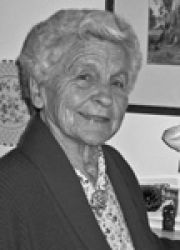
Elizabeth Gay (Beth) Bennett
Inducted in 2007 for services to:
- Community, advocacy and inclusion
Elizabeth Gay (Beth) Bennett
Inducted in 2007 for services to:
- Community, advocacy and inclusion
Born: 1923
(Hobart, Tasmania)
Elizabeth (Beth) Bennett and her late husband, Harry, moved from Geeveston, where they had an orchard, to Orford in 1974. Since moving to the East Coast she has shown a strong commitment to the needs of the residents of the Glamorgan-Spring Bay Municipality.
Her long association with the Girl Guides saw her progress from a Leader in Geeveston, through to a District Commissioner at Spring Bay and finally, a member of the Guides Tasmania Council. She has continued to work with young people as a mentor, and has been able to motivate others in the community to become mentors as well.
Beth has a strong social conscience and is committed to justice and fairness for all Tasmanians. She was a municipal councillor for Spring Bay from 1980-90. Many people in the Orford-Triabunna community continue to go to Beth for help because they know she can effectively represent their issues through the committees and networks of which she is a part.
As part of her commitment to the wellbeing of the older people of the Glamorgan-Spring Bay municipality, Beth has been involved with a number of boards and committees. Beth is the Vice Chair of the Prosser House Board of Management, and held the position of Chair from 1995-2003. She has also been the Chairwoman of the War Widows Guild, East Coast Sub-branch, since 1984.
Beth’s other involvements include being a member of the Positive Ageing Consultative Committee, member of the Glamorgan-Spring Bay Municipal Health Advisory Committee and the Orford Hall Committee. She is also a Justice of the Peace.
An innovative organiser, Beth has been responsible for coordinating the Seniors Week concert at Orford for several years. The 2006 concert featured 12 items, which included everything from a strip-tease to tango, all performed by older members of the community.
Beth is very aware of the effects of social isolation and is particularly concerned for those who live in outlying rural areas. Her commitment to her community has been recognised by her being named the Spring Bay Municipality Citizen of the Year in 1990.
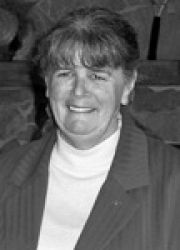
Sister Marlene Binns
Inducted in 2007 for services to:
- Community, advocacy and inclusion
Sister Marlene Binns
Inducted in 2007 for services to:
- Community, advocacy and inclusion
Born: 1945
(Launceston, Tasmania)
Passed: 2006
Sister Marlene Binns obtained an education degree and was then employed as a secondary teacher in many schools and colleges.
While employed at the Emmanuel Pastoral and Spirituality Centre, Launceston, and at MacKillop Hill, Forth, Sister Marlene completed training and worked as a Spiritual Director and facilitated reflection days for students from Marist Regional, St Brendan Shaw and St Partick’s Colleges. Sister Marlene spent 10 years as a member of the Diocesan Youth Commission.
Sister Marlene was a member of the Congregation of Sisters of St Joseph for 40 years. She was the administrator of the Catholic Church on King Island for the last six years of her life. In recognition of her vast contribution to her community and many skills, Premier Paul Lennon appointed Sister Marlene to the Tasmanian Women’s Council in 2006.
During her time on King Island, Sister Marlene was an active member of many community groups and provided great support to everyone involved with the island community. She was a member of the Country Women’s Association, the King Island Hospital Auxiliary and the Carers Support Group. Sister Marlene was also a keen volunteer at the King Island Hospital, Nursing Home and Day Centre where she was renowned for her fancy costumes on theme days.
She was also active in the King Island Community Support Group, which was responsible for connecting people by looking at their skills. Sister Marlene was a member of the Crisis Support Team that supported people and the community in times of trouble. She used to say there were ‘tea and tissues’ people in a crisis and along with her many contributions to the community, Sister Marlene also offered grief counselling.
As a member of the Youth Access Steering Committee, Sister Marlene supported the young people on King Island. The Building Stronger Families forum was another of Sister Marlene’s passions, and she actively supported children and families on King Island.
Sister Marlene was also a foundation member of the King Island Supporting Disabilities Forum and was actively engaged in the funding proposal for Phoenix Community House. With her colleague, Sarina Laidler, she started a garden at Phoenix House to ‘make the place look brighter’. Sister Marlene was also an executive member of the committee responsible for the day-to-day running of Phoenix House.
Described as “an angel” by the King Island Mayor Charles Arnold, Sister Marlene will be remembered for her significant ongoing impact and the strong support she provided to the King Island community.
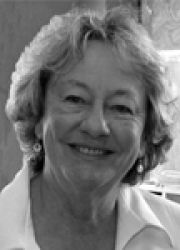
Jan Mary Blizzard
Inducted in 2007 for services to:
- Community, advocacy and inclusion
- Government (Public services and politics)
Jan Mary Blizzard
Inducted in 2007 for services to:
- Community, advocacy and inclusion
- Government (Public services and politics)
Born: 1935
(Burnie, Tasmania)
Passed: 8 Mar 2007
Jan was a great friend of the people of Burnie, willing to champion any cause she felt was in the best interests of the community. She really loved Burnie and wanted only the best for the city she cared so much for, and its residents of all ages and abilities. - Alvwyn Boyd, Mayor, Burnie City Council
Jan Blizzard was born in Burnie and married Michael Blizzard. They had three children - a son, Zachary, and two daughters, Kate and Emily.
After leaving school at age 14, Jan worked as a radio announcer on 7BU. Her radio career lasted from 1949-62 and was typified by her work for women and children, which touched so many people. She had a variety of career roles including restaurateur and small business owner. She was also a music teacher for many years and loved to help develop young musicians. She established a very successful youth choir and was involved with the Burnie Eisteddfod for several years. Jan also took a keen interest in her family's involvement with the Burnie Emu Musicians and Musical Society, and was actively involved for many years in local dance graduations in her role as compere.
Jan was a member of and Fundraising Quest Coordinator for Multicap Tasmania from 1983-99. She played a key role in the organisation and running of the state-wide Multicap quest. As well as being an important part of the social fabric of Tasmania, these quests were a major factor in raising awareness of and funds for Multicap, an organisation devoted to helping people with disabilities. She targeted young women she could see had the potential to do more and often convinced them to become the most they could be.
Jan also played a key role as the North-West Coordinator of the Republican movement and was a passionate advocate for the cause, running the North-West campaign almost single-handedly.
Her anger at a proposed cut to funding for Burnie Park led her to stand for election to the Burnie City Council. Jan was elected as the top polling candidate in 2000. She became involved in numerous initiatives such as the Burnie City Youth Council, Positive Ageing Committee, the 20-Year Management Plan for Burnie Park and management plans for West Park, Fern Glade and the foreshore. Council General Manager Paul Arnold, said he often referred to Alderman Blizzard as the “Minister for Parks”, such was her passion for Burnie’s parklands.
Jan was particularly passionate about providing a voice for all of her community. She believed that to be an effective councillor she should have the ability to genuinely listen to people and communicate their concerns, hopes, wishes or suggestions back to the council. As a well-loved community leader, Jan possessed a strong penchant for consultation and was closely in touch with the feelings of her community. She passionately believed in Burnie, and saw a very strong future for the city.
Jan was awarded the Centenary Medal in January 2001 in recognition of her service to the community and public.
Diagnosed with a brain tumour in early 2007, Jan died on 8 March 2007. Her daughter, Kate, recalls Jan’s great loves as being her family, her garden, jazz, football and her community. Jan was, in her own words,
“…a mature sensible woman not given to using meaningless phrases, but dedicated to hard work, setting goals and getting good results for the people of Burnie.”
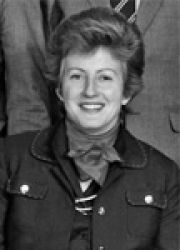
Marion (Jill) Burbury
Inducted in 2007 for services to:
- Community, advocacy and inclusion
Marion (Jill) Burbury
Inducted in 2007 for services to:
- Community, advocacy and inclusion
Born: 1941
(New Norfolk, Tasmania)
Jill Burbury is described as a ‘quiet achiever’ who enters into and actively supports community life on every level.
In the 1970s, Jill became very involved in a local group dealing with the development of tourism in the Oatlands area after another rural depression. She joined the Oatlands Council (now the Southern Midlands Council) and served as a member for seven years. Later the formation of the Heritage Highway Tourism Region became the major focus.
Jill represented the Oatlands Council on the Regional Library Committee, then as the municipal representative on the State Library Board. From this her involvement in the formation of the Online Access Centres became a “passion” both in the Southern Midlands and through the statewide body, the Online Access Centre Association of Tasmania. Jill has also helped with suicide prevention programs and the Midlands youth initiative project, MILE.
In the early 1990s, Jill served on Tasmanian Government health forums as a representative for the Southern Midlands. This involved discussing the health needs in different areas and reporting back to the Department of Health. She was a member of the Rural Support Tasmania Board (now the Rural Financial Counselling Service Tasmania) for seven years.
After the tragic death of her daughter, Georgina, in 1985, Jill became the Tasmanian contact for Compassionate Friends, an international self-help group for parents and families whose children pre-decease them. Unlike other states Tasmania, up until this point, had never had an active Compassionate Friends group. Jill became a vital person to turn to for any Tasmanian losing a child or sibling and needing to talk to an understanding person.
Jill’s interest in older people resulted in her being selected as a member of the Department of Premier and Cabinet’s Positive Ageing Consultative Committee, co-ordinated by the Seniors Bureau. Jill has been actively involved in Seniors Week in the Midlands and served on many committees concerned with seniors.
In order to preserve life stories of those living in the Midlands, Jill has conducted a multitude of interviews with seniors for the Oatlands local FM radio station.
One of the memorable features of a trip along the Midlands Highway, particularly for children, is seeing the topiary plants portraying animals, birds and trains. Jill was instrumental in instigating a fitting memorial to the creator of the topiaries, Jack Cashion, and accessing funding for the topiaries to be rejuvenated, including extending the project into Oatlands. This is a perfect story to describe Jill’s involvement in the community. Jill is a woman who sees something that needs doing in the community – and makes it happen.
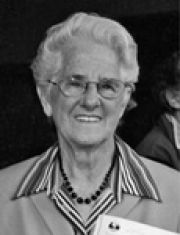
Jean Heather Burgess
Inducted in 2007 for services to:
- Community, advocacy and inclusion
Jean Heather Burgess
Inducted in 2007 for services to:
- Community, advocacy and inclusion
Born: 1930
(Queenstown, Tasmania)
Passed: Feb 2014
Jean Heather Burgess was born in Queenstown and moved to Recherche Bay with her family when she was three years old. She spent most of her life living and working in the Huon Municipality. Her family, the Heathers, has a proud heritage with the region's timber industry, and has operated sawmills at Moss Glen and Cockle Creek. Jean married Sid Burgess in 1950 and had six children - five sons and a daughter.
Jean began work at her father's sawmill during World War II. At 15, she was racking the laths used in lathen plaster walls. At 16, due to the shortage of male workers through the war years, Jean started working in the bush. Under the supervision of their father Jean, her sister Nancy and brother George, would go into the bush and fell giant stringy bark trees to supply the mill. They used only cross cut saws and axes, with Jean taking the left-handed axe position.
The felled timber was extracted by a log hauler and carted along a tramway by tractor back to the mill. The family built the tramway which extended almost two kilometres into the forest. When not working in the bush, Jean worked in the mill. The flywheel for the mill is still at Cockle Creek, with an interpretative display which features articles on the mill and extracts from an interview with Jean.
As an adult, Jean was involved in many community activities. Her involvement with the Pensioners Union was long standing. She was Secretary and President of the Pensioners Union of Esperance. She was an active member of the Huon Eldercare committee and involved in Meals on Wheels and community transport. Through Jean's community leadership, the Tasmanian Government has assisted in the provision of a car to provide community transport in the region.
The Huon Valley community held Jean in high esteem because of her involvement in, and promotion of the area. She was a member of the Southern Spinners group that produced the interpretative tapestry on display at the Tahune Airwalk. She was involved in the Geeveston Streetscape project that beautified the town centre and restored pride in the town after harsh economic times. Jean also volunteered at the local heritage centre and was part of the Geeveston Green Jacket group, a voluntary non-profit group which provides a rostered guide/greeting service to the Esperance Forest and Heritage Centre. She was active in the Friends of the Community Bank Committee that established the first community bank in the State.
Jean had a deep knowledge of the area's environment and was an active member of the Huon Resource Development Group. She always displayed an optimistic outlook for her community and made a major contribution to the community's self esteem.
Mary Campbell
Inducted in 2007 for services to:
- Community, advocacy and inclusion
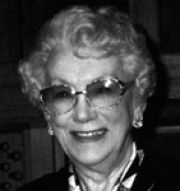
Mary Campbell
Inducted in 2007 for services to:
- Community, advocacy and inclusion
Born: 1923
(Launceston, Tasmania)
Mary Campbell was educated at Sacred Heart College, Launceston, and went on to the University of Tasmania and the Tasmanian School of Art.
Mary married Hugh Neil Hugh Campbell in 1948 and is the mother of five children, all graduates of the University of Tasmania. Mary supported a number of school parent associations, often in executive positions, for more than 25 years.
In the war years, Mary served in the Australian Women’s Army Service from 1943 to 1946. She worked in transport as a staff-car driver and truck-driver. She then worked in education and finally in post-war rehabilitation for returned men and women.
After her discharge from the Army, Mary trained as a teacher and taught art and general subjects in many Tasmanian schools.
Mary has held many positions with the National Council of Women Tasmania (NCWT) including State President, Vice President and Convenor for Economics. She is currently Advisor on Human Rights and Conventions and edits the monthly newsletter. She also represented NCWT on the Telecom Regional Consultative Committee for a number of years.
Mary was elected as the inaugural President of the newly formed National Councils of Women Coalition Inc in 2002 when the three councils combined to form one group. Her gentle and conciliatory leadership provided strong support for this new body in its formative days.
Mary’s involvement with the Catholic Women’s League Tasmania spans a great many years and roles. She has taken on positions at state, national and international levels, including that of National President in 1996 when she welcomed representatives from 75 countries to a gathering of the World Union of Catholic Women’s Organisations Assembly.
Mary has supported a number of other women’s organisations throughout her life including Penguins and Probus. She also served on the Board of the women’s shelter, Caroline House, for many years and still supports that organisation.
Mary was awarded Life Membership of the National Council of Women, Tasmania, in 1993 and the Catholic Women’s League in 1994 in recognition of her outstanding service to those organisations.
Linley Grant OAM
Inducted in 2007 for services to:
- Community, advocacy and inclusion
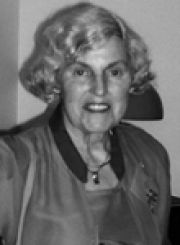
Linley Grant OAM
Inducted in 2007 for services to:
- Community, advocacy and inclusion
Born: 1933
(Circular Head, Tasmania)
Passed: 13 Apr 2022
Linley Grant was born in Circular Head during the Depression. In 1940 her family moved to Devonport, where she completed most of her schooling. She married Malcolm in 1959 and they have three children.
After leaving school, Linley worked for one year in a pharmacy and then completed a four-year nursing course at the Royal Hobart Hospital, where she graduated as dux in 1955. She left Tasmania to work with psychologically disturbed children in London. On her return to Tasmania in 1958, she worked in the Burnie General Hospital before her marriage and in nursing education again after her children were at school.
Linley and her family moved from Burnie to George Town in 1972 where she worked at the George Town Hospital and Ainslie House, Low Head. The family transferred to Hobart in 1974 and Linley worked part-time at the Royal Hobart Hospital, primarily in the Burns Unit and as a lecturer in the care of burns injuries until 1997. She also studied part-time for her Bachelor of Arts, graduating with Honours in 1981.
Linley has been a Commissioner or Unit Leader in Guides Tasmania since 1958. Her commitment to her community has been expressed through continual representation, most often as Secretary. She has been involved with the Mount Stuart Progress and Community Service Associations (31 years); establishing and maintaining the Fiona Allan Walkway (25 years); the National Council of Women of Tasmania (26 years); the Anti-Poverty Coalition, Tasmania (10 years); the United Nations Association Australia, Tasmania (eight years); Women’s International League for Peace and Freedom (12 years); several Parents and Friends Associations; the Order of Australia Association (Tasmania) and founded three clubs for the Penguin Club of Australia (Tasmania).
She was state president of the Pre-School Parents Council (four years), the Penguin Club (two years), National Council of Women of Tasmania (four years), Tasmanian Rostrum (four years); National Vice-President of Australian Rostrum (three years) and Vice-President of Birds Tasmania (three years). Linley has also been involved with committees that resulted in the establishment of the Tasmanian Women’s Health Centre and the Tasmanian Working Women’s Centre. She has served on several government committees including the Tasmanian Women’s Consultative Council, Riverworks, Tasmania Together Progress Board and the Tasmanian Women’s Council.
Recognition of her extensive community work has come through several awards including Life Membership of the Tasmanian Pre-School Parents Council (1975) and the National Council of Women of Tasmania Inc (1996). She has a Wattle Award and long service awards from Guides Tasmania, was awarded Freemanship of Australian Rostrum (2004) and received an OAM for community service in 1993.
Linley’s family has remained her highest priority, and has supported her throughout her community service involvement.
Carol Aileen Grey
Inducted in 2007 for services to:
- Community, advocacy and inclusion
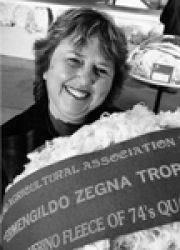
Carol Aileen Grey
Inducted in 2007 for services to:
- Community, advocacy and inclusion
Born: 1949
(Launceston, Tasmania)
Carol Grey grew up at Harrymount on Benham Estate. One of 12 children, only seven of whom survived, Carol grew up in a house with no electricity – although the family did have lamps. Her mother, a trained schoolteacher, was a resourceful woman who taught her children through distance education, and then they were sent to relatives to complete their high school. Carol and her siblings never felt disadvantaged - they were rich in knowledge of the world through books. Every few months a large bundle of books arrived from the State Library. Carol’s mother would read to the family of a night like a serial, a few chapters each night. Carol says her mother instilled in them to care for others and to always be honest.
When Carol left school she trained as an auxiliary nurse, before marrying Mervyn Williams at the age of 18. They had three sons: Dale, Roger and Glen.
Merv died tragically in 1999, leaving a traumatised Carol to run their sheep farm, Wattle Grove. Up until this point, Carol had not had much “hands-on” experience around their 500-hectare farm. However, she not only turned the farm around but achieved the highest tribute in superfine wool growing, the Zegna Trophy, in 2004.
In 2005, Carol won the Marcus Oldham Rural Leadership Scholarship. Following this, she started the South Esk Discussion Group – a group intent on improving the town. In April 2006, Carol established the Greater Esk Tourism (GET) Inc, which is growing quickly and now has members from Rossarden, Avoca, Upper Esk, Mathinna, Fingal and St Marys.
The tourism potential of the area is beginning to be tapped and Carol has been described as “a magnet”, attracting people to her ideas. Her work through Women in Agriculture has created networks that are continually developing and strengthening.
GET has many initiatives planned, including: restoring the old school building, a history trail around each town, tree planting and beautification projects throughout the valley.
In June 2006, Carol and her partner Peter Hazell opened the Billy Bag gift shop in Avoca’s main street. The tourism venture sells a selection of Tasmanian and mainland products, unusual imported goods including a life-size pig, and of course Superfine Merino wool socks. The shop looks like a pioneer’s cottage, in recognition of pioneer women of Tasmania.
While doing all of this, Carol has also continued to be a farmer alongside Peter. Carol’s time is concentrated on getting the fledgling business to a point where she can employ a local full-time staff member. Though they are in drought conditions, Carol maintains her positive and strong commitment to others and the community. She acknowledges her faith in God has been a great strength to her. Carol is proud that her three sons are all in caring/human services professions.
Mary Hill OAM
Inducted in 2007 for services to:
- Education and training
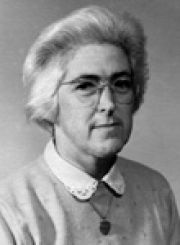
Mary Hill OAM
Inducted in 2007 for services to:
- Education and training
Born: 1924
(Devonport, Tasmania)
Mary Hill was born in Devonport and trained as a teacher.
Mary is known by many for her enthusiastic and determined approach to the education of girls as Headmistress of Broadland House from 1967 to 1977. She has worked constantly to ensure girls receive opportunities to further their academic studies.
Through the Girl Guide movement Mary has made an enormous contribution to the development of young women, both in Tasmania and internationally. From 1946-52, she was a Guide Captain in Devonport. In 1948, she gained her Outdoor Camper’s Licence, allowing her to take young Guides camping. In 1959, she earned the Guide Training Diploma that allowed her to assist and assess trainers at all levels of Guiding. Her various training roles have provided a vehicle for Mary to share her knowledge, skills and experience.
Mary has held a diverse range of volunteer positions within the World Association of Girl Guides and Girl Scouts (WAGGGS), including as the WAGGGS Commissioner for Training in Nigeria (1963-64); training positions in England, Scotland, Ireland, Sweden and Finland (1964-65); and a six-year period as a member of the WAGGGS Asia Pacific Committee which saw her work in 17 countries in the Asia Pacific region. Mary was awarded the highest WAGGGS honour, the Silver Fish Award, in 1985.
Mary’s mentoring and training role is not limited to young leaders. She is a friend and mentor to many women throughout the State, many of whom she has nurtured since their early days as Guides. The wealth of experience her international roles has provided has allowed Mary to encourage Tasmanian women to take on roles at a national and international level.
Mary also has worked quietly in her local community through adult literacy programs. Her patience, guidance and love of language have provided many people with literacy and numeracy skills they never believed possible. She spends hours preparing for her adult students and is proud of their achievements.
Mary has also been active in promoting Seniors Week, encouraging a range of groups in the North-West to hold events. In 2003 the then Premier, Jim Bacon, presented Mary with a certificate of appreciation for her enthusiasm in recruiting organisations to hold Seniors Week events.
Mary grew up in a time where the roles of women were specific and, in many respects, limited. She defied those limitations and took on the challenge to excel as an individual and active member of her community. In doing so, Mary has contributed to break down the barriers for women as leaders and responsible and valuable citizens, at a local, national and international level.
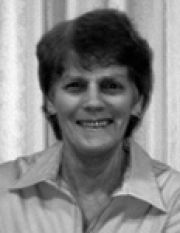
Vera Margaret Hine
Inducted in 2007 for services to:
- Community, advocacy and inclusion
Vera Margaret Hine
Inducted in 2007 for services to:
- Community, advocacy and inclusion
Born: 1942
(Strahan, Tasmania)
Vera Hine was born in Strahan in 1942 and moved to Queenstown after her marriage in 1961. She has four children, 12 grandchildren and five great-grandchildren. Other than her family, her passions are the RSL Women’s League, the RSL Club in Queenstown and hockey. Vera has dedicated her life to these passions.
Vera is a Life Member of the Queenstown Hockey Association and is still currently playing the game. This is her 53rd year of playing hockey. During this time, she has provided great support to others. She has held all committee positions, marked the grounds, cleaned the clubhouse, worked in the canteen, umpired and coached. She is always on hand to help raise money for the hockey club. She continued to provide this support even while her children were young.
Vera also started a junior hockey club with the help of a few others, each taking an interest in one of the three primary schools in the district at the time. Vera and her helpers taught the children to play, coached, umpired and even took a few home after the games. Many of those now playing learnt the game from Vera. When the Indoor Hockey for Children program started in Queenstown, Vera was there again, coaching the very young ones, setting up the hall, dragging out the goals and umpiring.
Vera has been voluntarily involved with her local RSL Women’s League for about 45 years. She works part-time as a cleaner and has held that job for about 30 years.
Every Anzac Day, Vera is up at 3am to cook breakfast and lunch for the club members. Vera has voluntarily worked in the kitchen for the Women’s League for all of this time, and held all positions on the women’s committee. She directs a small band of women, most of whom are elderly now, in cooking meals every Friday night and catering for all the functions held at the club including weddings, parties and funerals. Most recently, Vera has become the Secretary of the Queenstown RSL.
In recognition of her great support of community life, Vera was a runner in the Commonwealth Games baton relay. All of her family went along to support her.
Vera has been awarded Life Membership of the Queenstown RSL for her support and dedication over many years.
She was named the West Coast Australia Day Citizen of the Year in 2005 for her involvement as a hockey player, coach and member of the committee for 50 years.
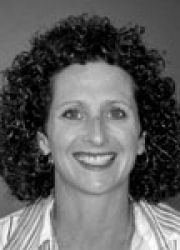
Julie Kent
Inducted in 2007 for services to:
- Sport and recreation
Julie Kent
Inducted in 2007 for services to:
- Sport and recreation
Born: 19 Apr 1965
(Hobart, Tasmania)
Julie Kent is known throughout Tasmania as one of the State’s pre-eminent sportspeople. She began diving at the age of 12 and such was her natural talent that she represented Tasmania at the Australian titles for the first time two months later.
The determination to achieve her goals in her chosen sport has made Julie a standout in the sporting history of Tasmania. In the 1980s, Tasmania was not known for developing sports stars in the pool. To pursue her dream, from age 14, of being an Olympic diver, Julie had to train at the outdoor Hobart Olympic Pool, through all seasons. The lack of appropriate year-round training facilities led Julie to move to Canada in her teens. The move resulted in Julie becoming World Junior Champion in 1983 and representing Australia at the Commonwealth Games in 1982 and 1986 and the Olympic Games in 1984 and 1988.
Julie has not only been an exceptionally successful sports person, she has given a lot back to her sport. She actively supported the development of the Tattersalls Hobart Aquatic Centre, with a purpose-built, indoor diving facility and has used the centre to coach young divers.
Since retiring from competitive diving, Julie has been actively involved with Olympic fundraising and as president of the Tasmanian Olympic Council from 1996-2000 Julie assisted in raising funds to help other Tasmanian sportspeople to compete in the Olympic and Commonwealth Games. She is an outstanding mentor to young people and an excellent role model.
Julie has held numerous positions on a variety of sporting committees, all with the aim of seeing young Tasmanians being given the opportunity to compete at the highest level in their chosen sport.
As Executive Director of Variety, the children’s charity, Julie plays a key role in raising funds to improve the quality of life of special needs children in Tasmania. Events such as TasBash and Teen Face of Tasmania have become important fundraisers that help draw communities together.
In recognition of her outstanding contribution and achievements in diving, Julie has been named the Hobart City Council Citizen of the Year, the Confederation of Australian Sport Junior Female Athlete of the Year (1983), was the 2000 Australian Sports Medal recipient, and has been inducted into the Tasmanian Sporting Hall of Fame. She is a Life Member of the Tasmanian Diving Association and the Hobart Springboard Diving Club, and was a irector of Diving Australia for eight years.
Julie was the Australian Olympic Team Manager, Diving, for the 2004 Olympics in Athens. She continues to be an exemplary ambassador for her sport and is currently a selector for Diving Australia.
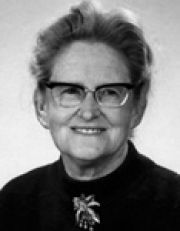
Irene Mary Kerslake
Inducted in 2007 for services to:
- Education and training
Irene Mary Kerslake
Inducted in 2007 for services to:
- Education and training
Born: 1913
(Wilmot, Tasmania)
Passed: 1995
Irene Kerslake was born the middle of three daughters to Wilmot farmers Elizabeth and Augustus Kerslake. Irene was known as a pioneer Launceston educationist.
Irene was a brilliant student and she attributed her intense interest and ability in learning to her mother who, although uneducated herself, encouraged and supported her three daughters to achieve university education.
Irene completed her secondary education at Devonport High School when she was 15. Her results were outstanding and she finished third on the list of general university scholarships. However, she was too young to attend university and had to wait until 1930 to commence her tertiary education. Irene graduated with a Bachelor of Arts and began full-time teaching. While teaching she studied for her masters degree and gained her MA in 1935 at the age of 23. She was the youngest person at that time to gain a masters degree from the University of Tasmania.
Irene’s teaching career included periods in primary and high schools as well as the Curriculum Centre. She was an outstanding teacher and so well regarded that in 1947 she was selected to join the staff of the Emergency Training Centre for teachers. As lecturer in English language, Irene had responsibility for a large portion of the curriculum. She was also appointed to the important role of Women’s Warden. There are stories that her lessons started in the corridor on the way to her classroom and she was well regarded by her students as a caring person.
Irene demanded a high standard in written work and set high standards in her marking. However, her work extended beyond the classroom and included extra curricular activities associated with excursions, hotel accommodation, sport and student welfare. Her concern about injustices to women teachers saw her regarded as a forerunner for women’s rights.
In 1967, Irene was appointed Acting Vice Principal at the Launceston Teachers College and she was heavily involved in the transfer of teacher education to the Tasmanian College of Advanced Education (TCAE) at Newnham. She completed her teaching career at the TCAE where Kerslake Hall of Residence was named in her honour.
In retirement, Irene indulged her passion for the Tasmanian wilderness by volunteering with the Devonport Wilderness Society. This passion also led to her developing an outstanding native garden at her home in Devonport. She created beautiful embroideries of the native plants in her garden, some of which have been donated to the Queen Victoria Museum and Art Gallery and the University of Tasmania, Launceston.
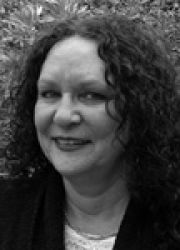
Vicki maikutena Matson-Green
Inducted in 2007 for services to:
- Aboriginal or Torres Strait Islander affairs
Vicki maikutena Matson-Green
Inducted in 2007 for services to:
- Aboriginal or Torres Strait Islander affairs
Born: 1951
There is so much more Aunty Vicki has done and is doing, she is one of the strongest Aboriginal advocates I know in this State. [She] has the respect of many people and has played major roles in the reconciliation process of Tasmania. - Sharon Dennis, 2007
Vicki maikutena Matson-Green is of the palawa people and grew up on Flinders Island within a large extended family.
Vicki has achieved much through her life. She has been a strong voice for the recognition of Aboriginal history and rights in Tasmania, as evidenced by her commentary in the film Black Man’s Houses. This 1992 film documents the story of the original Aborigines who were removed to Wybalena, Flinders Island, and follows through to the current Aboriginal population. It is Vicki’s grasp of the events of the 19th Century and her articulation of the need for the current generation to have a strong sense of their roots and identity that brings real emotion to the film. Vicki was strongly engaged with the Flinders Island Aboriginal Association during the Aboriginal political era through the ‘70s and ‘80s.
Vicki won an Aboriginal bursary to attend Prospect High School in 1964 and has continued to be a champion of Aboriginal students. She completed her Bachelor of Arts degree in 1996, after winning the prestigious UTas Mount Nelson Award in 1995 in recognition of her academic and community achievements during her years of study. She was President of the Tasmanian Aboriginal Student’s Education Committee which she helped establish to give Aboriginal higher education students a voice in their own education. Later she was elected Chair of the Riawunna Centre for Aboriginal Education Board, which advises the Vice-Chancellor on policy development for Aboriginal students and staff and was one of the primary contributors in the establishment of the Aboriginal Studies Major within the School of Arts. Vicki is currently studying for her Masters in Professional Communication and Media through Deakin University.
Vicki was a member of the organising committee for the second Aboriginal Women Writer’s Conference and has written academic papers on palawa people and history. She has contributed to a number of historic publications and is currently researching the life of Aboriginal Elder Alma Stackhouse OAM to honour her life story in a biography.
Vicki was President of the inaugural Tasmanian Aboriginal Language Group, as well as the state representative on the national body. She was an inaugural committee member of the Tasmanian Aboriginal Land Council and Chairperson of the Tasmanian Aboriginal Child Care Association. Vicki is a current member of the ya pulingina kani Group, which advises Safe at Home on Aboriginal family and community violence.
Her love and understanding of Tasmanian Aboriginal art led to her appointment to the Aboriginal and Torres Strait Islander Arts Board in 1999. She is now the chair of the Aboriginal Arts Advisory Committee and a member of the Tasmanian Arts Advisory Board, which represents the Tasmanian Arts community to the Minister. She continues to participate in Aboriginal community programs, particularly those involving Aboriginal women.
Vicki has worked for the Indigenous Services Unit of Centrelink for six years and has contributed to the many changes that have occurred in that department in relation to Aboriginal people. Vicki is about to enter the mutton bird industry and in partnership with five other palawa, is establishing an Aboriginal arts and cultural tourism business, kukana wurawina – echoes of our past, with the assistance of Spencer Morgan Pty Ltd.
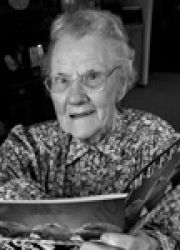
Joyce Elaine McConnon OAM
Inducted in 2007 for services to:
- Community, advocacy and inclusion
Joyce Elaine McConnon OAM
Inducted in 2007 for services to:
- Community, advocacy and inclusion
Born: 1921
(Ulverstone, Tasmania)
Passed: 2013
Joyce McConnon was born in Ulverstone and lived in Devonport, having spent her whole life on the North-West Coast. She and her late husband, Laurie, raised nine children together.
Joyce always gave her time freely to her community. She had life memberships of Our Lady of Lourdes and St Brendan Shaw College Parents and Friends Associations. A devoted Catholic, she worked many years for Our Lady of Lourdes parish where she was in charge of catering and raising much needed funds. She was also a sacristarian at Devonport's Catholic Church where she performed many duties and ensured the Priest's robes were ready for each service.
At the age of 85, Joyce was still working in a voluntary capacity for a number of community groups. Her contribution to the St. Vincent de Paul second hand shop was to iron for one morning a week, not a task for the faint-hearted! She cooked numerous Christmas puddings each year, including more than 70 for Vinnies Christmas Hampers. Joyce also helped run Bingo each week as a fundraiser in the church hall.
She had a long association with Meals on Wheels and was Secretary for more than 20 years. Joyce was a valuable member of the Meecroft Homes for the Aged Auxiliary for many years.
An enthusiastic cook, Joyce helped the Catholic Women's League cater for a 21 st birthday party. This event stirred her interest in catering and she was in charge of the McKillop Hill catering service. Her catering colleagues claimed that Joyce could estimate, almost to the final crumb, just how much food was required for each function. She also helped out with Gran's Van, a food van for the homeless.
Joyce was a long-standing member of the Catholic Women's League, first joining in Ulverstone and continuing her membership in Devonport. She was also a foundation member of the Country Women's Association in Forth. Joyce was awarded a Medal of the Order of Australia in 2002, in recognition of her outstanding community work.
Photograph courtesy of The Advocate.
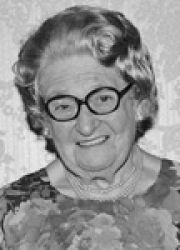
Anne McGarry OAM
Inducted in 2007 for services to:
- Arts and media
- Education and training
Anne McGarry OAM
Inducted in 2007 for services to:
- Arts and media
- Education and training
Born: 1894
(The Huon, Tasmania)
Passed: 1979
Anne McGarry was born in the Huon in 1894. She received her early piano tuition from the Sisters in the convent at Franklin. She was a well-known identity in the Huon, entertaining people by playing for silent films and dances.
After finishing her studies in Franklin, Anne taught there for about seven years before moving to Hobart to open a music practice. There were stories in the Franklin area of students who used to row across the river from Cradoc just to have lessons with Anne.
Anne went on to study through the Melbourne Conservatorium of Music and she studied for her Licentiate of Music through the Royal College of Music in London.
Anne was the first Tasmanian pianoforte tutor to be appointed at the Tasmanian Conservatorium of Music.
For many years, Anne was one of the best-known piano teachers in Hobart and she significantly contributed to the Tasmanian community through her music teaching career. Anne had a profound influence on three generations of students. Many of those students have gone on to become successful music teachers, in turn contributing to the community themselves.
By the 1960s, Anne’s reputation as a teacher had grown to the extent that one had to be a reasonably gifted musician to be considered as a potential student. Anne taught an impressive list of students and many successfully gained the highest distinction of AMEB qualifications.
However, the bond between Anne and her students went beyond teacher-pupil. Anne was much loved, as well as admired. It is therefore not surprising that some pupils brought their children, and their grandchildren, to be taught by Anne.
Anne was very much part of the musical society and contributed time to the Tasmanian Music Teachers Association and the local eisteddfod, at which they have established the Anne McGarry Award for pianists.
Illness forced Anne to retire from teaching in 1974 but that was not before she had 60 years’ of teaching experience. Hobart’s Lord Mayor gave her a civic reception at the time of her retirement.
Anne was honoured in 1975 with an Order of Australia Medal (OAM) for her years of dedication in the field of music. Such was her humour that she referred to the OAM as “Old Anne McGarry”.
Even after her official retirement, Anne still loved music, playing the piano at Mary’s Grange in Taroona and she quipped: “I play the piano every night after tea. They call me ‘bed and breakfast’ because I’m never in my room”.
Photograph courtesy of The Mercury.
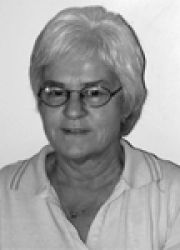
Christine O'Connor
Inducted in 2007 for services to:
- Community, advocacy and inclusion
Christine O'Connor
Inducted in 2007 for services to:
- Community, advocacy and inclusion
Born: 1951
(Burnie, Tasmania)
Christine O’Connor was born in Burnie where she still lives. She has spent the past 20 years as an advocate for Tasmanian families dependent on the timber industry for their livelihoods, and North-West families in particular.
Christine’s advocacy for the timber industry and its dependent families and communities has centred on advancing social justice and creating inter-generational equity. She advocates sustainable and renewable forestry to create jobs, giving those working in the industry, and their children, a viable future.
Whenever the need arises, Christine travels to the national capital to represent the North West community. Politicians at both state and national level acknowledge her significant contribution as an advocate for her community. She recognises the ‘multiplier effect’ of industry development, having been in a family business that provided an essential service to the offices of timber, pulp and paper companies in Burnie. Christine was aware that her family income, and that of her employees and suppliers, directly depended on a sustainable timber industry.
Christine currently works part-time in a shop in a small rural community on a tourist route, and is always ready to inform visitors of the pride she has for her region and the State.
Christine continues to make a positive and major contribution to the development of her regional community. She has hosted meetings, forums and tours to advance the region and its people. She has acted as a spokesperson in national, state and regional committees. She has been involved in the development of an empowerment process entitled ‘Women in Timber’ creating skills, knowledge and attitudes for other women to succeed in representing communities and advocating their aspirations.
Christine’s efforts are all voluntary and in many instances have cost her lost income or business opportunities. In some instances, she has used family income to travel to meetings and to represent her community.
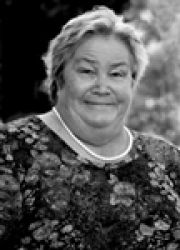
Leila (Margaret) Osborne OAM
Inducted in 2007 for services to:
- Community, advocacy and inclusion
- Sport and recreation
Leila (Margaret) Osborne OAM
Inducted in 2007 for services to:
- Community, advocacy and inclusion
- Sport and recreation
Born: 1942
(Flinders Island, Tasmania)
Margaret Osborne was born on Flinders Island in 1942 where she lived until illness forced her into hospital in Launceston. Margaret contracted polio at the age of 10 and spent 12 months recovering. She has been confined to a wheelchair for the past five years, however, her trademark “get on with it” approach has seen her break through her own barriers and contribute remarkably to the East Coast community.
Currently Break O’Day Council’s Deputy Mayor, Margaret is known to be a kind and giving woman who has been described as a role model for women on the East Coast.
Margaret’s work as a liaison officer with St Helens District High School for more than 17 years has given her an intimate knowledge of the families in the community. For this work she received a State Award for Educational Excellence in 2004.
However, Margaret’s main contribution has been her involvement in the Little Athletics Centre in St Helens. Margaret was living on the East Coast with her husband and five children in 1981 when a group of parents were involved in determining the interest in Little Athletics. At a public meeting, a committee was formed with Margaret as the inaugural Secretary of the new centre. Margaret has had a 35-year involvement with Little Athletics, including 25 years in St Helens.
Margaret then became involved with the sports complex steering committee and began working on sourcing government funding so the community could build a sporting facility where children and adults could train and compete.
Since the early days of the St Helens Sporting Complex, Margaret has been involved with the St Helens Athletics Carnival including as Secretary for the past six years. The carnival was voted National Athletics Carnival of the Year in 2005-06. Former St Helens Little Athletics member Tao Baker was State Athlete of the Year for 2005-06. Ten former St Helens Little Athletic members have competed in state teams since Margaret first started the organisation including Tamie Roney, who Margaret coached to the first Tasmanian race-walking medal at the Australian championships.
Apart from being foundation Secretary for the St Helens Little Athletics Centre, Margaret has also been Secretary, Vice President and President of St Helens Netball Association, a Tasmanian Netball Association board member, the Patron of the East Coast Vietnam Veterans Association for the past five years, and is the current St Helens Hospital Auxiliary Chairwoman. She is an augural joint Secretary of the committee for the Cancer Council’s East Coast Relay for Life, which in 2007 raised more than $53,000.
In recognition of her services to the community, Margaret has been awarded the Australian Centenary Medal (2001), Portland Council Citizen of the Year Award (1994), Break O’Day Council Citizen of the Year Award (1998), Australia Sports Medal (1998) and the Tasmanian Little Athletic Association State Service Award (2002).
Margaret was awarded a Medal of the Order of Australia in 2005 for service to the community of St Helens through a range of sporting, recreational and school organisations, and to local government.
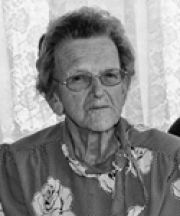
Miriam Evelyn Fairham O'Toole OBE
Inducted in 2007 for services to:
- Community, advocacy and inclusion
Miriam Evelyn Fairham O'Toole OBE
Inducted in 2007 for services to:
- Community, advocacy and inclusion
Born: 1914
(Beauty Point, Tasmania)
Passed: 26 Feb 2008
Miriam O’Toole was born at Beauty Point in Tasmania’s Tamar Valley, and moved to Beaconsfield when she was nine. She was married to Jim for 74 years and had two sons. Miriam worked in a bakery after leaving school. As it was the Depression, her money went to the family income.
At 21, Miriam started work, in a voluntary capacity, at the Beaconsfield District Hospital. A matron at the hospital commented that the sewing and patching was keeping her too busy, so Miriam volunteered to take on the job. After 70 years of voluntary service to the hospital, Miriam received a certificate of appreciation from the then Minister for Health, David Llewellyn, for her remarkable volunteering achievement. Her 70-year service also included 49 years as the auxiliary’s Secretary-Treasurer and 32 years on the hospital board, the longest serving member. Miriam also recalled helping dig dugouts at the hospital during World War II.
Miriam’s voluntary efforts for her community were many and varied. She was an active member of the Beaconsfield Football Club Ladies Committee for 25 years, a member of the Beaconsfield Tennis Club for 30 years and a member of the Beaconsfield Badminton Club for 35 years. She was very active in organising support for these organisations.
For more than 20 years, Miriam was a member of the local branch of the Red Cross until it disbanded. She was also a keen member of the local branch of Weight Watchers for 35 years and an active member of the Beaconsfield Vigaro Team during the 1930s and 40s.
She was a staunch member of the Greens Beach Golf Club for 50 years. She held the position of President for five years and received honorary membership on her retirement. Miriam was also a member of the Exeter Golf Club and in 1982 received Life Membership in recognition of her ‘outstanding service’ to the Club.
A member of the Country Women’s Association for 45 years until her local group disbanded, Miriam was also a member of the Beaconsfield War Memorial Hall Committee for 21 years and trained many Beaconsfield debutants.
Her voluntary activities also included teaching home arts for 15 years at the Beaconsfield Area School and assisting with the Beaconsfield Day Care Centre annual Christmas Dinner.
Miriam was awarded an OBE in 1982 in recognition of her outstanding service to the community.
Of her voluntary activities Miriam said: “You make a lot of friends and the work is very helpful. I will carry on until the Good Lord sends me somewhere else.” Miriam died on 26 February 2008.
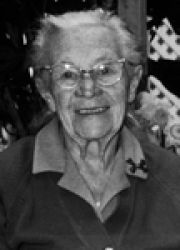
Dame Marjorie Alice Collett Parker DBE
Inducted in 2007 for services to:
- Community, advocacy and inclusion
Dame Marjorie Alice Collett Parker DBE
Inducted in 2007 for services to:
- Community, advocacy and inclusion
Born: 1900
Passed: 1991
Described as a fun person with boundless energy, Dame Marjorie Parker made an outstanding and indelible contribution to the Launceston community. Her selfless charity and social work across Northern Tasmania, in particular Launceston, helped lay the foundations for many charities and organisations that continue to assist the community today.
Marjorie was a radio announcer for women’s interests with Radio 7EX for 28 years from 1941 to 1969. She was a great publicity agent for women’s organisations such as the National Council of Women and the Soroptimists. She also co-ordinated other 7EX initiatives. The 7EX Children’s Fair was inaugurated in 1948. Marjorie took on the task of organising the fair and carried this work on until 1977. During this time, more than $500,000 was raised which benefited more than 33 charitable organisations.
In 1961, Marjorie initiated Meals on Wheels in Tasmania. The Launceston General Hospital and many volunteers provided support. This is a service very much valued by the Launceston community today.
Marjorie was a founding member of the Soroptimist International of Launceston. She was President from 1951-52. She also edited the Tasmanian Soroptimist magazine from 1954.
Marjorie was a great supporter of the National Council of Women (NCW) Launceston and was made a Life Member in 1974 in recognition of more than 31 years of devoted service to the organisation. She was also a Vice President of the National Council of Women of Australia.
Marjorie was the founder and President for 28 years of Launceston’s first crèche, which has since been named in her honour.
Marjorie was involved in a plethora of organisations and held a number of important positions, including: Northern Regional President of the Australian Red Cross Society of Tasmania (1965-68), member of the State Executive of the Tasmanian Division of the Miss Australia Quest (1964-71), founding member and Public Relations Officer of the Good Neighbour Council (1964-70), Public Relations Adviser for the Girl Guides (1954-68), Vice President of the United Nations Association Launceston (1964-68) and Life Member and President (1973-76) of the Victoria League Launceston. In 1970, Marjorie became the first woman to be elected Australian President of the Royal Commonwealth Society, and in 1973 the Society for the Care of Crippled Children made Marjorie a Life Member.
Marjorie also worked for 28 years with the Launceston General Hospital Auxiliary.
Marjorie was honoured with an MBE in 1950 and an OBE in 1970 and was granted the ‘Freedom of the City’ by the City of Launceston in 1984. In 1976, she was appointed to the Order of the British Empire – Dames Commander for distinguished community service. She regarded this as an honour not just for herself but also for those who worked with her.
Dame Marjorie Parker died in 1991. Following her death, the Soroptimists created a fund for a scholarship in her memory. She was inducted into the Launceston Hall of Fame in 2007.
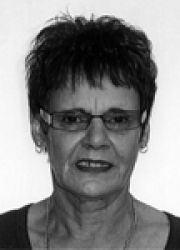
Annette Elizabeth Peardon
Inducted in 2007 for services to:
- Aboriginal or Torres Strait Islander affairs
Annette Elizabeth Peardon
Inducted in 2007 for services to:
- Aboriginal or Torres Strait Islander affairs
Born: 1949
(Whitemark, Flinders Island, Tasmania)
At the age of nine, Annette Peardon was taken away from her mother, spending her childhood in foster homes and institutions. She was punished as a child for crying and missing her mother. She disciplined herself not to cry.
Annette’s story is typical of the Stolen Generations. These were children taken from their parents and put into foster homes or institutions. Many lost contact with their family and heritage.
Annette is an Aboriginal elder and staunch activist. She has worked long and hard and has been instrumental in gaining reconciliation for the Tasmanian Stolen Generations. She has earned great respect from the Aboriginal community, members of Parliament and the community at large for her positive but tenacious fight for justice for the members of the Stolen Generations.
Annette was appointed Tasmanian co-commissioner on the Human Rights and Equal Opportunity Commission’s national inquiry into the removal of Aboriginal and Torres Strait Islander children from their families.
Annette was present when the Tasmanian Parliament acted on one of the recommendations from that inquiry by apologising to the Stolen Generations in 1997. On 13 August 1997, Annette made history by becoming the first member of the public in more than 100 years to address the House of Assembly. In an historic and moving event, then Premier, Tony Rundle, then Opposition leader and future Premier, Jim Bacon, and then Tasmanian Greens leader Christine Milne all backed the move to apologise to the Tasmanian Aboriginal people for the Stolen Generations.
Apart from official appointments and her work at the Tasmanian Aboriginal Centre, Annette has worked tirelessly on Stolen Generations issues. With Link-Up, Annette has worked for many years trying to re-unite removed children and their families.
More recently, she led members of the Aboriginal community in celebrating a major milestone - the historic passing of the Stolen Generations of Aboriginal Children Act 2006 in Tasmania. The Act enables the Tasmanian Government to provide payments to eligible members of the Tasmanian Stolen Generations from a fixed fund of $5 million.
The Act was passed unanimously in both Houses of Parliament in November 2006, evoking scenes rarely observed in 150 years of Tasmanian Parliament. It was reported that the public galleries of both the Legislative Council and the House of Assembly were crowded with onlookers who clapped, cheered and cried as politicians of all political persuasions spoke in favour of the legislation.
Similar scenes followed Annette’s address to the House of Assembly prior to the legislation being passed. Following her heart-felt speech, she put to the House:
“I cry for each and every one of us, for our community, for the parents, grandmas and grandpas. I am a survivor and I am going to ask Parliament today to please consider the bill for compensation… I am asking for the better interest of the Aboriginal children in our community, that we be together thankfully in the name of reconciliation.”
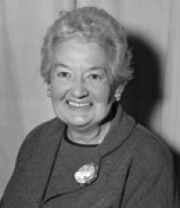
Jean Perkins
Inducted in 2007 for services to:
- Community, advocacy and inclusion
- Government (Public services and politics)
Jean Perkins
Inducted in 2007 for services to:
- Community, advocacy and inclusion
- Government (Public services and politics)
Born: 1911
(Hobart, Tasmania)
Passed: 2004
Let us show our faith in the great potential of the human race for good by doing our best to create a greater optimism in all our personal contacts. We must believe, and make others believe, that what we do does count in the sum of total life.
The above quote comes from an interview where Jean Perkins discussed her philosophy of life.
After leaving Hobart High School, Jean worked for a number of years for a large Hobart store, where she acquired book-keeping and management skills which she put to use in her community work later in life. She married Bill Perkins in 1943 and together they raised three daughters.
In the 1950s, Jean became involved with voluntary community work. She had a strong sense of social justice and concern for the disadvantaged. Her first voluntary community commitment was raising funds to build Tolosa Street Pre-School. She then became involved with the Yalambee Hostel for children with intellectual disabilities, becoming a member of its management committee and helping with book-keeping and fundraising. This work extended to the Retarded Children’s Association, with Jean serving on its Board and later becoming Vice President of the Tasmanian branch.
While working at the second hand clothing store she helped run in Glenorchy for the Association, Jean became aware of the plight of Tasmanian Aborigines and their lack of rights. She was drawn to organisations working for the betterment of conditions for those who did not have a strong voice in society, such as people with disabilities and marginalised people.
Jean was a strong opponent of the Vietnam War, and among her most treasured memories was her involvement in the anti-Vietnam War movement. She was very active in the movement and attended meetings, helped raise money for the cause and joined anti-war marches through the streets of Hobart. She was Secretary of the Vietnam Moratorium Committee (Tasmania).
Her long involvement with the Australia China Friendship Society saw her hold a number of offices, culminating in her being made a Life Member. Her commitment to friendship between Australia and China extended to her giving hospitality to visiting Chinese delegations and scholars studying in Tasmania.
Jean’s membership of voluntary organisations, often as a hard-working office bearer, was prodigious. She held Life Membership of the Retarded Children’s Association, Pre School Association, Girl Guides Association, Penguin Club of Tasmania, National Council of Women, Family Planning Association of Tasmania, Art Society of Tasmania, St Ann’s Rest Home, Australia China Friendship Society and the Australian Labour Party.
In 1992, Jean received a Human Rights Week Award in recognition of her commitment to the human rights of women, children, Aboriginals and people of non-English speaking background.
Photograph courtesy of The Mercury.
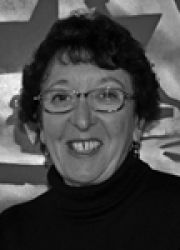
Sandra Reid
Inducted in 2007 for services to:
- Education and training
Sandra Reid
Inducted in 2007 for services to:
- Education and training
Born: 1943
(New Norfolk, Tasmania)
Sandra Reid studied at the Launceston Teachers College before finishing her Bachelor of Education by distance education. Sandra has lived and worked as a teacher on Cape Barren Island for the past 30 years. For most of this time, the Cape Barren School was the only one-teacher school in Tasmania.
One of the major programs Sandra instigated at the Cape Barren School was the unique ‘artist in residence’ program, which is still running today. Emerging and well-established artists from all over Australia are invited to spend one or several weeks within the community and work with the children from the school.
Through this residency program, Sandra has delivered outcomes in the school community well beyond the normal school curriculum. Students have been exposed to a variety of creative experiences including dance, visual arts, writing and drama.
The experience the artists bring to the island has been invaluable for such an isolated community. Apart from benefiting the students and community of the island, the residency program is also assisting artists to acquire a better understanding of life in a remote community and to break down barriers between indigenous and non-indigenous people.
For much of the time, Sandra is solely responsible for teaching, administration and activities relating to the running of the only school on the island. She undertakes her responsibility with vision and innovation.
Sandra has been an inspiration for the young women on Cape Barren Island as well as to artists and teachers in the wider community. Through her work in education, her dedication to the community and her belief in the importance of creativity, Sandra has promoted equal opportunities for Aboriginal students and made a difference for many students through the opportunities provided.
Sandra’s professional life often merged with voluntary social activities outside school hours, such as dinner dances, bonfires and plays that bring the community together. Sandra’s ongoing commitment to her students was recognised in 2002 with a Learning Together Award for Educational Excellence for her outstanding contribution to education in an isolated community.
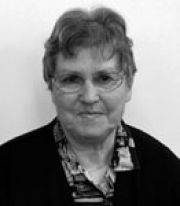
Carlene Vickers
Inducted in 2007 for services to:
- Arts and media
Carlene Vickers
Inducted in 2007 for services to:
- Arts and media
Born: 1938
(Devonport, Tasmania)
Passed: 5 Jul 2019
Carlene Vickers attended Devonport High School and then went onto the University of Tasmania.
Carlene moved to the West Coast in 1961 and taught at various West Coast schools for 17 years. She taught in primary and special schools as well as child migrant education.
Her list of community involvement includes the Zeehan Hospital Auxiliary, the Catholic Women’s League and Parents and Friends Associations. However, her predominant contribution to community has been in the area of the arts and in particular the restoration of the Gaiety Theatre in Zeehan.
The once-famous Gaiety Theatre drew world-class acts and tourists to the town. Built in 1898 for entrepreneur Edward Mulcahy during the glory days of West Coast mining, the 1000-seat Theatre was one of the biggest in Australia and regularly drew international acts such as Harry Houdini and the All Male Welsh Choir.
The Gaiety Theatre is historically very significant for both Zeehan and Tasmania because it is one of the few remaining late Victorian combined theatre and hotel complexes in Australia.
Carlene is a founding member and current Chairwoman of Friends of the Gaiety which was formed in 2000. This small group led by Carlene decided to restore the Gaiety Theatre to its former glory.
The group has been very successful in raising funds. Ongoing fundraising and grant accession has seen approximately $120,000 spent on the restoration. From this, the Theatre itself has been tastefully refurbished as has the dining room, two billiard rooms, three shop fronts, hotel bar and atrium. There are displays regarding the importance of the role of women on the West Coast and an art gallery.
All the hard work paid off for the Friends of the Gaiety in April 2006 when the Gaiety Theatre was officially re-opened by former Governor, Sir Guy Green. West Coast Mayor Darryl Gerrity, said the Theatre’s restoration gave the town a second chance to be on the cultural map and the capacity to once again attract big events.
Carlene is also well known in art circles for her work as an exhibiting member of the Arts Society of Tasmania and the Australian Society of Miniature Art.
Carlene has devoted her skills, her professional attitude and a great deal of her time to the communities of the West Coast. Tourism to the area is greatly enhanced by her efforts. She has deepened community links and enhanced a sense of purpose and pride in what can be achieved by community groups with commitment to a vision.
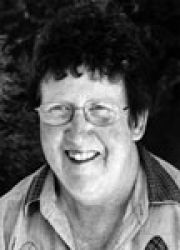
Janet (Jan) Walley OAM
Inducted in 2007 for services to:
- Sport and recreation
Janet (Jan) Walley OAM
Inducted in 2007 for services to:
- Sport and recreation
Born: 30 Mar 1942
Passed: 23 Mar 2020
Jan Walley has made an outstanding contribution to sport, particularly netball and billiards. Many who have worked with her have benefited from her leadership and administrative skills. She has supported participation, organised events, trained umpires, marketed women’s sport and helped others achieve and enjoy sport.
Since 1957, Jan has held many administrative positions within the Northern Tasmanian Netball Association including: Association Treasurer, Secretary, Games Secretary, President, Vice President, Acting Finance Officer, and Finance Director. Jan was also the association’s umpires convenor in 1982 and 1987 and held many clinics for umpires.
Jan served on the steering committee for the Tasmanian Netball Centre complex and was instrumental in getting this international standard facility built in Launceston. It is regarded as one of the most modern outdoor netball facilities in Australia.
Jan has also worked hard to improve the profile of netball in Tasmania through the media. She has been actively involved in getting great coverage of the sport.
Jan served for 26 years as a member of the Board of Management of the All Australia Netball Association – a national body for netball in Australia. During this time, she dedicated herself to numerous important roles including serving as a member of the Management Committee (1985-87), the Finance Committee (1985-87) and the Marketing Board of Management (1985-86); and as Convenor of the Coaching Development Committee (1982-83 and 1987-89). She also convened numerous national events between 1982 and 1994. Jan also served as the All Australia Netball Association’s delegate and liaison officer to the Tasmanian Netball Association for 26 years.
Besides netball, Jan has held various positions within the ranks of billiards and snooker associations. She was Northern Tasmanian Association Treasurer, Secretary and Vice President. She then became the first woman in the history of Australian billiards and snooker to take on the position of President, which she held for five years.
Jan worked for 27 years with the Tasmanian Government’s northern Office of Sport and Recreation. In the role of Program Support Officer, she further assisted many peak Tasmanian sporting bodies and organisations.
In 2000, she volunteered to assist at the Sydney Olympics with drug testing in sport. In the same year Jan was awarded a Medal of the Order of Australia for service as a sports administrator, particularly to netball in Australia, and received the Australian Sports Medal for umpiring and administration and being involved in nationals for many years.
Since her retirement, Jan has gone on to become a Justice of the Peace. She voluntarily works as a register for the Honorary Justices Association of Tasmania Inc.