
The following 32 members of the Tasmanian Honour Roll of Women were inducted in 2006.
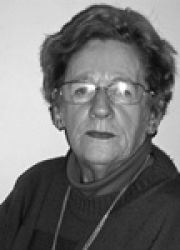
Patricia (Pat) Ahearn
Inducted in 2006 for services to:
- Community, advocacy and inclusion
- Education and training
Patricia (Pat) Ahearn
Inducted in 2006 for services to:
- Community, advocacy and inclusion
- Education and training
Born: 1930
(Launceston, Tasmania)
Pat Ahearn, the eldest of two girls, was educated at Sacred Heart College where she was inspired by Sister Teresa and Sister Imelda to enter into a teaching career.
Pat provided leadership, training and professional development and innovative initiatives throughout her 44 years in early childhood education.
Early in her teaching career Pat spent a year on exchange in the United Kingdom and was sent by the Tasmanian Education Department on a six-month study tour to the UK and America. While in the UK she studied at the Institute of Early Childhood Education attached to the University of London.
In America, Pat became convinced of the value of involving parents in the education process and on her return to Tasmania gained funding to build a parents’ room at the Mowbray Heights Primary School where all parents and teachers could meet. This new concept proved invaluable to both parties.
Another initiative by Pat and her colleagues was the development of the Emily Browne Group. Pat and her teaching colleagues believed all children should be given an understanding of the history of the community in which they live. The Emily Browne Group wrote, illustrated and published books for children that were a wonderful depiction of colonial life in convict times.
The last 15 years of Pat’s teaching career were spent at Glen Dhu Primary School. As a testimony to her extraordinary work and dedication, an extension to the school was named in her honour.
Pat is much revered for her significant contributions to Tasmanian heritage, culture and the arts, as well as her commitment to many community organisations. Some of these roles include: C chairperson of the Franklin House Management Committee; a volunteer in the History Department at the Queen Victoria Museum and Art Gallery; a Friend of the Library; a member of the Australian Federation of University Women; a member of the World Education Fellowship; Life Member of the Tasmanian Early Childhood Senior Staff Association; and a Life Member of the Glen Life Group, an organisation that raises funds for children in need.
Pat’s love of literature has resulted in publications on the life of remarkable women including Broadland House Girls’ School headmistress Miss Rooney, and the last member of the Hawkes family of Franklin House, Charlotte Hawkes.
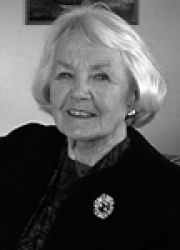
Mavis Beven
Inducted in 2006 for services to:
- Arts and media
Mavis Beven
Inducted in 2006 for services to:
- Arts and media
Born: Jul 1928
(Hobart, Tasmania)
At the age of 11 Mavis Beven sang for troops at the old Brighton camp and after a period as a child entertainer, she undertook vocal training. At the age of 22 she began her career as a soprano performing both locally and nationally under her maiden name, Mavis Brinckman.
For the next 34 years, Mavis performed in many leading roles for the National Theatre and Fine Arts Society, the Elizabethan Trust Opera, the Theatre Royal Light Opera Company, ABC Television, the Tasmanian Opera Company, and the Tasmanian Conservatorium of Music.
Mavis was one of Tasmania’s leading sopranos from the 1950s to the 1980s. She has made an outstanding contribution to the musical and theatrical life of Tasmania. In the 1950s she was offered the opportunity to join the Elizabethan Trust Opera (forerunner to Opera Australia) as a soloist. However, with a young family, she decided to stay in Tasmania, ensuring Tasmanian musical and theatrical audiences could enjoy an artist of national quality.
As well as continuing her professional career in Tasmania, Mavis performed concerts for the Derwent Regional Library from 1980-94 and for many years has delighted residents at the Glenview Home for the aged with her performances.
Mavis has been an active member of the City of Hobart Eisteddfod Society since 1980. She has performed many roles during that time and has been awarded life membership of the Society. Mavis is also a Life Member of the Arts Club, Hobart, and has served in a number of roles within that organisation.
Mavis is well respected within the Tasmanian musical and theatrical communities and has inspired and supported many young artists who have gone on to acquire national and international success.
Although retired from her professional stage career, Mavis and her husband perform at an annual concert at Wrest Point Casino that always draws a large and appreciative audience.
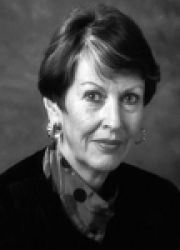
Frances (Fran) Bladel
Inducted in 2006 for services to:
- Community, advocacy and inclusion
- Education and training
- Government (Public services and politics)
Frances (Fran) Bladel
Inducted in 2006 for services to:
- Community, advocacy and inclusion
- Education and training
- Government (Public services and politics)
Born: 1933
(Hobart, Tasmania)
Passed: 6 Dec 2023
Fran Bladel has been and is an inspiration to the women of Tasmania because of her courage, her principles, her honesty, her community service and her tireless pursuit of social justice. - Antje Fox, 2006
Fran Bladel was born in Hobart and grew up in Moonah during the last years of the Depression. Fran attended the local Catholic primary school where she first became aware of the strengths, contradictions and prejudices of different groups of people. She attributes her strong commitment to social justice to these early influences.
At the age of 15, Fran began work in a studio in Hobart as an assistant to a Russian portrait photographer. The post-war migration of Europeans who had lost their homelands brought Fran in contact with a diverse range of people, and in 1954 she married a young German immigrant. She was widowed after seven years and raised her son by herself.
Being the ‘sole bread-winner’ exposed Fran to the hardships faced by women in low-paid jobs. She also had to rely on the generosity of family members or neighbours for child care. These early experiences influenced her later political career.
After gaining a studentship, Fran graduated with a Bachelor of Arts (Hons) from the University of Tasmania in 1969 and became a teacher.
Fran experienced many highlights in her teaching career, most notably her shared leadership of the Tagari Project School from 1973-77. She also taught at the Women’s Prison in a voluntary capacity in 1978. There were few resources available and the library was located in the Men’s Prison, so Fran provided a number of resources herself.
Between 1977 and 1986, Fran was the senior mistress for English studies at Bridgewater High School. She has become a lifelong advocate for that community.
In 1986, Fran was elected to the Tasmanian Parliament. She was the Chairperson of the Parliamentary Labor Party’s Inquiry into Women’s Affairs in Tasmania in 1987 and continued to champion equality for women throughout her parliamentary career. From 1989-92 and 2001-02, she was Minister for Consumer Affairs, Administrative Services, Minister for Construction, and Minister assisting the Premier on the Status of Women.
Throughout her life, Fran has been a volunteer, an advocate and an active member of many community organisations.
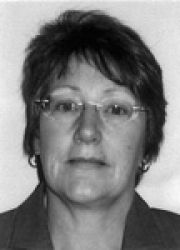
Geraldine Mary Brown
Inducted in 2006 for services to:
- Sport and recreation
Geraldine Mary Brown
Inducted in 2006 for services to:
- Sport and recreation
Born: 1949
(Launceston, Tasmania)
Geraldine Brown spent her childhood years at Beauty Point, on the West Tamar. She attended Beaconsfield Primary School, Launceston High School, Launceston Matriculation College and the University of Tasmania. From a young age she participated in a variety of sports, and was constantly encouraged by her sport-orientated family.
Geraldine has made her mark as an elite sportswoman in the sports of badminton and squash. She spent her high school years playing badminton at junior tournament level and progressed to the national level, winning the Australian Under 19 Mixed Doubles competition. She went on to represent Tasmania and Victoria at a national level over a period of 20 years.
Geraldine’s career wins have included holding the Tasmanian Ladies’ Doubles title 14 times; the Tasmanian Mixed Doubles title six times; and the Australian Open Ladies’ Doubles title twice. Geraldine has represented Australia five times, competing against New Zealand, India, Indonesia, England and a touring Chinese team.
Geraldine started playing squash to improve her fitness level and went on to represent Tasmania in this sport on several occasions and represented Australia in a masters tournament.
In her latter competitive years, Geraldine began coaching junior state teams in both badminton and squash. Since retiring from competition she has become involved in both administration and management of badminton and squash in Tasmania.
She was the Manager of the Olympic Badminton Team in 2004, Manager of the Commonwealth Games Badminton Team in 2002, managed the Thomas Cup Team in 2002 and 2004, the Uber Cup Team in 2002 and 2004, the Whyte Trophy Team in 2003, and the Oceania Championships Team in 2002.
Geraldine has been both a state and Australian selector in badminton. She is currently on the boards of Badminton Australia and the Australian Commonwealth Games Association.

Beverley (Bev) Buckingham
Inducted in 2006 for services to:
- Sport and recreation
Beverley (Bev) Buckingham
Inducted in 2006 for services to:
- Sport and recreation
Born: 1965
(Norfolk, England)
Bev Buckingham migrated to Australia with her parents when she was two years old. She grew up in north-west Tasmania, where her father trained racehorses. Bev pursued her love of thoroughbred horses throughout her childhood through pony club, riding lessons, track work and by helping her father in his stables.
Bev left school in 1979 to become an apprentice jockey in her father’s stable at Wesley Vale. She had her first race ride in October 1980, just a fortnight after Alison Anderson had made history as the first woman to race against men in Tasmania. Until 1979, the Australian racing clubs had not allowed women to become fully fledged jockeys.
On her fourth ride, at Elwick Racecourse, Bev rode Limit Man to an easy win, becoming the first woman to ride a winner against all comers in Tasmania. At the completion of her first season’s racing, Bev had ridden 22 winners and was ranked ninth on the overall jockey’s table. In 1982, she won the Tasmanian Jockeys’ Premiership, making her the first woman in the world to win a State Jockeys’ Premiership. She achieved this at the age of 17, in only her second season of racing, with 63 winners.
Bev had many highlights throughout her racing career, riding a total of 906 winners in 18 years. Throughout the 1980s and 90s she won, amongst others, the Devonport Cup, the Launceston Cup and the Queen’s Cup. She won the Hobart Cup three times - in 1986, 1996 and 1998. In 1984, Bev also became the first woman to ride in the Caulfield Cup.
Bev’s riding career ended after a tragic fall on 30 May 1998, in which she fractured two vertebrae in her neck. Despite being told by doctors that she would never walk again, Bev has proven herself to be a winner against all odds by regaining the use of her legs. She gave birth to her daughter in 2000 and is once again enjoying recreational riding.
In 2005, Bev was inducted into the inaugural Tasmanian Racing Hall of Fame. She has also fulfilled a long-held ambition of joining her father as a racehorse trainer.
Photograph courtesy of The Mercury.
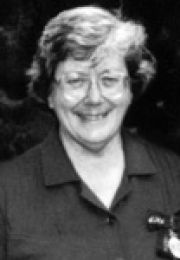
Mary Cameron AM
Inducted in 2006 for services to:
- Science, technology, mathematics and research
Mary Cameron AM
Inducted in 2006 for services to:
- Science, technology, mathematics and research
Born: 1925
(Launceston, Tasmania)
Passed: 2001
Mary Cameron was educated at East Launceston Primary School and Methodist Ladies’ College. She gained her Bachelor of Science with a major in botany from the University of Tasmania in 1947, and became a lifelong friend of botanist Dr Winifred Curtis. Mary was a demonstrator in botany at the University in 1947 and 1948. She later obtained a Secondary Teachers Certificate and became an Associate of the Library Association of Australia.
Mary married in 1949 in Launceston and worked as a secondary school science teacher and a reference librarian while raising a family of six children.
After commencing work at the Queen Victoria Museum and Art Gallery as Honorary Museum Botanist in 1972, she was appointed Honorary Research Associate in Botany in 1986 in recognition of her substantial contribution to the Museum. This is the highest level of recognition given by the Museum to those who have made a substantial contribution to its activities. In her 30 years at the Queen Victoria Museum and Art Gallery, Mary maintained and curated the Museum’s significant herbarium collection.
Mary was a Life Member of the Launceston Field Naturalists Club and the Tasmanian Conservation Trust, Chairman of the Royal Society of Tasmania (northern branch), and a member of the Australian Heritage Commission Tasmania elevation panel and the Tasmanian Parks and Wildlife Service Flora Advisory Committee.
Mary wrote and edited many publications including editing the Launceston Field Naturalists Club’s most successful field manual, A Guide to Flower and Plants of Tasmania, first published in 1981. This is now in its eighth printing and third edition. She was also the co-author of a number of articles on Tasmanian flora. She supervised and participated in a number of museum research projects, which included natural history surveys and vegetation reports.
In 1993, Mary was appointed a member of the Order of Australia for services to botanical and environmental conservation. In 1999, she received the Australian Natural History Medallion for her contribution to furthering knowledge and understanding of Australian flora.
Mary continued working in a voluntary capacity maintaining and curating the Museum’s herbarium until shortly before she passed away in 2001.
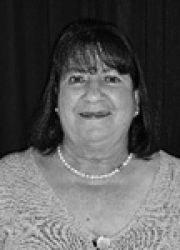
Patricia (Aunty Patsy) Cameron
Inducted in 2006 for services to:
- Aboriginal or Torres Strait Islander affairs
- Cultural heritage
- Education and training
Patricia (Aunty Patsy) Cameron
Inducted in 2006 for services to:
- Aboriginal or Torres Strait Islander affairs
- Cultural heritage
- Education and training
Born: 1947
(Launceston, Tasmania)
Patsy Cameron is an Aboriginal Elder who has consistently worked towards improvement in opportunities and achievements in Aboriginal education during the past 30 years. Born in Launceston, Patsy grew up on Flinders Island and still has strong cultural and spiritual connections to the island.
As the inaugural member for Tasmania on the National Aboriginal Education Committee, Patsy established the Tasmanian Aboriginal Education Consultative Group (TAECG), which later became incorporated, and is now known as TAEA.
Patsy has had a long and impressive association with the University of Tasmania. She was involved in the establishment of the Centre for Aboriginal Research and Education (CARE), which is now known as the Riawunna Centre for Aboriginal Education. She was deputy head of the Riawunna Centre in Launceston for a number of years. Significant achievements during this time included the development and implementation of Aboriginal Studies as a major course, guest lecturing in several faculties at the University and assisting in the increase of access, participation and success for Aborigines in higher education.
Another key initiative at the University of Tasmania Patsy has been involved with is teaching the Cultural Studies and Development unit in the Murina program which offers a pathway course for Aboriginal people who want to move into undergraduate degree courses.
In her former role of Aboriginal Employment Strategy coordinator, Patsy worked diligently to promote the employment of Aborigines statewide at the University of Tasmania. In this role Patsy also provided direct assistance to the development and delivery of Aboriginal cultural safety training to staff and students, and the general community.
Patsy has helped establish other Aboriginal organisations and events such as the Flinders Island Aboriginal Association, as well as displays at the Queen Victoria Museum and Art Gallery, and the Aboriginal garden and sculptures at the University of Tasmania, Launceston campus. As an Aboriginal Elder, Patsy believes it is important to pass on her knowledge of Tasmanian Aboriginal culture and history to other Aboriginal people, and actively endeavours to do so.
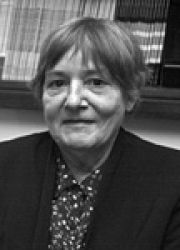
Enid Campbell AC OBE
Inducted in 2006 for services to:
- Education and training
Enid Campbell AC OBE
Inducted in 2006 for services to:
- Education and training
Born: 1932
(Launceston, Tasmania)
Passed: 20 Jan 2010
Enid Campbell graduated dux of Launceston Methodist Ladies’ College before enrolling in economics and law at the University of Tasmania. Enid shared the top law student prize when she graduated in 1955. She accepted a scholarship to Duke University in North Carolina as a means of continuing her studies overseas and achieved a PhD that included the study of international law, jurisprudence and public administration.
Enid returned to the University of Tasmania in 1959 and lectured in political science and law. In 1960, she accepted an offer to teach law at the University of Sydney. In 1967, she was appointed the Sir Isaac Isaacs Professor of Law at Monash University and held that position until her retirement in 1997. She was awarded an Order of the British Empire in 1979.
Enid became the first female dean of a law faculty in Australia when she was appointed Dean of Law at Monash University. In 1990, to celebrate the University of Tasmania’s centenary, Enid was one of five graduates to receive the degree of Doctor of Laws honoris causa. She was subsequently awarded an Honorary Doctorate in Law from both the University of Sydney and Monash University.
Enid served on many significant bodies including the Royal Commission on Australian Government Administration in 1974 and the Constitutional Commission for the Australian Bicentennial. She was also the author or co-author of a number of books and more than 100 scholarly articles in Australian and international law journals. Her reports and conference papers covered a diverse range of topics.
Emeritus Professor Enid Campbell was recognised as one of Australia’s leading scholars in constitutional law and administrative law. Although she officially retired in 1997, she remained an active and influential researcher and continued to publish learned works at the highest level. She was appointed Companion of the Order of Australia in 2005.
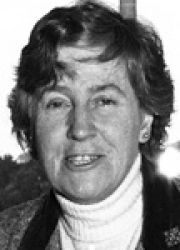
Maida Coaldrake
Inducted in 2006 for services to:
- Education and training
Maida Coaldrake
Inducted in 2006 for services to:
- Education and training
Born: 1919
(Queenstown, Tasmania)
Passed: 31 Jan 2010
Maida Coaldrake moved to Launceston with her family when she was in primary school. She received a scholarship to attend the Methodist Ladies’ College in Launceston in 1930 and graduated as dux in 1936. She was Vice-Captain of the school and was awarded many prizes during her school years. In 1935, she gained the University Prize for English and in 1936 was awarded two literacy scholarships by the University of Tasmania and the University Prize for physiology and hygiene.
Maida undertook tertiary study in Tasmania at a time when it was unusual for women to pursue an academic career. She was one of only five full-time female students at the University of Tasmania in 1937 and was editor of the University of Tasmania’s Togatus. After graduating with a Bachelor of Arts, she moved to Melbourne to research her masters thesis on Tasmania’s role in the constitutional movement.
After her marriage in 1949, Maida lived in Japan for seven years where her husband was working as an Anglican missionary priest in Yokohama. Since returning to Australia in 1956, she played a leading role in Japanese studies. She took up a position as senior tutor in history at Sydney University and at the same time established the University’s first Japanese language and history course.
Maida returned to Tasmania in 1974 as senior lecturer of history at the University of Tasmania and was responsible for the establishment of courses in Japanese language and history. She continued to hold senior positions at the University of Tasmania until her retirement in 1984.
In her retirement, she completed her doctoral thesis on intellectual revolutionary movements and personalities in pre-modern Japan. She was Visiting Professor to Sophia University in Japan, an institution she was associated with since 1974. In 1997, Maida was awarded an honorary degree, Doctor of Letters, from the University of Tasmania.
Maida was awarded one of the highest honours conferred by Japan. On 5 December 1997, she received the Order of the Precious Crown (Wistaria level) by His Majesty Emperor Akihito for her contribution to the promotion of the studies of Japanese history and language. The order of the Precious Crown is the equivalent of a British knighthood and it is rare for a foreigner to be honoured in this way. Maida Coaldrake died on 31 January 2010.

Donna Cowen
Inducted in 2006 for services to:
- Community, advocacy and inclusion
Donna Cowen
Inducted in 2006 for services to:
- Community, advocacy and inclusion
Born: 23 Dec 1959
Donna Cowen is known as the ‘Queen of Goodwood’ due to her tireless community work. She is president of the Goodwood Community Centre and successfully runs many programs through the Centre. Through her enthusiasm and drive, the Centre has developed strong links and partnerships with the Glenorchy City Council, Tasmania Police, the Goodwood Neighbourhood Watch, local businesses and the community in general.
She actively assists in planning and preparing meals for senior members of the community who attend the Centre and ensures many community-based organisations regularly use the Centre.
Donna was one of the first people to volunteer her services to assist in the development of the Goodwood Together Group. The Group was established in 2004 to work in close association with other Goodwood organisations to help build a stronger community.
Donna is the coordinator of Goodwood Neighbourhood Watch and works to promote crime prevention. She also works with a number of agencies including Tasmania Police and local businesses on strategies to make the community a safer place to work, live and play.
Donna has also been involved with the Goodwood Community Precinct, holding the positions of convenor and acting convenor and her skills in drawing the community together led to the precinct becoming one of the most active in Glenorchy.
Donna is very active in the youth movement, in particular supporting the Goodwood Youth Taskforce. She actively assists in planning events such as youth discos, quiz nights and the painting of murals. Her support and belief in young people has resulted in the Goodwood Youth Taskforce becoming one of the most successful youth taskforces within the Glenorchy City Council’s Youth Participation Program.
Donna was recently made a Life member of the Goodwood Parents and Friends Association for her longstanding commitment to the students of Goodwood Primary School and is currently heavily involved in organising fundraising activities for the school.
In 2004, Donna was awarded the Glenorchy Citizen of the Year and in 2005 she was awarded a Certificate of Commendation by Tasmania Police in the Tasmanian Crime Prevention and Community Safety Awards.
Margaret Francis Dare
Inducted in 2006 for services to:
- Community, advocacy and inclusion
Margaret Francis Dare
Inducted in 2006 for services to:
- Community, advocacy and inclusion
Born: 6 Aug 1969
(Queenstown, Tasmania)
Margaret Dare grew up on the West Coast of Tasmania where she is now bringing up her own family.
Over many years, Margaret has become well known through her extraordinary commitment to the people of the West Coast, particularly young people. She feels strongly that young people need support and somewhere to go to be with peers. During the past seven years, through her voluntary efforts, Margaret has fulfilled her dream of creating a haven for youth on the West Coast.
Margaret’s passion for helping and supporting young people led her to raise thousands of dollars for the Queenstown Squash and Fitness Centre Youth Room, which gives young people somewhere to go to be with their peers and participate in supervised activities. Margaret is also the President of the Youth Room and is involved in the day-to-day running of the Centre which involves diverse tasks such as marketing, hand-on youth work, events management and financial management.
The Youth Room has been furnished especially for young people with multi-coloured walls and colourful couches, and it provides a range of activities for youth where volunteer adults supervise activities.
Margaret’s other voluntary work includes driving school buses for the Mountain Heights School and St Josephs’ School in Queenstown, working as a voluntary Australian Tax Help Agent, being an office manager for the Queenstown Squash and Fitness Centre and involvement with Targa Tasmania in a voluntary capacity.
Margaret has also been involved with the Lyell Neighbourhood Watch since it began in 1999, taking on the role of Secretary. She is now the coordinator of this group.
Margaret is currently studying and raising a family as well as carrying out many diverse voluntary roles.
Her commitment to the West Coast and the Queenstown community and her work with the Queenstown Squash and Fitness Centre Youth Room were recognised in 2003 when she was awarded the Centenary medal for Service to the Community.
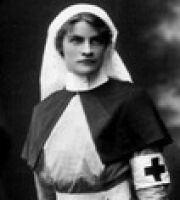
Clare Deacon
Inducted in 2006 for services to:
- Health
Clare Deacon
Inducted in 2006 for services to:
- Health
Born: 1891
(Pipers River, Tasmania)
Passed: 1952
Clare Deacon had three sisters and a brother. Their aunt and uncle raised Clare and her youngest sister, Henrietta after the early death of their mother.
From an early age Clare spoke of her ambition to be a nurse upon her completion of school. She became a trainee nurse at the Royal Hobart Hospital and after completing her exams had a few years’ experience before World War I was declared. Clare was one of the first nurses from the Royal Hobart Hospital to offer her services and she embarked for Egypt on the Kyarra with the first contingent.
On reaching Egypt Clare was deployed to Mena House, a palace converted into a hospital, in Cairo, near the pyramids, and the training grounds for the Australian Light Horse Regiments.
Clare nursed many of the wounded from Gallipoli through the hot summer in scorching temperatures reaching 117ºF at a time when nurses had to wear ankle-length uniforms.
In 1915, Clare was promoted to Sister and relocated to England before being sent to France to join the 2 nd Australian General Hospital. As many wounded were dying on the way to the hospital, it was decided to move doctors and nurses nearer to the front line.
On the night of 22 July 1917, while Clare was serving with the 2 nd Australian Casualty Clearing Station at Trois Arbres near Armentieres, an air raid warning was sounded. Rather than taking shelter in the bunkers Clare, who was off duty at the time, and two other nurses ran into the hospital to rescue patients. They risked their lives by evacuating them from the burning buildings while the station was being bombed.
Later in England, Clare was awarded the Military Medal which was personally pinned on by King George V. Only seven nurses out of 2,600 serving Australian nurses received this distinction. Clare was the only Tasmanian woman to receive this medal.
She was also awarded the 1914/15 Star, the British War Medal and the Victory Medal and is listed in the Dictionary of Biography of notable Australians.
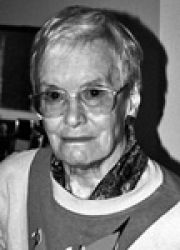
Marie Edwards
Inducted in 2006 for services to:
- Arts and media
Marie Edwards
Inducted in 2006 for services to:
- Arts and media
Born: 1925
(Stanley, Tasmania)
Passed: 2005
I study the human psyche in all its roles within the world environment but my work is purely visual and comes from my spiritual consciousness. It is intuitive and words prove meaningless. …My aim is to discover the unknown. - Marie Edwards, 1992
Marie Edwards was attracted to painting as a young girl. After raising a family and studying fashion drawing and design she enrolled at the Tasmanian School of Art and was awarded a certificate in Fine Art (Painting) followed by a Diploma in Fine Art in 1973.
A seven-day summer school with John Olsen, where she was introduced to concepts like ‘ taking the line for a walk’, and ‘looking at the landscape as if you were flying’, and an art study tour of Europe and America with Leon Paroissien and Bernice Murphy completed the picture. Marie found she had committed herself to painting in a modernistic international style, in many ways foreign to her environment, especially as a woman artist.
Marie was at the forefront of a new generation of forward looking women who put female art on the map in Tasmania when women artists were in short supply elsewhere in Australia. She was a pioneer in the field of contemporary abstract art and also women’s art.
Diagnosed with Parkinson’s disease in 1981, Marie found herself no longer able to continue experimenting with new international large canvas techniques. Life became a constant challenge, but she never gave up, right to the end. She was actively involved in Parkinson’s groups and supported Parkinson’s research, even volunteering to take part in research studies in her last year.
In 2003 she donated her personal collection of paintings and drawings to the University of Tasmania Foundation to establish a perpetual scholarship, so other artists could live the dream of post graduate study in Europe.
During her lifetime her work was hung widely in solo and group exhibitions, including the Robin Hood 18 th International Art Competition and the Blake Religious Prize in 1979. Her works are held by the Tasmanian Museum and Art Gallery, Queen Victoria Museum and Art Gallery, University of Tasmania Fine Arts Collection and a number of private collections throughout Australia and overseas.
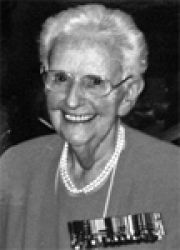
Nellie Jane (Nell) Espie AM
Inducted in 2006 for services to:
- Health
- Veterans
Nellie Jane (Nell) Espie AM
Inducted in 2006 for services to:
- Health
- Veterans
Born: 1924
(Oatlands, Tasmania)
Passed: 15 Aug 2016
Colonel Nell Espie, AM, RRC, FRCNA, trained as a nurse through the 1940s. After a number of years nursing, Nell was able to fulfil her ambition to be an Army nurse when the Korean War broke out.
She was commissioned as a Lieutenant with the Royal Australian Army Nursing Corps (RAANC) and posted to Ingleburn, NSW, in 1951. She went on to be a Ward Sister and Charge Sister in Japan, Korea, Duntroon, Malaya, Queensland and Victoria. In 1969 Nell became Matron of the Australian Field Hospital, Vung Tau in South Vietnam. She describes this position as the most rewarding experience of her career.
In the course of a distinguished career Nell was promoted through the ranks to Captain, Major, Lieutenant Colonel, Colonel Director of Nursing Services – Army, Queens Honorary Nursing Sister, and in 1980, Honorary Colonel and Representative Honorary Colonel, RAANC. By the time she was discharged from the Army in 1981, after 30 years’ service, she was Matron in Chief of the RAANC and Director of Army Nursing.
After her retirement, Nell continued to take a very active role in the RAANC Association. She established a state branch in Tasmania, serving as National President from 1990 to 1994 and became a Life Member in 1997.
Nell has been a driving force behind many committees such as the Florence Nightingale Trust, of which she is still an active member. She has worked tirelessly to assist many veterans, war widows and dependants in obtaining their entitlements through the Department of Veteran Affairs.
Nell has received many awards both during her military career and since her retirement in 1981. Her Australian honours include a National Medal (1977), Royal Red Cross (1978), Member of the Order of Australia (1992), and the Centenary Medal in 2001.
Her long-time involvement with the Returned and Services League of Australia (RSL), Oatlands Sub-Branch (over 50 years), has seen her serve as their Treasurer (1983-87) and President (1988-2004). She was made a Life Member of the RSL in 1995 and received a Meritorious Service Medal in 2004.
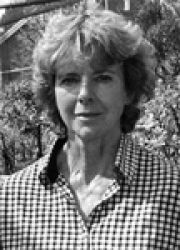
Lynne Farrell
Inducted in 2006 for services to:
- Science, technology, mathematics and research
Lynne Farrell
Inducted in 2006 for services to:
- Science, technology, mathematics and research
Born: 1944
(Launceston, Tasmania)
Lynne Farrell was the youngest daughter of a large family and raised in Longford. After obtaining high achievements at high school in Launceston she embarked on a tertiary degree in veterinary science, beginning her studies in Tasmania and later transferring to Sydney University.
She was the first female veterinary surgeon to practice in Tasmania, paving the way for acceptance of female veterinary practitioners. There are many stories of Lynne working in the Deloraine area in her tidy shirt, tie and apron, calving cows that had stumped large male farmers.
Lynne and the late Simon Ranicar were pioneers of Angora goat genetics in Tasmania. Unusually for the time, in the 1970s and 1980s Lynne was performing embryo transfer in goats.
After the death of her husband, Robert, Lynne was left to raise her son, Fergus. She continued her veterinary practice in Launceston and was well respected as a soft tissue surgeon with a special interest in ophthalmology. She performed surgical techniques that were usually the domain of mainland specialists at the time.
Lynne then married Neale Farrell (Brown Mountain Nursery) and through him developed a deep interest in the art of bonsai. After his sudden death, Lynne single-handedly ran the Tasmanian Bonsai Centre in Riverside, Tasmania.
To further her expertise, Lynne applied for, and was awarded, a Churchill Fellowship to study bonsai in Japan under the Master Sasumu Nakamura. Since her return, she has shared her enthusiasm for this ancient art by teaching bonsai at the Bonsai Centre and through adult education classes. Lynne has also widely exhibited bonsai in the Launceston area.
As well as inspiring and paving the way for women in non-traditional career choices, Lynne has always given back to the community and supported others through volunteer work such as Meals on Wheels.
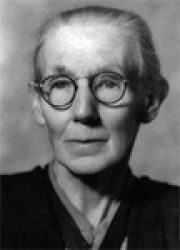
Mary Elizabeth Gertrude Fox MBE
Inducted in 2006 for services to:
- Education and training
- Sport and recreation
Mary Elizabeth Gertrude Fox MBE
Inducted in 2006 for services to:
- Education and training
- Sport and recreation
Born: 1877
(Ross, Tasmania)
Passed: 1962
Mary Fox was not only a good administrator – wise, progressive and far-sighted, but she was a true educator. - Rev. Cook, 1962
Born at Horton College, Ross, Mary Fox was educated at the Launceston Ladies’ College and graduated from the University of Tasmania with a Master of Arts. In 1903, at age 26, Mary was appointed the Headmistress of Launceston Ladies’ College, later to be known as the Methodist Ladies’ College.
She was greatly admired both as a teacher and headmistress. As well as her administrative duties, she taught English, French, Latin, history and geography as well as giving scripture lessons on Sunday.
When Mary took over as Headmistress of the College, enrolments were down to 30. They had risen to 300 by the time of her retirement. She also oversaw an extensive building program, formed the Old Collegians Association (of which she was President) and introduced the house system in 1925 to encourage leadership among the students.
In 1929, she established a domestic science program, 25 years earlier than the program was offered in other schools. In the same year, she set up a branch of the Junior Red Cross Society in the school to enable the girls to raise money for charity.
In 1925, she formed the Association of Headmasters and Headmistresses of Independent Schools as a basis for future discussions and decision making in school policy. She was an active member of the Examinations Committee and the Musical Advisory Board of the University.
Mary was not only an outstanding educator, but also excelled in sports. Having grown up at the all-male Horton College, she was something of a tomboy, being able to out-climb and out-run many of the boys. She was President of the All Australian Women’s Hockey Association in 1925, 1932 and 1938. Ahead of her time, she also founded the first Women’s Cricket Association in Tasmania.
On her retirement in 1941, she received an MBE from King George VI for her extraordinary contribution to women’s education and sport. Never one to remain idle, Mary joined the Women’s Land Army, assisting the war effort by working in a canning factory and on a poultry farm.
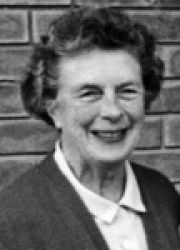
Heather Gibson
Inducted in 2006 for services to:
- Medicine
Heather Gibson
Inducted in 2006 for services to:
- Medicine
Born: 1919
(Launceston, Tasmania)
Passed: 2005
(Hobart, Tasmania)
Heather Gibson became a leading figure in the establishment of the School Medical Service in Tasmania.
Although considered an unusual occupation for a woman at that time, Heather chose to study medicine at the Melbourne University and graduated in 1942 at the age of 23.
After returning to Hobart, she married Sam Gibson and took up a position of junior resident, registrar and admitting officer at the Royal Hobart Hospital. Following five years’ leave to have children, Heather worked for 34 years from 1950 as the Senior School Medical Officer in the School Medical Service, within the Department of Health. She became well known to thousands of teachers, parents and children as the ‘school doctor’.
Although Heather had a position as a public sector medical practitioner with no formal academic appointment, she undertook substantial research into childhood diseases concentrating on obesity, asthma and iodine deficiency disorders.
Her work is now known for its unique scale and thorough reporting. Much of her work continues to provide a basis for ongoing study into those areas.
In November 2003, Professor Haydn Walters (Professor, Medicine, University of Tasmania) described Heather’s original study of 8,500 children as one of the most important community and family studies on asthma, with worldwide implications.
Another landmark study conducted by Heather was the Surveillance of Iodine Deficiency Disorders in Tasmania 1949 to 1984. This was first published as a monograph in 1995. In 2006, Professor Eastman AM (Weastmead Hospital, NSW) launched a reprint of the study and commented that if it were submitted today, it would be worthy of a doctorate.
Heather retired in 1984 and died in 2005, having made a significant contribution to the Tasmanian community and provided a wonderful role model for women entering the field of medicine.
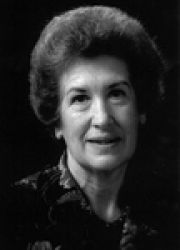
Margaret Anne Giordano
Inducted in 2006 for services to:
- Arts and media
- Environment
- Literature and education
Margaret Anne Giordano
Inducted in 2006 for services to:
- Arts and media
- Environment
- Literature and education
Born: 1928
(Hobart, Tasmania)
Passed: 1997
Gentle, humorous, disciplined in all she undertook and constantly encouraging to those around her, Margaret was passionately committed to literature, indefatigable and generous to a fault. - Faie Watson, 2006
Margaret Giordano (nee Murray) was a modest woman who was a high achiever throughout her life. After graduating from the University of Tasmania, she worked as a librarian before winning a scholarship in 1953 to study French civilisation at the Sorbonne in Paris.
While in Paris, she taught English in a French school and then went on to become a French translator at the Indian Embassy in Paris. She met her future husband while on a holiday in Florence and moved with him to Sardinia after their marriage. Following her husband’s transfer to Rome, Margaret became an Italian and French translator at the Australian Embassy. She also took on the role of interpreter for Arthur Calwell, then Leader of the Federal Opposition, when he was in Italy in 1963.
After 12 years abroad, Margaret returned to Hobart with her husband and three young children in 1965. Having always aspired to be a writer, she applied herself increasingly to her writing, producing book reviews, giving talks, conducting seminars and writing plays and short stories which were broadcast on radio. One of her plays, Mathinna, won the University of Tasmania Bean Essay Prize and was subsequently adapted as a ballet.
She produced many newspaper articles, including a six-part series on Hobart murders for the Saturday Evening Mercury. Margaret’s major contributions to Tasmanian literature were five published books: Tasmanian Literary Landmarks (with Don Norman), Countries of the Mind (with John Reynolds), A Man and a Mountain (the story of Gustav Weindorfer and Cradle Mountain), Watcher of the Skies (about Launceston astronomer Alfred Barret Biggs) and Tasmanian Tales of the Supernatural.
In 1973, Margaret became involved with the Tasmanian Chapter of the Fellowship of Australian Writers and retired as its President in 1996.
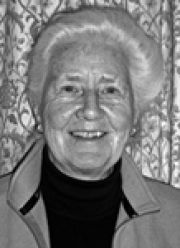
Sheila Given AM
Inducted in 2006 for services to:
- Education and training
Sheila Given AM
Inducted in 2006 for services to:
- Education and training
Born: 1928
(Portarlington, Ireland)
Passed: 27 Jun 2024
Dr Sheila Given was educated in Ireland and in 1945 obtained her school certificate from the University of Oxford. In 1949, she successfully gained her National Froebel Foundation Teacher Certificate A (1 st Class). After being widowed at an early age, Sheila raised her four children alone.
Since immigrating to Tasmania in 1967, Sheila has served the Tasmanian community in a great variety of educational capacities. She taught at The Friends’ School from 1971 to 1986, becoming the head of the combined Preparatory and Junior Schools. After retiring, she continued her education studies at the University of Tasmania, which culminated in a PhD in Educational Administration in 1993.
Sheila is highly regarded within the Tasmanian education community and has been a major advocate for lifelong learning. She was the inaugural President of the University of the Third Age in Kingborough (2000-02), playing a pivotal role in its establishment. She assisted in the development of the Tasmanian Plan for Positive Ageing 2000-05 and co-founded TALENT (the Third Age Learning Network of Tasmania) in 2001.
For seven years, Sheila wrote a weekly column about older people for the Sunday Tasmanian. She also wrote the history of The Friends’ School, entitled In the spirit of family: The Friends’ School, Hobart, 1945-1995, published in 1997.
Sheila is a member of the TASCOSS Tasmanian Social Policy Council, Kingborough Stronger Community Working Group, Adult Learners Week Working Group, Council on the Ageing (COTA), and Chair of the Positive Ageing Consultative Committee.
Sheila’s exceptional contribution to the community in education has been acknowledged with many awards, including the Margaret Record Award for Outstanding Service to the Tasmanian Chapter of the Australian College of Education, which she received in 1993. Her commitment to advocate for older people was recognised when she was named the Commonwealth Senior Australian Achiever in 1999. She received the Media and Arts Alliance Award for excellence in reporting on Older Tasmanians in 2001, as well as a Certificate of Appreciation from the Seniors Bureau in 2003.
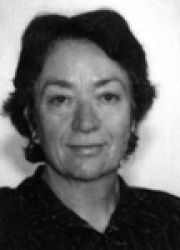
Stella Goiser
Inducted in 2006 for services to:
- Community, advocacy and inclusion
- Multicultural affairs
Stella Goiser
Inducted in 2006 for services to:
- Community, advocacy and inclusion
- Multicultural affairs
Born: 1937
(Athens, Greece)
Stella Goiser migrated to Australia in 1958. She has been a keen advocate for migrants since her arrival in Tasmania. She was instrumental in helping to establish services for migrants at a time when the need for these services had not yet been recognised. Stella became a voice for migrants, representing their particular needs to mainstream services and government at a crucial time in the development of services for migrants.
Stella has also helped to educate the wider community in tolerance and cross-cultural awareness. Her particular skills in identifying migrant needs and contributing to issues of the time led to her being sought for membership on many committees.
Stella was active in the formative years of the Greek Orthodox Community in Launceston in the mid 1960s and a founding member of the Greek Orthodox School of Launceston. She was also a founding member of the Migrant Resource Centre (MRC) in Launceston. She served on the MRC (Launceston) Committee as Treasurer and was a member of the welfare sub-committee for many years.
Stella was appointed to the Tasmanian Women’s Consultative Council in 1990 to represent migrant women’s issues. She was also a member of the first Tasmanian Council for Multicultural and Ethnic Affairs (TACMEA) and a founding member of the Ethnic Communities Council of Northern Tasmania.
She is currently a member of the Tasmanian Immigration and Settlement Committee (TISC) and has been a representative on the TISC Women’s Sub-committee since its establishment. She is also the current President of the Good Neighbour Council of Tasmania (Launceston Branch).
Stella has been, and continues to be, a member of a number of other committees. She is currently also a translator and interpreter for the Translating and Interpreting Service.
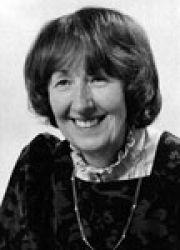
Shirley Jeffrey AM
Inducted in 2006 for services to:
- Science, technology, mathematics and research
Shirley Jeffrey AM
Inducted in 2006 for services to:
- Science, technology, mathematics and research
Born: 4 Apr 1930
(Townsville, Queensland)
Passed: 4 Jan 2014
Dr Shirley Jeffrey attended the Methodist Ladies' College in Melbourne for four years. It was there that her interest in biology emerged.
She obtained her Masters of Science degree from the University of Sydney and a PhD in Biochemical Pharmacology from Kings College, London University. She joined the CSIRO Division of Fisheries and Oceanography in 1958 to work on marine plant pigments. During this time, she developed new biochemical separation techniques and discovered new families of pigments.
Shirley was the first person in the world to prepare pure chlorophyll c, found only in marine plants. It was one of the most important moments in her career, and it gave scientists, for the first time, the means of evaluating microscopic plant biomass and photosynthesis in our oceans.
Her contributions to Tasmania's community range from developing educational courses to developing and supporting the fast growing Tasmanian aquaculture industry. Her work provided top-quality algal cultures to aquaculture industries. The availability of such cultures stabilised hatchery hygiene and techniques and allowed the industry to develop quickly.
Shirley was active in the support and encouragement of women in science. Her achievements and the example she set spoke to all Tasmanian women. She spent over 15 years as a Fellow at Jane Franklin Hall, at the University of Tasmania, and was active in the support and mentoring of students.
Shirley had a highly productive career. She led the way as a scientist, a woman and a mentor and this was recognised with numerous awards. In 1991, she was elected to the Australian Academy of Science. She was appointed a member of the Order of Australia in 1992. In 1993, Shirley received the Gilbert Morgan Smith Medal from the United States National Academy of Science for excellence in marine or freshwater research. She was the first person outside the United States to receive this Medal. She was later elected as a foreign associate of the National Academy. In 2003, she was awarded the Australian Centenary Medal.
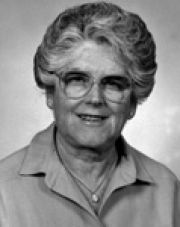
Faith Layton AM
Inducted in 2006 for services to:
- Community, advocacy and inclusion
- Education and training
Faith Layton AM
Inducted in 2006 for services to:
- Community, advocacy and inclusion
- Education and training
Born: 1925
(Launceston, Tasmania)
Faith Layton was educated at Broadland House Girls’ School before graduating from the University of Tasmania with a Bachelor of Arts. She taught in many schools in northern Tasmania.
After the birth of her two children, Faith became head of the Social Science Department and Deputy Headmistress at Broadland House Girls’ School for a number of years, where she had a strong influence in girls’ education.
As President of the Broadland House Old Girls’ Association, and at their request, Faith was the main author of a book on the history of Broadland House School, An Establishment for Young Ladies.
Faith has been an active member of the Australian Federation of University Women (AFUW) and was the first Tasmanian national President from 1989-91. In 1989, she led an AFUW delegation of 56 members to the International Federation of University Women’s Conference in Helsinki. The 28th national AFUW conference was held in Tasmania during her term of office and Faith’s influence ensured an international contingent attended this important event.
Faith was a member of the National Council of Women in Launceston for many years and President from 1992-95. In 1995 she co-founded and was Chairperson of the Support Group for Women Entering Local Government. Faith was a member of the Tasmanian Women’s Consultative Council for many years and its northern convenor from 1995-2000.
Faith has served on, and was President of, the Association of Independent Retirees North Tasmanian Branch. In 2002 she chaired a committee that organised a Grandparents of the Year project that drew 909 entries from northern primary school children.
From 2001-04 Faith was Chairperson of the Order of Australia Association (Tasmania, northern branch). During her time with the Association, Faith made history by deciding a major fundraising activity was needed. The Order of Australia Foundation was established to sponsor talented young Australians who had proved to be outstanding in their chosen field and who needed assistance to continue their tertiary education. This was the first region in Australia to raise a four-figure sum for the Foundation.
In 1993, Faith was made a member of the General Division of the Order of Australia for services to women and education.
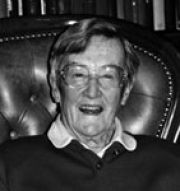
Bronwen Meredith
Inducted in 2006 for services to:
- Human rights, justice and corrections
Bronwen Meredith
Inducted in 2006 for services to:
- Human rights, justice and corrections
Born: 1919
(Hobart, Tasmania)
Passed: 19 Nov 2011
Raised in a Quaker family, Bronwen Meredith learnt the values of tolerance, peace and justice from an early age. Educated at The Friends’ School, she ran a Junior League of Nations as a student, with talks and discussions about the role of the League of Nations in peace making and social justice issues. In 1938, she attended the Phillip Smith Teachers College to train as a teacher, and also studied for her Bachelor of Arts at the University of Tasmania.
She married her husband, Richard, in 1945 and together they became interested in prison reform, actively working to oppose the death penalty of a young man. In 1956, Bronwen and her husband moved to Papua New Guinea where they both taught at a mission school. Their five children accompanied them. Returning to Hobart in 1961, Bronwen did a library course and worked at New Town High School for 10 years.
Bronwen joined the Women’s International League for Peace and Freedom (WILPF) Tasmania when it re-formed in 1963. One of the first campaigns she became involved with in WILPF was opposing French nuclear testing in the Pacific, and then the Vietnam War, when she and her husband assisted young men facing the draft.
She became the first Secretary for WILPF in 1970 and was also involved in conducting a branch of Amnesty International at the time. In 1967 Bronwen attended an international Quaker conference in North Carolina and spent six weeks at the Quaker office in New York. While there she summarised the attitude of members of the United Nations Organisations to the Vietnam War, as expressed by the General Assembly. This summary was printed and presented to then Prime Minister, Gough Whitlam.
In 1973 concern for indigenous people moved Bronwen and her husband to join the Commonwealth Service in the Northern Territory. They taught in government schools in Darwin and Katherine for seven years.
Bronwen and her husband moved to England in 1981 where she became active in both Amnesty International and the UK branch of WILPF.
In 1986 Bronwen became the national Secretary of WILPF and was President of the Religious Society of Friends in Australia for four years. She spoke out against the war in Iraq at the Hobart International Day of Action in 2003 and is still an active and valued member of WILPF.
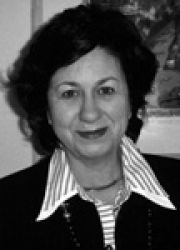
Marion Elizabeth Myhill
Inducted in 2006 for services to:
- Community, advocacy and inclusion
- Cultural heritage
Marion Elizabeth Myhill
Inducted in 2006 for services to:
- Community, advocacy and inclusion
- Cultural heritage
Born: 1949
(Hobart, Tasmania)
Dr Marion Myhill was educated at The Friends’ School and has been awarded a number of university degrees including a Bachelor of Arts with Honours from the University of Tasmania, a Masters of Science from the University of London and a PhD from the University of Western Australia. Marion has recently been elected a Fellow of the Royal Society of Arts. She is married with two daughters.
Marion has been active in many voluntary organisations, but one of her most significant contributions to the Tasmanian community has been her voluntary work with the National Trust of Australia (Tasmania). In 2000, Marion was the first woman to become State President of the Trust in its 40-year history, a position she held until 2003. Her role as President came at a very challenging time for the Trust as it was facing a number of serious financial and governance issues.
Marion initiated changes designed to provide the Trust with the firm voice, sound financial basis and good governance structure needed to take it strongly into the future. She also helped raise the status of the Trust, and heritage issues in general in the broader Tasmanian community through alliances with other professional and volunteer groups. She continues her commitment through the National Trust Government Advisory Council.
Marion has a history of involvement with equity issues for women, particularly in higher education. She has been the President of the Northern Tasmanian branch of the Australian Federation of University Women (AFUW) and national education convenor of the AFUW. She was a member of the national council and a delegate representing AFUW (in the Australian Government delegation) to the UNESCO Higher Education Conference in Paris in 1998.
She was a member of the University of Tasmania’s Equal Opportunity Committee for many years and has been involved with many mentoring activities as a ‘senior woman’ at the University.
Marion is currently the Chair of the Board of the Launceston Church Grammar School (the first female to hold this position) and has been a board member since 1998.
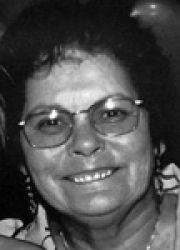
Lennah (Aunty Lennah) Newson
Inducted in 2006 for services to:
- Aboriginal or Torres Strait Islander affairs
- Arts and media
Lennah (Aunty Lennah) Newson
Inducted in 2006 for services to:
- Aboriginal or Torres Strait Islander affairs
- Arts and media
Born: 1940
(Launceston, Tasmania)
Passed: 2005
Lennah Newson spent the 1940s growing up around Killiecrankie on Flinders Island. Her memories and reactions to her childhood were mixed. In an interview before her death, Lennah remembered that through her childhood “…you weren’t allowed to be Aboriginal and you weren’t allowed to be white – you were classed as half-caste, so I had a sense of not belonging to anything”. - Examiner, 19/04/2004, p.15
Despite the hardships of her early childhood and denial of her heritage by white authority figures, Lennah always maintained her strong links to the traditional culture. Of the Palawa people, Lennah emerged as a gifted artist whose work has been collected by many major galleries and institutions, including the National Gallery of Australia.
A gifted weaver, Lennah drew her inspiration from the beaches around Flinders Island. Another source of inspiration for her art was growing up watching her father, grandfather and grandmother making nets, fish traps and kangaroo and wallaby snares. She excelled in all the artistic pursuits she undertook, and was a gifted painter and enthusiastic accordion player.
Lennah played an important role in maintaining her culture by passing on her skills to others. She taught many of the younger generation of Aboriginal women the art of weaving through direct mentoring, school programs and festivals.
The continuation of traditional fibre art in the Tasmanian Aboriginal community will be the lasting legacy of Lennah Newson.
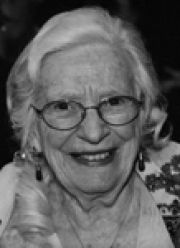
June Olley AM
Inducted in 2006 for services to:
- Science, technology, mathematics and research
June Olley AM
Inducted in 2006 for services to:
- Science, technology, mathematics and research
Born: 1924
(Croydon, England)
Dr June Olley was born in a bungalow at the back of Croydon aerodrome (UK) where her father was one of the early flyers. When she was 10, she was given a Zoo Magazine and solemnly listed every animal in alphabetical order.
At 14, she chose her boarding school Wycombe Abbey because of its good science facilities. During the blitz, the science library was blacked out for her for evening homework. She studied chemistry at the University College London and went on to receive the first PhD in the Chemistry of Nutrition in 1950.
June then went to the Torry Research Station in Scotland to work on the handling and preservation of fish as food. The work included extensive travel in Europe, America and Israel.
The 1956 Fulbright travel grant strengthened her work on phospholipids leading to a Doctorate of Science in London in 1968. In that year, she came to Tasmania to marry barrister F.D. Cumbrae-Stewart and began work on abalone at the CSIRO Tasmanian Food Research Unit.
She was among the first to devise a scientific methodology to predict food safety, now known as predictive microbiology. She and Professor David Ratkowsky have published together continuously during the past 30 years and were co-authors of the first book on predictive modelling in 1993.
On retirement in 1989, she moved to the University of Tasmania and has mentored many higher degree students. She was appointed a member of the Order of Australia in 1988 and was elected a Foundation Fellow of the Australian Academy of Technological Science and Engineering.
In 2005, the Australian Marine Sciences Association presented her with the 15th Silver Jubilee Award of Excellence.
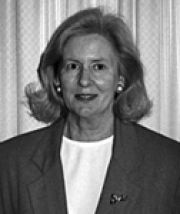
Mary Catherine Polack OAM
Inducted in 2006 for services to:
- Health
Mary Catherine Polack OAM
Inducted in 2006 for services to:
- Health
Born: 1941
(Hobart, Tasmania)
Mary Polack qualified as a pharmacist in Tasmania in 1963.
Mary was employed as the Branch Director of the Pharmaceutical Society of Australia (Tasmanian Branch) for 20 years from 1978-99. As Branch Director, she was one of the driving forces in Tasmania in raising the standards of pharmaceutical practice for the health and well-being of the general public at a state and national level.
Mary’s outstanding contribution to the pharmacy profession in Tasmania is well known. Her dedication to her profession saw her voluntarily working many additional hours to ensure that pharmacy in Tasmania and Australia was at the best practice standard to meet community needs.
Mary became a major player in the Australia-wide development of Pharmacy Self Care, a comprehensive integrated health information program for the community, pharmacists and their staff.
Mary also developed alliances with stakeholders to ensure pharmacy worked hand in hand with government and other organisations to adopt health care practices that would benefit the well-being and safety of the general public.
She developed and delivered life-long education programs to move Tasmanian pharmaceutical practice to its best practice standard and to continue professional development of pharmacists. She was also the instigator of many national pharmacy health care programs designed to make health care readily accessible to the general public.
Mary continues to work for the benefit of the Tasmanian community and is currently involved in supporting Sudanese refugees in successfully integrating with the Tasmanian community.
In recognition of her outstanding contribution, Mary was awarded a Fellowship by the Pharmaceutical Society of Australia in 1990. In 2002, she became the first Tasmanian to be elevated to Life Fellow, the highest honour that can be bestowed on a society member.
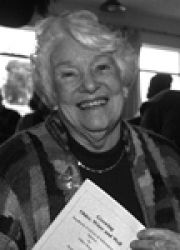
Betty Jean Vyvyan Pybus OAM
Inducted in 2006 for services to:
- Community, advocacy and inclusion
- Health
Betty Jean Vyvyan Pybus OAM
Inducted in 2006 for services to:
- Community, advocacy and inclusion
- Health
Born: 1923
(Grange, South Australia)
Passed: 2004
…That new life was born out of all I learned from the Women’s Liberation Movement which I now use as a tool for the emancipation of older women, who, unlike me, did not discover WLM but are now being empowered to see themselves and their lives in positive terms. - Betty Vivian, As Good As New, p.2
Betty Vivian Pybus, the eldest of two girls, married in 1942 and moved to Hobart with her husband in 1945. She had a son and a daughter.
At the age of 47, Betty became a true feminist. Her autobiography, As Good As New, written under her maiden name Betty Vivian, is a valuable first-hand account of the development of the second wave of feminism in Australia in the 1970s.
As the convenor of a 15-woman collective, she was responsible for groundbreaking achievements including setting up the Women’s House in Sydney. The centre provided a counselling and referral service for rape victims, and information on contraception, abortions and the women’s movement. It was the first abortion referral service in Australia, and resulted in the elimination of the backyard abortion trade and the establishment of a legal clinic for terminations.
Betty continued as a pioneer of the Australian women’s health movement, as a founding member that established the Leichardt Women’s Community Health Centre, which was the first federally funded feminist initiative. She went on to manage the Liverpool Women’s Health Centre. The establishment of these health centres were pivotal in the establishment of the Hobart Women’s Health Centre.
Betty was also a part of the movement that resurrected the writings of early feminists. The discovery that many of the books were out of print led to the establishment of women’s publishing companies such as the Feminist Press, Virago and Women’s Press, who republished them.
Her commitment and activism continued through her later years, and her contribution to the feminist movement and unceasing work on behalf of older women was recognised at the inaugural Edna Awards in Hobart in 1999. On Australia Day 2004, she received the Medal of the Order of Australia in recognition of her work for women, as a feminist and community activist.
Photograph courtesy of The Mercury.
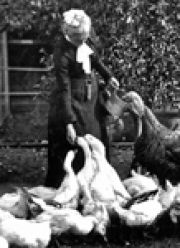
Mary Grant Roberts
Inducted in 2006 for services to:
- Community, advocacy and inclusion
Mary Grant Roberts
Inducted in 2006 for services to:
- Community, advocacy and inclusion
Born: 1841
(Hobart, Tasmania)
Passed: 1921
(Hobart, Tasmania)
Mary Roberts (nee Lindsay) was the youngest child of her family. She married Henry Roberts in 1863.
In 1877, Mary and her husband used two acres of land to build Beaumaris. In 1895, she opened the Beaumaris Zoo, which primarily housed birds. Although Mary had not undertaken any professional scientific training, she had great skill in animal husbandry.
The Zoo soon became well known for exhibiting birds as well as thylacines, which she obtained throughout the state. She sold some of the thylacines to zoos in England and America. In 1910, she was the only Tasmanian zookeeper at that time to draw international interest and was invited to become a corresponding member of the Zoological Society of London.
Carrying out chores deemed unsuitable for a lady of the period, Mary personally purchased the animal food, fed the animals and handled all animals in her Zoo including the thylacines.
She was also known as the first to breed Tasmanian devils in captivity and published a study about this in the Zoological Society of London’s Proceedings in 1915.
She founded the Anti-Plumage League and the Game Preservation Society and was responsible for the Royal Society of Tasmania campaign to strengthen Tasmania’s legislation regarding animal welfare.
Mary’s interest in many issues led to her giving time and support to numerous groups and organisations in Tasmania. She was a council-member of the Art Society and the Mother’s Union; a delegate to the Tasmanian National Council of Women; and a committee member of the National Club and Young Women’s Christian Association. She also assisted in setting up the Girl Guides Association of Tasmania. Mary belonged to many other groups dealing with animal and human rights.
Mary had strong moral views, regularly attended church and was also extremely patriotic. She raised funds to erect a statue to King Edward VII and ran charity afternoons at her zoo during World War I.
Mary died in Hobart in 1921, survived by two sons and two daughters. After her death, the Zoo was presented to the Hobart City Council and relocated to the Queen’s Domain. The Zoo was closed in 1937.
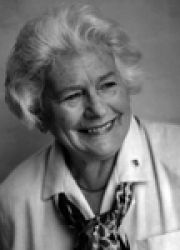
Barbara Millie Sattler MBE
Inducted in 2006 for services to:
- Community, advocacy and inclusion
Barbara Millie Sattler MBE
Inducted in 2006 for services to:
- Community, advocacy and inclusion
Born: 1926
(Hobart, Tasmania)
Barbara Sattler was the only daughter of Bernard and Rita Kilmartin. She had an older brother, Geoff. She grew up in New Norfolk and attended St Brigid’s Convent School and later St Mary’s College in Hobart. Barbara was married in 1948 and has five children (one son deceased) and 14 grandchildren. Her husband passed away in 1986.
Barbara worked at the University of Tasmania until 1986. During this time, she was appointed to the University Council. She was also a member of the Advisory Board of the State Library of Tasmania and a member of the Advisory Boards of the Royal Hobart and St John’s Park Hospitals.
An hereditary eye disease affected Barbara’s brother when he was 18 and he became legally blind. Her aunt was also legally blind and Barbara realised what it meant when someone was cut off from the enjoyment of reading. This sparked her interest in library services for people with print disabilities. Barbara established the Hear a Book Service in 1972, with the financial assistance of the Tasmanian Apex clubs and friends.
For the first 18 years she was Honourable Secretary and she has been President ever since. The Hear a Book Service is a non-profit organisation based in Hobart serving people with print disabilities throughout Australia and New Zealand. The Service is the largest producer of analogue recorded books in Australia. The Service has a catalogue of more than 11,700 books recorded by volunteers in their own homes.
There are also monthly cassette selections available from a number of popular magazines such as Women’s Weekly, New Idea, House and Garden, Australian Geographic and National Geographic.
Barbara’s contribution and commitment to the Hear a Book Service, which spans 34 years, has been recognised with many awards including being made a Member of the British Empire in 1979 and being awarded the Centenary Award. She has also received the Award for Enterprise, the Advance Australia Award, the David Blyth Award from the National Federation of Blind Citizens of Australia, the Redmond Barry Award from the Library Association of Australia, and the Paul Harris Fellowship from Rotary International, and is included in the 2006 Who’s Who of Australian Women.
At 80, Barbara’s interests include her friends and family, the Hear a Book Service, being a Friend of Tasmanian Museum and Art Gallery, a member of the committee of the University of Tasmanian Retirees and being involved with the Soldiers’ Walk Inc, Queens Domain, Hobart. She is also a courier for the State Library.
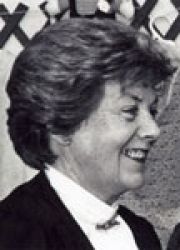
Eris Mary Smyth OAM
Inducted in 2006 for services to:
- Community, advocacy and inclusion
Eris Mary Smyth OAM
Inducted in 2006 for services to:
- Community, advocacy and inclusion
Born: 1929
(Central Queensland)
Passed: 21 Dec 2022
Eris Smyth was educated by correspondence school and later attended boarding school. She studied at Duchesne College at the University of Queensland and obtained a Bachelor of Commerce degree. After working in the economics section of the University, she travelled overseas for four years, working first as a book buyer for Wymans and then for the Mitsui Bank in London.
Eris married Stephen Smyth and has eight children. She obtained her librarianship qualification before her last child started school. The family moved to Tasmania in 1957.
Eris has made a major contribution to the trade union and women’s movement in Tasmania. Her trade union involvement spanned 20 years, from 1972 to 1992. During that time she worked on upgrading the Workers’ Compensation Act and became a delegate for the Hobart Trades and Labour Council, and then the Tasmanian delegate to the Australian Council of Trade Unions Women’s Committee for six years.
Her contribution to the community has included being a foundation member of Caroline House, which commenced operation as a women’s shelter in 1978. She was also a member of Holyoake Incorporated and served on the board for seven years. She is a Life Member of the Catholic Women’s League and has been a member since 1958. She is also a member of the National Council of Women Tasmania, having served as both President (2000-02) and Secretary. She was an inaugural member of the Women’s Action Alliance Tasmania, and is still an active member.
Her commitment to social justice and significant contribution to the Tasmanian community was recognised when she received the Medal of the Order of Australia in 1994 for service to the community and trade union movement. In 2001, she was awarded the Centenary Medal for more than 30 years’ dedicated voluntary service to the Tasmanian women’s movement.
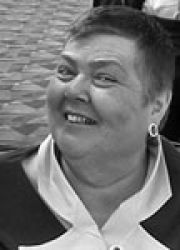
Robin Jane Wilkinson AM
Inducted in 2006 for services to:
- Human rights, justice and corrections
Robin Jane Wilkinson AM
Inducted in 2006 for services to:
- Human rights, justice and corrections
Born: 1942
(Sydney, New South Wales)
The effectiveness of her efforts is evident in the fact that the organisations she has helped establish, such as Women with Disabilities Australia, have become significant voices for the rights of the people they represent. - Jan Miller, Jenny Stanzel, Marie Kennedy 2006
Robin Wilkinson was born in Sydney with severe physical disabilities. She has overcome those difficulties to become an advocate for social justice for the human rights of Tasmanians with disabilities.
She cites the two most influential people in her life as her father and stepmother. Born before Thalidomide, the extent of her physical disabilities was a challenge not often experienced by the medical profession. Robin has spoken of how her father accepted that his daughter was born without the usual two legs, two arms and straight back and his insistence that she be brought up a ‘normal child’.
Robin moved to Tasmania with her family when she was eight years old and was educated at The Friends’ School. After leaving school, she joined the State Public Service as a junior typist. An ardent theatre-goer, Robin helped establish a junior drama group and loved it. The love of performing led into a job as an ABC radio announcer. She was with the ABC from 1963-69.
Robin travelled overseas and began her studies in social work at the Quaker College ‘Woodbrooke’ in Birmingham, UK. She returned to Australia and completed her studies in welfare and social work and has since worked in a variety of roles.
From the 1970s onwards, Robin has worked to foster the rights of Tasmanians with disabilities as an integral part of Tasmanian society. She was founder of the organisation Tasmanians with Disabilities Inc. and was its President for many years. She has also been a Tasmanian delegate to a variety of national councils, including the Disability Advisory Council of Australia and the National Council of Disabled Peoples’ International (Australia).
Robin was a founding member, and is currently the Chair, of the Consumer’s Telecommunications Network (CTN) Inc. In 2005 (France) and 2006 (Chicago), Robin was a part of the Australian Communications Industry Forum (ACIF) delegation from Australia to the Global Standards Collaboration meeting. The promotion of the rights of people with disabilities in the area of communications has led to international recognition of the work of the CTN.
Robin’s appointments and contributions to various committees over the years have been extensive. Her work in human rights has touched many people and this has been recognised by her being appointed a Member of the Order of Australia in 1994 and being named Hobart Citizen of the Year in 2005. She is now considered an Elder with the Aging and Disability Community, a distinction she has embraced with her usual enthusiasm.