
Legacy lives on in the Port Arthur collection
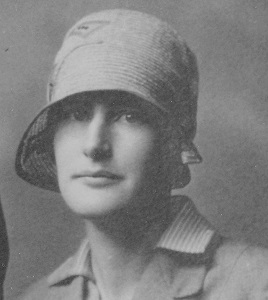
Inducted in 2021 for services to: Tourism.
Born: 27 Jul 1907
Passed: 12 Dec 1985
Dora Blackwood was an early tourism pioneer who spent a lifetime immersed in Port Arthur and operated a museum dedicated to convict history that enthralled visitors for more than three decades.
Dora was one of 8 children who lived with her family in the cottage at Port Arthur that was once home to the Irish political prisoner, William Smith O’Brien. Smith O’Brien Cottage overlooks the historic township.
At 16, Dora attended a dance in the former asylum, then known as the Carnarvon Town Hall, where she met her future husband William (Bill) Radcliffe. The couple waited until Dora was 21 before marrying.
Bill owned land at the western end of the Port Arthur Penitentiary. Bill and Dora erected a shop and house, and after digging up convict artefacts on their property, erected a museum called The Old Curiosity Shop.
The Old Curiosity Shop was full of convict-era relics. The couple also purchased other collections to add to the museum. Sadly, Bill died in 1943, leaving Dora a widow in her 30s and pregnant with her sixth child. Dora had no idea how to run the museum and faced a steep learning curve.
Visitor numbers to Port Arthur increased, particularly when the Tasmanian Government began re-acquiring the ruins and land for heritage protection. Dora’s renamed Port Arthur Museum often appeared in national newspapers and magazines. Dora continued to add to the collection, gave tours, established a souvenir shop and resisted offers to sell objects to private collectors.
After remarrying and selling her beloved museum buildings at the Port Arthur Historic Site to the Tasmanian Government, Dora moved her collection to purpose-built premises just outside the historic site. In 1973, the Radcliffe Collection was acquired by the Tasmanian Government.
During the Port Arthur Conservation Project, Dora was an active participant in the recording of the buildings.
Dora died in 1985 but her museum lives on as part of the Port Arthur Historic Site collections.