
The following 26 members of the Tasmanian Honour Roll of Women were inducted in 2015.
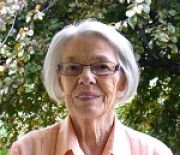
Wendy Andrew
Inducted in 2015 for services to:
- Architecture
- Engineering
- Environment
- Government (Public services and politics)
- Planning
Wendy Andrew
Inducted in 2015 for services to:
- Architecture
- Engineering
- Environment
- Government (Public services and politics)
- Planning
Born: 17 Aug 1935
Caring for natural and cultural heritage
Wendy Andrew came to Tasmania in 1991 for a ‘quiet life’. Instead, she rapidly joined community activities.
Wendy served on the Tasmanian Canine Council’s Retrieving and Field Trial Committee, became a Life Member of the Gundog Club of Tasmania, and is well-known for caring for natural and cultural heritage.
Wendy’s voluntary work has included managing a Work for the Dole project rehabilitating bushland in the Clarence Plains Rivulet Recreation Area, a project managing the conservation of historic graves in Rokeby, including that of Tasmania’s first Chaplain, Reverend Robert Knopwood, helping to produce educational kits about the local environment and history for schools, and giving talks about heritage and the environment.
In 2000, Wendy researched the history of Rokeby and designed signage and brochures for the Old Rokeby Historic Trail for Landcare. This inspired Wendy to write the book Footprints: The People and Places of Early Clarence Plains and Rokeby in 2008. She hoped that readers would develop a greater sense of understanding and appreciation of the beauty of the Clarence Plains area.
Wendy’s involvement in the Tranmere-Clarence Plains Land and Coastcare group saw her awarded the Centenary Medal for Services to Southern Tasmania in 2001, the Tasmanian Individual Landcarer Award in 2007 and, with her husband Bruce, the Tasmanian Pride of Australia Medal Environment category in 2012.
The Clarence City Council honoured Wendy by naming the entrance to the Glebe Hill Bushland Reserve after her.
Wendy is a member of Clarence City Council’s History Advisory Committee and the Clarence Plains Community Network. Wendy is also helping to develop the Clarence Plains Environmental Management Plan to investigate the social, cultural and environmental values of the area and future improvement.
The Planning Institute of Australia elected Wendy as an Honorary Fellow in 2013 for her contribution to better planning outcomes.
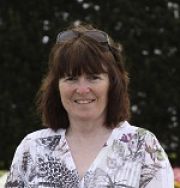
Dr Marita Bardenhagen
Inducted in 2015 for services to:
- Architecture
- Arts and media
- Cultural heritage
- Engineering
- Health
- Planning
Dr Marita Bardenhagen
Inducted in 2015 for services to:
- Architecture
- Arts and media
- Cultural heritage
- Engineering
- Health
- Planning
Born: 1961
Died: 2012
A campaigner for heritage protection and giving voice to minority groups
Historian, Marita Bardenhagen, has documented the lives of hundreds of Tasmanians and become an advocate for women's history.
Marita's passion for oral history developed during her studies for a Bachelor of Arts at the University of Tasmania in the 1980s.
In 1986, Marita published a history of German immigration to Northern Tasmania followed by an examination of the township of Lilydale during World War One.
By researching Lilydale, Marita became interested in the legacy of local bush nurse, Mary Walsh, and decided to research the history of bush nursing in Tasmania for her PhD. Marita researched how the pioneering bush nursing service delivered health services to rural and remote Tasmania, and highlighted the role these educated, resourceful and independent nurses played in laying the foundation for modern health service delivery.
In 2003, Marita was awarded her Doctorate and became a consultant historian and delivered papers on Tasmanian bush nursing at state, national and international levels. Her passion for bush nursing resulted in a touring exhibition Ordinary Women: Extraordinary Lives.
She also contributed several significant entries to The Companion to Tasmanian History, edited by Dr Alison Alexander.
Marita campaigned for the protection of Tasmania’s historic cultural heritage. She was President of the Launceston Historical Society for five years, and involved in the National Trust. Her campaigning helped protect the cottage of convict Martin Edwards and Colonel Alfred Harrap’s residence, both located in Welman Street, Launceston.
In 2005, Heritage Tasmania appointed Marita as a Heritage Officer to assess public and private buildings, engineering feats, townships and historic sites. Her heritage assessments of the Lake Margaret Power Station village on Tasmania’s West Coast, and R Stephens Honey Factory at Mole Creek, received national attention.
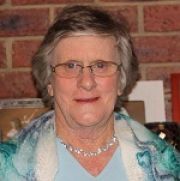
Mavis Margaret Burgess AM
Inducted in 2015 for services to:
- Community, advocacy and inclusion
Mavis Margaret Burgess AM
Inducted in 2015 for services to:
- Community, advocacy and inclusion
Born: 17 Dec 1938
(Echuca, Victoria)
Died: 16 Mar 2013
Renowned for her contribution to many local organisations
Mavis Burgess has supported King Islanders through varied and challenging situations. She is respected for her strong social justice principles and immersed herself in community life by being involved in a range of organisations.
Mavis trained to become a Registered Nurse in Melbourne. She started working at the King Island District Hospital in 1962 and has cared for many Islanders from birth through to death. At one time, she worked for the King Island Funeral Service and assisted many families through the loss of a loved one.
King Island is a small place and Mavis’ professional and voluntary work was diverse. She nursed in a number of capacities, helped establish St Johns Ambulance and trained the locals in first aid, ran first aid stations at events, and established the Telehealth video-conference facilities at the King Island Hospital and Health Centre. From 2004, she also worked as a pathology nurse and would rise early to take samples before starting her normal practice duties.
Mavis also worked part-time as a Child Welfare Officer for the Department of Community Service and Department of Social Security, and was a Family Violence Contact Officer on the Island.
When Mavis retired in 2012, she continued to care for Islanders as an Honorary Probation Officer, a member of the King Island Hospital Auxiliary, a member of the King Island Community Crisis Support Team, and as President of the Phoenix Community House which supports disadvantaged community members.
Mavis was instrumental in raising funds for the King Island Hospital and Health Centre, and the Phoenix Community House. She also helped arrange for a retreat room for families and friends of patients receiving palliative care.
Mavis was, posthumously, awarded an Order of Australia in 2013.
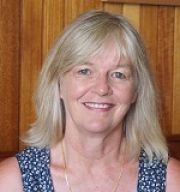
Linda Clark
Inducted in 2015 for services to:
- Arts and media
- Cultural heritage
- Science, technology, mathematics and research
Linda Clark
Inducted in 2015 for services to:
- Arts and media
- Cultural heritage
- Science, technology, mathematics and research
Born: 1954
(England)
A voice for the protection of the nation's regional heritage
Linda Clark has played a leading role in the conservation of Tasmania’s cultural heritage and was one of the first female archaeological conservators in Australia. For several decades she was the only qualified and practicing objects conservator in Tasmania.
Linda migrated from England to Tasmania as a teenager. In the 1970s she received a Tasmanian Government scholarship to study archaeological conservation at the Institute of Archaeology at the University of London.
During the 1970s and 1980s Linda worked as a field conservator on archaeological sites in Europe and Asia before accepting the position of Conservator at the Northern Territory Museum and Art Gallery in 1983.
Linda returned to Tasmania in 1986 to be Objects Conservator at the Queen Victoria Museum and Art Gallery. She later worked as Conservation Manager for the National Trust of Australia (Tasmania) overseeing conservation projects at Runnymede and the Penitentiary Chapel in Hobart; Queenstown’s Mount Lyell Mine Offices; Home Hill in Devonport; and Clarendon House near Evandale.
Linda spent five seasons conserving artefacts from the internationally significant Sydney Cove shipwreck off Flinders Island and curated the acclaimed national travelling exhibition Cargo for Colony: the Wreck of the Sydney Cove. Her work conserving these objects, largely alone, was one of the largest maritime archaeological conservation projects ever undertaken in Australia.
In 2004, Linda was field conservator during the archaeological investigations of Chinese mining hut sites in isolated areas of North-Eastern Tasmania.
Linda was lead conservator during the conservation works at the Launceston Railway Workshops, one of Australia’s significant industrial heritage sites.
Linda has worked on the restoration and recording of heritage sites in Antarctica, including Mawson’s Huts, Mawson, Casey and Wilkes Stations and sealing remains on Macquarie Island.
Linda has provided mentorship and opportunities to young graduates, supervised with diligence countless volunteers and provided a voice for the protection of heritage.
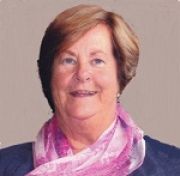
Maureen Clarke
Inducted in 2015 for services to:
- Health
Maureen Clarke
Inducted in 2015 for services to:
- Health
Born: 22 Feb 1944
Chaplain, nurse and Mersey Maiden
Maureen Clarke trained as a nurse and is Chaplaincy Coordinator at the Mersey Community Hospital at Latrobe. There she leads a team of inter-denominational Chaplains available to patients, relatives and staff on a 24-hour basis.
Chaplains provide for the physical, emotional and spiritual needs of patients. However, behind the scenes Maureen does much organising, fundraising and assisting to help the hospital and its patients.
As Chaplaincy Coordinator, Maureen was appointed to the hospital’s Quality and Safety Committee and liaises with staff as an advocate for patient care. Maureen also represents Chaplaincy as a member of a standby suicide watch.
Maureen is President of the Mersey Community Hospital’s Women’s Auxiliary and played an important role setting up the new kiosk. This involved setting up a staff roster and supporting volunteers, being part of the clean-up brigade and serving three shifts a month in the kiosk in addition to her full-time Chaplaincy position. Maureen also delivers the newspaper to patients in the wards two mornings per week.
As team member of the Mersey Maidens cancer fundraising team, Maureen encourages team members to provide for and operate well-stocked stalls to achieve fundraising targets. Maureen also participates in the Relay for Life and has been involved in the production of the Mersey Maidens Calendar.
Outside the Mersey Community Hospital, Maureen is very involved in the community.
Maureen works closely with all churches and is able to channel donations provided by churches and other community organisations to help patients in need.
She has taken on a number of roles with organisations in the community including the St Vincent de Paul Society, Ambleside/Panorama Heights Neighbourhood Watch, Soroptimists, the Mayor’s Charitable Trust, Taste of the Harvest and the Carols Service.
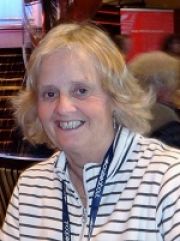
Rosemary Coleman
Inducted in 2015 for services to:
- Sport and recreation
Rosemary Coleman
Inducted in 2015 for services to:
- Sport and recreation
Born: 24 Apr 1953
Always on track
Athletics has been a passion for Rosemary Coleman since her children started competing at Little Athletics. From there, she became a prominent coach of young Tasmanian athletes and a leading athletics administrator, and assisted with the education of new coaches.
Rosemary’s commitment to her children’s sport had rewards for her family, community and the state. Both of Rosemary’s sons became national champions and represented Australia in athletics, and Rosemary has coached numerous state and national champion athletes.
Rosemary has been an official with Athletics Tasmania since 1993 holding a number of positions in that time. She has been the Tasmanian Manager for Athletics Tasmania for the past 15 years, the last 10 being the State General Manager. This position involves managing a team of between 50 to 120 children, liaising with parents and athletes and ensuring the safety and welfare of the children who are representing their state. She continues to volunteer as an official at the Sydney Olympic Games, Commonwealth Games in Melbourne, and many National Track and Field Athletics and Cross Country Championship events.
Since 1997 Rosemary has been a Coach, Secretary, President and committee member with the Old Virgilians Athletics Club. From 1994 to 2002 she was Secretary and President of the East Derwent Little Athletics Club, and she has been the President of the Tasmanian Race Walking Club since 2004.
Rosemary’s paid employment is as a teacher assistant at St Virgil’s College where she works with students with intellectual and learning disability. She is also the school’s Athletics Coach, which involves coaching athletes before and after school.
Prior to working as a teacher assistant, Rosemary worked for 30 years as a Paediatric Nurse in Darwin and Tasmania, and was responsible for screening the Kosovo refugee children when they were housed at Brighton Army Camp.
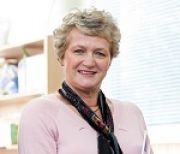
Ros Cornish
Inducted in 2015 for services to:
- Community, advocacy and inclusion
- Education and training
Ros Cornish
Inducted in 2015 for services to:
- Community, advocacy and inclusion
- Education and training
Born: 3 Apr 1953
A champion for women and children
Giving children a good start to life has been a priority for Ros Cornish, the Chief Executive Officer of Lady Gowrie Tasmania.
Ros has been a respected member of government and non-government committees to ensure children’s rights are at the forefront of government policy. She has lobbied on the importance of quality early childhood education and care services and actively advocated for improved wages and conditions for education and care professionals within her own workplace and on a national scale.
In 2012, Ros was the first Tasmanian to be elected National President of Early Childhood Australia after serving on the Board of Directors for 16 years, including terms as Treasurer and Deputy President.
Ros volunteers as the Deputy President of Kidsafe Tasmania, which advocates for the health, safety and wellbeing of young children by developing resources to raise awareness of potential childhood injuries. In this role Ros has overseen partnerships with Royal Life Saving Australia about water safety, and the RACT, which undertakes car seat safety checks for families at Tasmanian childcare centres.
Ros has taken a leadership role in a Risdon Prison project to support inmates maintain relationships with their children. This involved upgrading the visitation centre to make it a more appropriate environment for young children to interact with their parent. Ros also developed an online training program for Prison Officers to support their understanding of the importance of attachment and relationships between parents and young children. This resource is now used as part of orientation and induction procedures.
Ros has been appointed to the University of Tasmania’s Faculty of Education Professional Experience Advisory Group. She is a Fellow of the Australian Institute of Management and was awarded the Tasmanian Chamber of Commerce and Industry Professional Leader of the Year in 2009.
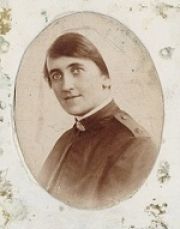
Elsie May Cumming
Inducted in 2015 for services to:
- Community, advocacy and inclusion
- Defence
- Health
Elsie May Cumming
Inducted in 2015 for services to:
- Community, advocacy and inclusion
- Defence
- Health
Born: 1885
Died: 1968
"How these boys suffer! This war is absolute hell. We see and hear all day …every day the results of its frightfulness. We can hear the guns quite plainly." - Elsie Tranter's diary entry, 2 May 1917
Elsie Tranter was a brave nurse who joined the Australian Army Service in 1916 and managed to write a compelling and engaging diary despite working long, hard shifts treating "horrific injuries" on the Western Front in France.
There were about 2 500 Australian nurses who served in World War One. Elsie’s diary is an account of a nurse’s wartime experience. It was published as the book In All These Lines: The Diary of Sister Elsie Tranter 1916-1919 by J M Gillings and J Richards. Extracts from Elsie’s diary were also used in More Than Bombs and Bandages by Dr Kirsty Harris, the docudrama, ANZAC Girls by Peter Rees and The Daughters of Mars by Thomas Keneally.
Elsie was one of a small number of nurses trained to administer anesthetics. She would sometimes assist in over 20 operations a day and not be off duty until after midnight.
Elsie was born in Fyansford, Victoria and met Tasmanian, Gordon Cumming, in France, during World War One. They married in 1922 and moved to Invermay in Launceston where Elsie’s war diary survived the 1929 floods. The couple later built a home at Newstead called ‘Gezaincourt’, named in honour of the place where Gordon proposed. Elsie considered the garden another room of the house. With her keen gardening skills and Gordon’s woodcarving, the Cumming home and garden was entered on the Tasmanian Heritage Register in 2012.
During the war, many soldiers entrusted Elsie with ‘last letters’ to write to their mothers in Australia and New Zealand. For the rest of her life, she took an interest in returned servicemen and women and for decades after the war wrote to patients she had nursed.
Caring for others was part of Elsie’s life. She nursed elderly relatives, assisted neighbours during bouts of poor health and took in struggling migrants.
Photo credit: Courtesy of the Cumming family.
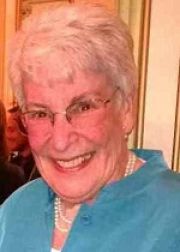
Dr Margaret Davies OAM
Inducted in 2015 for services to:
- Science, technology, mathematics and research
Dr Margaret Davies OAM
Inducted in 2015 for services to:
- Science, technology, mathematics and research
Born: 8 Nov 1944
Honoured for herpetology
Scientist, Dr Margaret Davies, has journeyed to challenging environments, published many scientific reports and was awarded a medal of the Order of Australia (OAM) for service to science in the field of herpetology (frogs).
As the Australo/Papuan frog fauna only emerges to breed and feed in the wet season, Dr Davies and colleagues made field trips to remote places like the Kimberley, Kakadu and Cape York in difficult conditions, high temperatures, and unbearable humidity when the mosquitoes are voracious.
The field trips were worthwhile. Dr Davies discovered and named 35 species of frogs (including one species from Tasmania) and authored, co-authored, edited or co-edited over 120 publications.
Dr Davies graduated from the University of Tasmania with a Bachelor of Science in 1966 and then studied Honours. Following this, she completed a Master of Science at the Australian National University in Canberra. Uperoleia, a genus that was poorly known, was the subject of her PhD thesis, which she received from the University of Adelaide. Dr Davies spent 30 years at that university as an academic and in 1996 received the Dean’s certificate for excellence in teaching in the discipline of zoology.
Dr Davies served on the Council of the Royal Society of South Australia for 26 years and was made an Honorary Fellow, was fauna editor of the Fauna and Flora Handbooks Committee of South Australia for six years, and is currently Honorary Editor of the Royal Society of Tasmania. The Australian Society of Herpetologists granted her Life Membership for her service and contributions.
Dr Davies returned to Tasmania after retiring from the University of Adelaide in 2002. In retirement she has become Honorary Editor of the Papers and Proceedings of the Royal Society of Tasmania, guardian of the Royal Society of Tasmania’s library and gives her time to lecturing to school groups, University of the Third Age, Rotary, Probus and many other community groups.
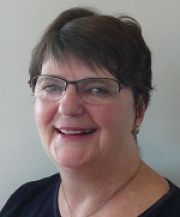
Elizabeth Eden
Inducted in 2015 for services to:
- Arts and media
Elizabeth Eden
Inducted in 2015 for services to:
- Arts and media
Born: 21 Oct 1949
Profoundly inspiring
Elizabeth Eden has made a major contribution to the arts in Tasmania through her dedicated work in choral music and theatre.
A University of Tasmania graduate with Bachelor of Arts (Honours) and Bachelor of Music (Honours) degrees and a Diploma of Education, Elizabeth held teaching positions including Director of Music and Senior Teacher (Languages) during 34 years at Mt Carmel College, Hobart. She received a French Government scholarship for a French pedagogy course in France in 1994-1995.
She was the first Tasmanian Conservatorium graduate to study a double major in performance (piano) and accompaniment. As musical director, répétiteur and in other capacities, she worked intensively for many years in theatre and with soloists before re-directing her energies to choral music.
From 1988 to 2009, Elizabeth was Director of Music at St Mary’s Cathedral in Hobart, regularly composing liturgical music. She was also Director of the Tasmanian Conservatorium Chorale and founding director of the Tasmanian Chorale, before being engaged as Assistant Director to establish Tasmania’s Festival of Voices. She passionately promotes the work of Australian composers, particularly in her regular work with Loose Canon Chamber Singers. She has commissioned or conducted several world premieres, including ‘Voices of History’ for Hobart’s bicentenary.
In 1999, Elizabeth received a Tasmanian Arts Council grant to attend the World Symposium on Choral Music in Rotterdam, Holland, and the Goddard Sapin-Jaloustre Scholarship to study Gregorian Chant at the Abbaye Royale de Fontevraud, France. A regular participant in international chant masterclasses, she was one of only 25 practitioners worldwide invited to a Colloquium celebrating the 1000th anniversary in 2010 of the Abbey of St Pierre de Solesmes, France.
For 12 years, Elizabeth was Vice-President of the City of Hobart Eisteddfod and was the driving force behind fundraising for the recently inaugurated Gwyneth Dixon Memorial Award. She also contributes generously through committee and administrative work to other local and national music groups, including Virtuosi Tasmania.
In retirement, Elizabeth enjoys playing Real Tennis, and attempts to learn basic gardening skills.
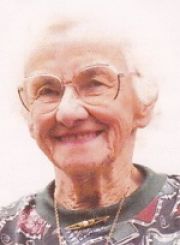
Rhyllis Gertrude Furmage
Inducted in 2015 for services to:
- Community, advocacy and inclusion
Rhyllis Gertrude Furmage
Inducted in 2015 for services to:
- Community, advocacy and inclusion
Born: 12 Nov 1914
Died: 31 Aug 2009
Fellowship through drama
The show always had to go on for Rhyllis Furmage who had many voluntary roles well into her 80s.
Nothing, not even floods that threatened to maroon Rhyl on Tasmania’s East Coast could stop her attending the Deloraine Youth Drama Festival. Rhyl told The Advocate (17 July 1974) it could well be a "catastrophe" if they did not get to Deloraine to "tie up the inevitable loose ends".
The role of Festival Director of the Deloraine Youth Drama Festival was one of the biggest contributions Rhyl made to her community from 1960 to 1975. Hundreds of hours were spent organising events. After the event, Rhyl would phone the adjudicator reports to The Examiner for the next morning’s newspaper. The Deloraine Dramatic Society’s motto ‘Fellowship Through Drama’ possibly explains the reward Rhyl experienced:
"…it was all worthwhile when you looked at the grease paint and happy smiles on the faces of the children" – Rhyllis Furmage, "Happy Memories revived at Celebrations" The Examiner, 14 December 1972 page 20B.
Rhyl started performing as a teenager. During World War Two she helped raise money for the war effort by singing solo at rally concerts. However, Rhyl was happier organising than acting and was Treasurer of the Deloraine Dramatic Society from its inception in 1952 until she retired to Coles Bay in 1973.
Rhyl’s volunteering efforts were considerable. She arranged banquets and suppers for the Masonic Lodge Installation from 1940 to 1974 (she only missed one); managed the President’s room at the Deloraine Agricultural Show with lunch and afternoon teas; and was Secretary of the Women’s committee of the Deloraine Amateur Cycling Club for six years.
When Rhyl moved to Coles Bay she became Secretary of the Red Cross Coles Bay Branch for 20 years, worked tirelessly to raise money to build the community hall and became the local volunteer librarian after the State Library closed.

Ros Goodsell
Inducted in 2015 for services to:
- Community, advocacy and inclusion
- Education and training
- Multicultural affairs
Ros Goodsell
Inducted in 2015 for services to:
- Community, advocacy and inclusion
- Education and training
- Multicultural affairs
Born: 20 Apr 1947
The spirit of volunteering and giving back
Growing up in post-war Melbourne, Ros experienced community volunteering as an integral part of family life. Both parents used their training and life-skills to volunteer for many years, and it became a natural choice for both their daughters to follow this tradition. Widely varied studies, inspiring workplaces and personal interests have enabled Ros to contribute to the Tasmanian community through volunteering. After graduating from Melbourne University in 1968 with an honours degree in languages, comparative linguistics and comparative religion, she lived and travelled in Southern Africa. It was this experience that sowed the seeds of her eventual involvement in wider issues of social justice, cooperative living in modern communities, and lifelong learning.
On returning to Australia, Ros moved to Tasmania in 1970, initially working in language teaching. She began volunteering as an English tutor with immigrant families in 1972. In that year she also embarked on a journey of study, work and volunteering in the plant sciences, which continued into the 1990s. Ros completed the qualifying program towards a Master of Science by research in 1975, a Certificate in Horticulture in 1986, and a Graduate diploma in Agricultural Science in 1993. While working in this field, she volunteered for nine years as a Friend of the Royal Tasmanian Botanical Gardens, and also assisted with landcare activities in the South Channel area.
Since the mid-1990s, Ros has worked and volunteered in English as an Alternative language with classes, small groups and individual students aged from the early teens to early eighties. To help support greater interfaith and intercultural understanding, she joined Religions for Peace, Australia, in 2005. She regularly participates in local community multifaith gatherings for special events and annual observances, and has volunteered in activities to raise awareness of faith-based persecution occurring in several countries. Ros hopes to continue in community volunteering when the time comes to retire!
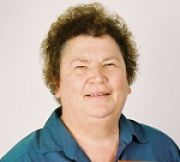
Lola Greeno
Inducted in 2015 for services to:
- Aboriginal or Torres Strait Islander affairs
- Arts and media
Lola Greeno
Inducted in 2015 for services to:
- Aboriginal or Torres Strait Islander affairs
- Arts and media
Born: 27 May 1946
(Cape Barren Island)
Traditional Aboriginal craft forms revitalised
The work of Lola Greeno speaks powerfully of today’s Aboriginal women and culture.
Lola is one of a few Aboriginal women maireener shell stringers responsible for ensuring the craft’s highly specialised skills are passed on to future generations.
As an artist, curator and program officer, Lola has established major cultural projects that have revitalised traditional Aboriginal craft forms and raised the profile of Tasmanian Aboriginal artists and crafts people.
Lola has been shown in 33 exhibitions, including the Athens Cultural Olympiad and the Kanazawa Triennial in Japan. Her work is represented in major national collections including the Powerhouse Museum, Sydney, the National Gallery of Australia in Canberra, National Gallery of Victoria, the Queen Victoria Museum and Art Gallery and Tasmanian Museum and Art Gallery, the National Maritime Museum and the Queensland Art Gallery.
Lola trained as a Curator of Aboriginal Art at the University of Tasmania, and completed an internship as a Regional Indigenous Curator at the National Gallery of Australia in Canberra. Her curatorial skills have presented the work of artists in major touring exhibitions such as Woven Forms: Contemporary basket making in Australia; Tayenebe and luna tunapril: contemporary shell necklace making in Tasmania.
Lola interviewed Tasmanian Aboriginal elders for ‘As I Remember’, an oral history project for the Tasmanian Department of Education, and worked on the ‘Bringing Them Home Oral History Project’ for the National Library of Australia.
From 2003 to 2013 as Arts Tasmania’s Program Officer, Aboriginal Arts, Lola initiated cross-cultural exchanges between Tasmanian, Australian and international indigenous people.
Now retired, Lola continues to advance Tasmanian Aboriginal artists as a member of the University of Tasmania’s Riawunna Advisory Committee, and the Aboriginal Arts Advisory Committees of the Tasmanian Museum and Art Gallery and the Queen Victoria Museum and Art Gallery.
Craft Australia recognised Lola with the Living Treasure Master of Australian Art Award in 2012.
Mary Kay
Inducted in 2015 for services to:
- Community, advocacy and inclusion
Mary Kay
Inducted in 2015 for services to:
- Community, advocacy and inclusion
Born: 25 Feb 1936
An asset for anyone with a boat and radio
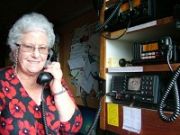
Keeping everyone safe is what matters to Mary Kay the sole operator of the Marine Radio Station for Coastguard at Smithton.
Many times Mary has given assistance to people at sea and has helped save lives. On one occasion, Mary alerted the Victorian Coastguard to a boat in trouble in Bass Strait. The Victorian Coastguard arrived in time and managed to rescue the men just as their yacht sank and disappeared from sight.
Mary has helped in the rescue of many yachts and their crews when they have run aground by arranging tows and calling emergency services for injured crew members.
Mary’s day starts at 6am, giving weather reports, taking position reports, assisting police when required in police rescues across Bass Strait and surrounding waters. She has provided this service for the last eighteen years, 24/7, entirely voluntarily and unpaid.
Fishermen’s stories about ‘black holes’ in the area prompted Mary to do something about poor radio reception. She worked hard and received a $32,000 Tasmanian Government grant for a base station to be erected on Three Hummock Island.
Mary is a foundation member of the women’s service club Soroptimist International of Circular Head, which was formed in 1989. She has held most positions including President. Mary has also served on Rotary for 25 years and writes local history books about Circular Head.
Mary’s awards include: Van Dieman’s Circumnavigation Cruises in 2007, 2009, 2011, 2013 for assistance and help; Lion’s Citizen of the Year for Community Service 2008; Pride of Australia Award 2009; Citizen of the Year 2010 Australia Day Circular Head Council; Ocean Racing Victoria Award Appreciation of Services; Finalist Tasmania Community Award 2013; Who’s who of Australian Women last five years; and Australian of the Year, local Hero for Tasmania 2014.
She and her husband Geoffrey continue to run a dairy and beef property at Nabageena.

Roz Madsen
Inducted in 2015 for services to:
- Community, advocacy and inclusion
- Education and training
- Human rights, justice and corrections
Roz Madsen
Inducted in 2015 for services to:
- Community, advocacy and inclusion
- Education and training
- Human rights, justice and corrections
Born: 1 Aug 1972
Advocate for working women's rights
Roz Madsen is passionate about women’s rights, public education and training and improving the lives of Tasmanian working women.
After graduating from the University of Tasmania in 1994, Roz started work at the Australian Education Union (AEU). She progressed through the ranks to become State Manager with oversight of 25 staff and the welfare and interests of 6 500 union members working in schools, colleges, TAFE campuses and other Department of Education sites across Tasmania.
In 2000, Roz was elected Vice President of Unions Tasmania and then President in 2010. In this role, Roz has been a driving force behind the establishment of the statewide Unions Tasmania Women’s Conference, which has become a regular part of professional development for women unionists. Roz has also been the Convenor of the Unions Tasmania Women’s Committee since 2007.
In 2007, Roz re-established the Anna Stewart Memorial Project, an annual mentoring and work experience program, aimed at increasing women’s active union involvement, their skills and knowledge. The project was established in recognition of Anna Stewart, a long time campaigner for women’s rights and prominent union official who died tragically in 1983. The Australian Council of Trade Unions (ACTU) recognised the program in 2014 by awarding it the Jennie George Award for contributions to women’s advancement in unions.
Roz has been the AEU Tasmanian Branch Women’s Officer for over 10 years. She has driven reforms for women in Tasmanian industrial awards and is a member of the Federal AEU Women’s Committee and the ACTU Women’s Committee.
Roz’s key achievements in advancing social justice include improved maternity (parental) leave provisions and breastfeeding/expressing conditions for women in public sector awards and Family Violence Leave provisions in all public sector industrial awards. Roz has also encouraged high profile men to be involved in the White Ribbon Day Campaign, which breaks the silence against violence towards women.
Roz is a Board member of Tasplan Superfund and the Tasmanian Building and Construction Industry Training Board.
Midlands Multi-Purpose Health Centre Auxiliary, Oatlands
Inducted in 2015 for services to:
- Community, advocacy and inclusion
- Health
Midlands Multi-Purpose Health Centre Auxiliary, Oatlands
Inducted in 2015 for services to:
- Community, advocacy and inclusion
- Health
Their commitment to the community is unparalleled
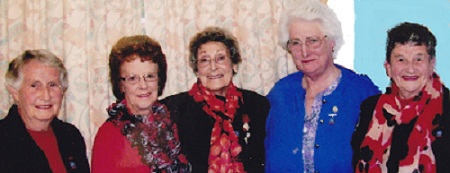
The dedication of the women who volunteer to support the Midlands Multi-Purpose Health Centre Auxiliary has been considerable.
In 1986, Dr Myrle Gray suggested setting up the Auxiliary to purchase equipment to aid patients, residents, medical and nursing staff. A torch for the night sister was the first purchase by the Auxiliary. Since then the Auxiliary has raised over $500 000 and purchased equipment including monitors for heart patients, crutches, urine analysers, vital signs monitors, bariatric bed and mattress, vein detectors, wheelchairs and patient lifters.
The main sources of fundraising for the Auxiliary have been through raffles, catering for funerals, sporting and car clubs, morning teas and bingo for residents. However, the true ingredient to the success of the Auxiliary has been the long-term selfless commitment of the volunteers who love the hospital.
Dr Gray has been the patron since 1986 along with four original Auxiliary members (Mrs Keitha Kean, Mrs Pat Knowles, Mrs Margaret Ball and Mrs Pat Thomas). Each was awarded Life Membership for 25 years of continuous service in May 2013.
The work of the Auxiliary is generously supported by the Southern Midlands community who values these quiet achievers and is prepared to give generously to the hospital, which they regard as a lifeline.
Julie Lynnette Miller
Inducted in 2015 for services to:
- Community, advocacy and inclusion
Julie Lynnette Miller
Inducted in 2015 for services to:
- Community, advocacy and inclusion
Born: 13 Aug 1950
Died: 31 Jul 2014
An adventurous spirit led others to achieve to the best of their abilities
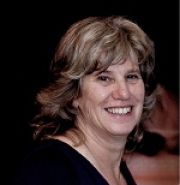
Julie wanted to ensure that Girl Guides Australia was an organisation ready to take on the challenges of today’s world. As a Leader in Northern Tasmania (1991 – 2014) Julie provided opportunities for girls to develop self-confidence and self-respect.
As a trainer of adults Julie was respected for her tireless efforts to ensure that a high standard of leadership, both locally and nationally, was maintained. Julie assisted in developing and implementing creative, effective and well balanced Guiding programs, encouraging girls and leaders to have fun and take Guiding into the community.
As a Leader, Julie took girls to Japan, Hong Kong and New Zealand, providing them with an experience of international Guiding.
In January 2013, Julie was the Convenor for the Girl Guides Australia jamboree, ‘fanTAStic 2013’. This was a positive experience for the 1 800 local, national and international Guides who attended. It is estimated that this event injected $1.5 million into the Tasmanian community.
Julie shared her enthusiasm for the outdoors and was both State Outdoors Advisor (2003 – 2008) and National Outdoors Advisor (2008 – 2010). She promoted the outdoors to Guides as a place of unlimited possibilities and a way of developing self-confidence and self-reliance.
In 2005, Julie was the West Tamar Council Australia Day Citizen of the Year. In 2013, Girl Guides Australia recognised Julie for her achievements and honoured her with the Red Kangaroo Award. This award recognises outstanding national service to Guiding.
As an inspirational teacher, Julie made a substantial contribution to the Vocational Education Training syllabus at Launceston College and worked with industry to set up workplace training and assessment opportunities.
Julie passed away on 31 July 2014 and is survived by her husband and three adult children. She is remembered for her enthusiasm for Guiding and her great love for her family.
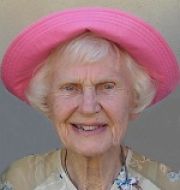
Audrey Moore
Inducted in 2015 for services to:
- Human rights, justice and corrections
Audrey Moore
Inducted in 2015 for services to:
- Human rights, justice and corrections
Born: 2 Apr 1926
Died: 4 Nov 2020
Striving for peace
Audrey Moore has worked tirelessly for over 50 years to rid the world of war and violence.
Audrey’s commitment to peace and non-violence has been informed by the aftermath of the wartime experiences of her father and husband.
Audrey’s father, who was in the British Army, was a prisoner of war in World War One and suffered mental illness thereafter. He was hospitalised for 47 years and died at the age of 75. Audrey’s mother coped as a single parent during the Depression with no government help and the stigma of her husband’s illness.
Audrey trained as a nurse and met her husband-to-be, Jim, as a patient, marrying him in 1949. The back injuries he sustained while on operations in the Pacific caused ongoing hospital treatment and eventual TPI status.
Audrey’s life has been synonymous in Tasmania with the Women’s International League for Peace and Freedom (WILPF). She has at various times held the position of a member, president, treasurer, national executive member, archivist and oral historian. Her creative skills are well known and she has helped organise 12 exhibitions with like-minded groups including the Children of the Gulf War exhibition in 2002.
Audrey has worked to raise community awareness against violence on television, chemical weapons, United States military bases, nuclear energy and stopping the arms race. She has found practical ways to promote human rights and peace locally, nationally and internationally. Among the many projects that she has organised or championed are the Peace Car project, anti-war toys education programs, anti-nuclear awareness, the national Junior Media Peace Prize, peace studies at Adult Education and letter writing to Members of Parliament and the media.
While active in WILPF, the organisation received the United Nations Association Australia Peace Award in 1986 and 1996. Audrey was awarded a TASDEC award and a Tasmanian Award for Humanitarian Activities in 1996.
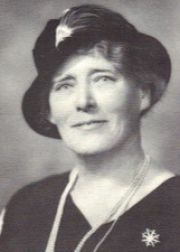
Ellen Nora Payne (nee Field)
Inducted in 2015 for services to:
- Arts and media
Ellen Nora Payne (nee Field)
Inducted in 2015 for services to:
- Arts and media
Born: 1865
(Westbury, Tasmania)
Died: 1962
(Hobart, Tasmania)
A pioneer in the Tasmanian arts and crafts movement
Ellen Field, known to her family as Nellie, was born and raised at ‘Westfield’, Westbury. She married Dr Charles Alexander Payne in 1887. When the couple moved to Victoria, Ellen took woodcarving lessons that changed her life. She subsequently became one of Australia’s most prolific female sculptors of the twentieth century.
The Paynes moved to England in 1899. Ellen enrolled at the Art Department of Goldsmiths College at the University of London when Dr Payne was appointed the Principal Physician to the Duke of Teck. While there, Ellen undertook one of her first carving projects for Tasmania - a memorial pulpit to her parents for St Andrews Church in Westbury, where there is the greatest single collection of her work.
By 1908 the Paynes had returned to Tasmania. Commissions followed for the Hutchins School in Hobart, St Andrews Church in Westbury, the Launceston Church Grammar School and many others. During World War One, Ellen created works to fundraise for the Red Cross, conducted private classes in woodcarving and volunteered as an instructor in handicrafts for disabled returned soldiers.
After the war, Ellen created Honour Boards for the University of Tasmania, local businesses, churches and town halls around the State, and some 34 ‘dower chests’ for family and friends. A patient and gifted artist, her other talents included needlework, leather work and sheet copper embossing.
In 1924, Premier Joseph Lyons presented Ellen with a special medal for a decorative screen she created featuring Australian flora and fauna, which was displayed in the British Empire Exhibition. She later carved the Royal Coat of Arms for the House of Assembly in Parliament House, Hobart.
One of her last major commissions was a vestry plaque for All Hallows by the Tower Church in London, which she completed when she was in her 90s.
Ellen died in Hobart in 1962. Her ashes were placed in the family cemetery at Westbury.
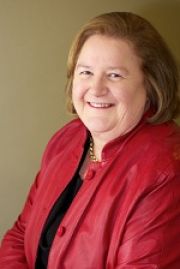
Dr Julie Ann Rimes
Inducted in 2015 for services to:
- Education and training
Dr Julie Ann Rimes
Inducted in 2015 for services to:
- Education and training
Born: 10 Jan 1949
The key ...is about having high expectations but also about being prepared to meet the needs of all students
Dr Julie Rimes has made a significant contribution to education, training and the professional development of teachers and administrators through workplace seminars, conference presentation, professional papers, community partnerships and education sector engagement.
Julie is the Director of the Collegiate Institute for Professional Learning, Research and Innovation (formerly the Kilburn Institute), which provides services to a variety of educational providers, schools, universities and businesses across Australia and supports teachers’ professional learning. Julie is also an Adjunct Associate Professor at the University of Tasmania as her work with the Collegiate Institute involves working with the University’s Master of Education programs to assist teachers in schools undertaking higher degree studies.
Julie’s specialised knowledge of curriculum and Vocational Education and Training enabled her to introduce school-based training for Teacher Assistants. Julie worked statewide and trained a significant number of Teacher Assistants, many of whom went on to gain teaching qualifications.
For over 30 years Julie has driven educational research and reform. The Australian College of Educators recognised Julie’s outstanding contribution to the College, as a member of the State Executive and National Board Executive, by making Julie a Fellow and presenting her with the Margaret Record Award. Julie has also served on the Executive of the Junior School Heads Association Australia, the Australian Primary Principals Association, Australian Council for Educational Leaders and the Australian Scholarship Group.
Julie’s dedication to education and management has been recognised with a Fellow of the Australian Council for Educational Administration, Fellow of the Australian Institute of Company Directors, and Honorary Life Membership of the Independent Primary School Heads of Australia.
Julie volunteers as Chairman of Oak Tasmania, Chairman of the Calvary Consumer Advisory Council, Calvary Health Care Tasmania, a member of the Calvary Community Council and Chairman of the Mature Artists Dance Experience (MADE) Tasmania, and she has a long standing association with the Hobart Eisteddfod.
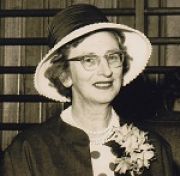
Loris Aileen Russell
Inducted in 2015 for services to:
- Education and training
Loris Aileen Russell
Inducted in 2015 for services to:
- Education and training
Born: 19 Feb 1903
(Barrington, Tasmania)
Died: 20 Dec 1999
When men and women work side by side on equal terms we shall achieve much
Loris Russell was an activist in education, gender and social equality.
Loris was born at Barrington and educated in Tasmanian State schools. In 1919, at the age of 16, the Education Department granted her a probationary studentship to teach in a junior position at Devonport State High School. So began the 42 year career of a woman regarded as a brilliant teacher and a strong advocate for the establishment of a comprehensive high school system in Tasmania.
Loris’ influence extended beyond the classroom. She was a catalyst for change by encouraging women teachers to fulfil their potential by applying for promotion and by seeking equal pay.
After spending 18 months as an exchange teacher in London, Loris wrote: "What has been done by women in other parts of the world can be done here... until all teachers, irrespective of sex, are filling... positions which they can best fill, the Education Department will be wasting much talent it can ill afford to waste."
Loris’ motion on the need for equal pay, brought forward at a Tasmanian Teacher’s Federation Council meeting in 1940, was the first in Australia to be accepted. She led the Association of Women Teachers program for equal pay.
Loris was the first woman elected President of the Tasmanian Teachers’ Federation in 1949-1950. The prejudices of the time prevented her from taking office and resulted in a new constitution and election.
Upon Loris’ compulsory retirement at 60 years of age from the Department of Education in 1962, educationalist Mr Harry Vernon Biggins said: "Miss Russell is one of the builders of the Tasmanian secondary education system. Her sincere work in the interests of education has made her contribution to the community a tremendous one."
After retiring from the Education Department, Loris was appointed Senior English teacher at the Lilongwe Girls’ Secondary School, Malawi, in 1966.
Photo credit: Courtesy of The Examiner, Launceston
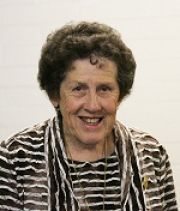
Margot Elizabeth Smart OAM
Inducted in 2015 for services to:
- Business
- Community, advocacy and inclusion
- Government (Public services and politics)
- Industry
Margot Elizabeth Smart OAM
Inducted in 2015 for services to:
- Business
- Community, advocacy and inclusion
- Government (Public services and politics)
- Industry
Born: 28 Jun 1936
(Launceston, Tasmania)
An important mentor and role model for local government women
Margot Smart OAM describes herself as "unashamedly parochial about Launceston."
Margot is a Life Member of the Launceston Chamber of Commerce, a former Executive Member of the Launceston Chamber and was a Company Director and major shareholder of Robert Fergusson Pty Ltd, a statewide retail and wholesale business.
Margot was a Launceston City Council Alderman from 1992 until 2007. When Margot stood in the Launceston City Council election in 1992 she pledged "… to encourage a balance between important city development and the city’s heritage". Margot served on Launceston’s Heritage Advisory Committee, campaigned to save Launceston’s historic post office building, and was a Treasurer for the National Trust and volunteer in the Umbrella Shop.
Margot’s interest in youth was evident both through her involvement with the Launceston Chamber of Commerce and Council where she showed a deep interest in employment opportunities for young people. She was a member of the Newstead College Committee, Chaired the Northern Youth Coordinating Committee, set up the Launceston City Council Scholarship Program and was involved in Youth Spaces, a project to enable young people to use public spaces.
The Vice-President of the Australian Local Government Women’s Association Tasmanian Branch, Cheryl Fuller, said "Margot has been an outstanding mentor for women" and "a crucial component of the successful WomenCan campaign" by "supporting candidates with hours of introductions, encouragement and support."
Margot was the first woman elected to a committee of any principle racing club in Australia in 1991. She was subsequently chairman of the Tasmanian Turf Club 1996 – 2000 and the Tasmanian Thoroughbred Racing Council 1998 – 2000 with a seat on the Australian Racing Board.
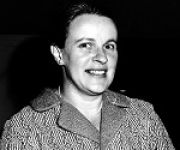
Ann Smith
Inducted in 2015 for services to:
- Community, advocacy and inclusion
Ann Smith
Inducted in 2015 for services to:
- Community, advocacy and inclusion
Born: 6 Jun 1934
Died: 13 May 1998
Find a way or make it
Ann Smith made her own way if there was no obvious path, she knew how to get around a rock and hard place and create networks.
When Ann moved from Sydney to Queenstown on Tasmania’s West Coast she was determined to put her science degree to good use and became the first female geologist employed at Mt Lyell. The Mt Lyell Mining and Railway Company motto of ‘we find a way or make it’ reflected Ann’s attitude.
When Ann was pregnant with her second child in 1970, she read about the Nursing Mothers’ Association Australia. A 1969 survey revealed that only one in six women in Tasmania were breastfeeding their baby at three months of age. The West Coast had the lowest breastfeeding figures in the State. Ann’s first lactation had failed. Realising she was not alone, Ann felt the Nursing Mothers’ Association provided the model for mother to mother support of shared experiences in breastfeeding. She therefore established the Tasmanian branch of the Nursing Mothers’ Association (now known as the Australian Breastfeeding Association).
Ann shared her experiences and knowledge by holding an informal meeting at a friend’s home in Queenstown. She also trained and qualified as a group leader in early 1971. Ann counselled women on breastfeeding issues throughout Tasmania. This often involved writing long letters as long distance phone calls were prohibitively expensive in those days.
Ann arranged for new mums to meet and encouraged women to train as counsellors and group leaders. By 1992 Tasmania had 27 Nursing Mothers’ Association Australia groups and 100 breastfeeding counsellors by 1994.
Besides counselling mothers and establishing groups, Ann helped establish the credibility of the Nursing Mothers’ Association with Tasmanian health professionals.
In 1994, Ann told the Nursing Mothers’ Association Australia Branch Seminar that if she had not started Nursing Mothers’ someone else would have. Who knows? It was Ann Smith who rose to the challenge.
Photo credit: Courtesy of The Advocate newspaper
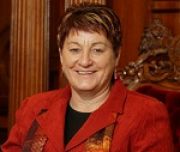
Sue Smith
Inducted in 2015 for services to:
- Government (Public services and politics)
Sue Smith
Inducted in 2015 for services to:
- Government (Public services and politics)
Born: 24 Jan 1951
Community life led to public office
Having served Tasmania in both local government and as a Member of the Legislative Council Sue Smith has been described as an inspiration for women aspiring to gain key positions in public office.
Sue was educated at Our Lady of Lourdes Primary and Secondary School in Devonport, where she was head prefect. She was also involved in community groups and was President of the Young Christian Students Youth Group.
Marriage to a farmer, having two children and becoming involved in the local community at Abbotsham were the catalysts for Sue to stand for local council.
She was first elected as a Councillor to the Ulverstone Municipal Council in 1981 and was elected Warden of the Ulverstone Council in 1992. The Council amalgamations of 1992 resulted in Sue becoming the first female Mayor of the Central Coast Council, a position she held until 1998. During this time, she was also the President of the Local Government Association of Tasmania (LGAT) obtaining a Life Membership of this organisation.
In 1997, Sue was elected to the Legislative Council as the Independent Member for Leven (later renamed Montgomery), and was re-elected in 2002 and 2007. In 2008, she became the first female President of the Legislative Council. While serving as a Member of the Legislative Council, Sue contributed to a number sessional and select committees.
Sue retired from the Legislative Council in 2013 and joined the RACT Board of Directors in 2014. Sue is also an independent director of the Tasmanian Farmers and Graziers Association, Deputy Chair of the Ministerial Advisory Council on Forestry and a member of the local government audit and code of conduct panels.
Sue continues to be Patron of the Ulverstone Senior Citizens Club and Ulverstone Repertory Society.
Her leadership and influence as a member of local government and the Legislative Council is widely acknowledged.
Soroptimist International of Circular Head
Inducted in 2015 for services to:
- Health
- Human rights, justice and corrections
Soroptimist International of Circular Head
Inducted in 2015 for services to:
- Health
- Human rights, justice and corrections
Small projects, huge impact
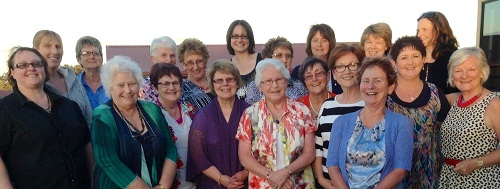
Soroptimist International of Circular Head is part of a global movement that demonstrates how small scale, local projects can have a huge impact in transforming the lives of women and girls.
Assisting, nurturing and developing sum up the objectives of the projects that the women behind Soroptimist International of Circular Head have been involved in.
The Soroptimists assist the Circular Head community by delivering Meals on Wheels and catering for events such as Australia Day and Seniors Week. They have, in the past, catered for the Melbourne to Stanley Yacht Race, held Christmas breakfast parties for school aged children, and organised bus tours for older local residents.
Women and girls have been supported by the Soroptimists through the annual scholarship program, which encourages a local young woman to pursue tertiary education. This is significant for Circular Head, which has relatively low participation rates in post high school education. The Soroptimists provided transport from Circular Head to Burnie to enable young girls to attend career information days. They also promote local women artists by hosting art exhibitions.
Young people are also supported by the Soroptimists who host children’s breakfast clubs to promote good eating habits and donate books to school children and new parents.
Soroptimists International of Circular Head have been involved in a range of programs and campaigns including the Community Health Advisory Committee, Home- Based Postnatal Care Support group, Aged-Care Assistance, preventing violence against women, working bees to develop and maintain community gardens and Save the Tasmanian Devil.
Soroptimists International of Circular Head have also supported national and international projects through financial assistance and fundraising including for the victims of the Dunalley fires in 2013, Queensland floods in 2011, training for birthing assistants and midwives in the highlands of Papua New Guinea and an orphanage in Vietnam.
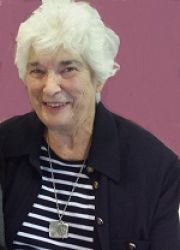
Janet Symons
Inducted in 2015 for services to:
- Community, advocacy and inclusion
Janet Symons
Inducted in 2015 for services to:
- Community, advocacy and inclusion
Born: 20 Jul 1934
(Hobart, Tasmania)
Making a significant difference to lives across the community
Janet Symons has been actively involved in the Huon community for over 50 years in addition to raising four children and caring for a husband with ill-health.
Janet’s willingness to fill a variety of roles in a range of community organisations has made a significant difference to lives throughout the Huon Valley and resulted in Janet receiving the Huon Council Special Service Award and the Rotary Club of Huon Community Award.
A commitment to ensuring that no person is left without assistance has meant that Janet has given long-term support to a range of organisations. She has been a Huon Show Society Steward for over 34 years and is currently in her 18th year as Secretary of the Ladies Committee. She has been involved with the Lower Longley Hall Committee for 36 years, including 32 years as Secretary. She was also Secretary of the Huon Art Exhibition for 25 years, Secretary and President of the Mountain River CWA for 25 years, and is currently President of the Lucaston CWA branch.
Janet has chosen to serve on the board of organisations in her community that deliver direct care including with Huon Eldercare for 26 years and the Huon District Hospital for 14 years.
Supporting children has also been important to Janet. She was President, Secretary and Treasurer for the Huon Child Health Association for 10 years, was Secretary of the Revellers Basketball Club and assisted numerous school and club activities.
Janet has also served as Secretary for five years with the Huon Sub Regional Council for Social Development, the Southern Tasmanian Licence Anglers Association and the Huon Toastmistress Club.
A number of organisations have also made Janet a Life Member including Huon Eldercare, the Huon Show Society and the Huon Delta Club, where Janet served for 15 years as President, Secretary and Treasurer.