
The following 28 members of the Tasmanian Honour Roll of Women were inducted in 2008.
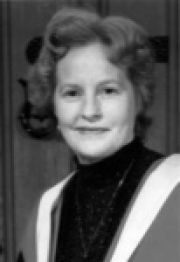
Elizabeth Lauretta Barron OAM
Inducted in 2008 for services to:
- Health
Elizabeth Lauretta Barron OAM
Inducted in 2008 for services to:
- Health
Born: 9 Aug 1933
(Alberta, Canada)
She’s an expert on pensions, claim forms and drainage … She bandages, gives injections, helps with diet and smiles, knowing that she may be the only person to step inside the house that day … She’s a domiciliary nurse, and she is welcome wherever she goes! - Jill Bourne, Advocate, 16 January 1974
Elizabeth Barron was born in Alberta, Canada and moved to Scotland at an early age to live with her grandparents after the death of her mother. The strong values, ethics and respect for older citizens instilled by her grandparents, influenced Elizabeth in pursuing her vocation as a nurse, a career that would provide her with enormous satisfaction over many years. She moved to Tasmania with her husband in 1962 and together they raised four children.
Elizabeth first trained as a nurse at the Stracathro Hospital in Scotland. She then completed a year’s training in fever nursing at Aberdeen City Hospital, followed by a year’s training in midwifery at the Aberdeen Maternity Hospital. In 1961 she successfully completed her training in district nursing at the Queen’s Institute of District Nursing in Aberdeen.
Elizabeth began working as a domiciliary nurse for the Burnie Hospital in 1968. During her time at the Burnie Hospital she motivated professionals with a hospital perspective to try a new, community based approach to health care, particularly for the aged and disabled. Elizabeth recognised early in her career the value of community health as an important aspect of both preventative and curative health services. She was put in charge of the Home Nursing Service at the Burnie Hospital in 1972, and was appointed Regional Coordinator in Community Health Nursing Services in 1981. By 1989 she had been appointed Director of Nursing, Community Health, North-West. Her dedication to patient and family care in the community setting set the standard for the system that would be adopted statewide.
In 1990, Elizabeth joined the Board of Umina Park Nursing Home in Burnie and was the Director of Nursing there from 1991-1998. In 1998, she took on the dual role of CEO and Director of Nursing at Umina Park and her services were recognised in 2000, when she received a Life Membership Award.
As well as the significant contribution Elizabeth has made to community nursing in Tasmania she has continually contributed to her community in a variety of ways. She was a volunteer and fund raiser for Lifeline and received a Life Membership Award in 1997. She served as an Alderman on the Burnie City Council from 1990-1995 and has been a member of a number of boards and committees. Elizabeth was appointed a Justice of the Peace in 1996.
Elizabeth has also been an active member of Soroptomist Burnie, the Emu Bay Business and Professional Women’s Association, and a judge in the Multicap National Mrs Australia Quest. She received a Certificate of Recognition for her extraordinary contribution to her community in the International Year of Volunteers in 2001.
Elizabeth was awarded a Medal of the Order of Australia in June 1998, in recognition of her service to nursing in North-Western Tasmania, particularly as an administrator.
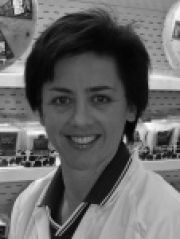
Jane Bennett
Inducted in 2008 for services to:
- Agriculture/Primary industries
Jane Bennett
Inducted in 2008 for services to:
- Agriculture/Primary industries
Born: 6 Jun 1969
(Devonport, Tasmania)
Jane Bennett was born in Devonport and grew up on the family farm in Elizabeth Town with her two sisters and two brothers. Jane attended school in Deloraine and then at Launceston College. In 1986, Jane left school to return to work at her family’s Elizabeth Town farm. Jane studied dairy technology in Victoria for two years, and was the only woman in a class of 18 students. In 1990, Jane left Australia for England, where she worked for two years learning the art of producing farmhouse cheeses.
In 1993, to add value to their farm’s milk production, the Bennett family established Ashgrove Cheese. Using the skills Jane acquired in England, Ashgrove became the only cheese producer in Australia specialising in English country style cheeses. All Ashgrove cheese is produced by hand using traditional recipes and techniques and is made from milk sourced exclusively from the Bennett’s own dairy herds.
The company’s award winning products are known nationally and internationally. Jane’s vision for new and innovative products has seen the development of unique products, most famously wasabi cheese, which was designed specifically for the Japanese market but has also become popular throughout Australia. Ashgrove Farm Cheese has become a major focal point for tourists to the Elizabeth Town area and the State more generally.
In recognition of her efforts in the agriculture industry Jane has been awarded a number of honours including the 1994 Tasmanian Rural Achiever of the Year Award, 1997 Australian Rural Woman of the Year Award and Young Australian of the Year in 1998.
In 1996, at the age of 27, Jane became the first female President of the Tasmanian Rural Industry Training Board, a position that led to her appointment to the Executive Committee of the Tasmanian Farmers and Graziers Association. Jane continued to play an active advisory role to community and all levels of government, serving on a large and diverse number of boards and advisory bodies. Jane was appointed to the 2000 and 2002 Australian Government inquiries into the privatisation of Telstra. She has also been a key player in the Tasmania Together Community Leaders group, which had primary responsibility for the development of the Tasmania Together plan. Jane was awarded a Centenary Medal in 2001, for service to this group.
Jane became an inaugural member of the Tasmanian Food Industry Council in 1999 and took over the role of Chair of the Council from 2002 until 2007. Jane was also a member of the National Food Industry Council from its formation in 2002 until 2007. She was also a member of the Trade Policy Advisory Council from 2002-2006 and the subsequent larger Trade Advisory Council in 2007.
Recent achievements for Jane have included being awarded a 2007 Nuffield Farming Scholarship and representing Tasmania at the 2008 Australia 2020 Summit in Canberra, as part of the group who discussed the Productivity Agenda (education, skills, training, science and innovation).
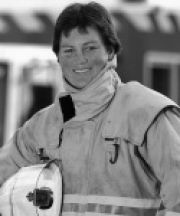
Shirley May Berger
Inducted in 2008 for services to:
- Emergency services
Shirley May Berger
Inducted in 2008 for services to:
- Emergency services
Born: 24 Sep 1964
On 23 May 2007, Shirley Berger completed the necessary qualifications and assessments to become the first female career Leading Firefighter in the Tasmania Fire Service, making her a trailblazer for women in this male dominated profession. As a Leading Firefighter she is also qualified as a Station Officer and is able to act in this position as required.
Shirley grew up as one of 12 children on a farm in West Ridgley and was educated at Ridgley Primary School and Parklands High. After a period of travel, and working at various jobs Shirley settled on the North-West Coast and married Ueli. She has three children, two girls, Melanie and Holly and a son Toby. While the children were growing up Shirley worked from home and ran a successful hydroponic strawberry farm along with a piggery and small farming operation.
Shirley undertook university studies as a mature age student and started work with the Education Department. Looking for a career change, in 2001, she joined the Tasmania Fire Service (TFS) as a recruit firefighter. After her initial training she spent time at the Launceston Fire Brigade, before transferring to the North-West Coast in 2002.
As the first permanent female firefighter on the North-West Coast, there were significant challenges for her and she had to work hard to become accepted in a stereotypical male domain. In 2001, her leadership skills were already evident and she was selected in the contingent that went to assist fighting the devastating Christmas fires in New South Wales.
Shirley has worked hard to achieve competencies during her career and undertook TAFE studies as well as in-service training. She was the only TFS Senior Firefighter to achieve Certificate IV in Firefighting (Supervision). Shirley actively promotes fire safety and is involved with the Junior Firelighter Intervention Program, and is also involved in community juvenile diversionary conferences.
Shirley is a peer counsellor in the Tasmanian Emergency Services Critical Incident Stress Management program where she provides support to emergency service personnel after traumatic incidents. She is a strong advocate for fairness and equity in the TFS and has assisted a number of applicants in their efforts to pursue their careers in the Service. Shirley participates in career expos and has spoken to many school and community groups, promoting the job of firefighter.
Shirley is particularly interested in fire investigation and has been involved with a number of complex investigations. She has pursued opportunities in a wide range of fire service activities, including Sector Commander training. As a result, Shirley was deployed to the East Coast fires in 2007 and appointed Sector Commander, working with a combination of local and taskforce crews. Shirley also acted, under supervision, as Incident Controller at the multi-million dollar fire at the Adult Education Centre in Burnie, where she coordinated career and volunteer crews at the fire.
Shirley owns, breeds and competes with her thoroughbred horses, breeds Labrador dogs, is an active advocate for animal welfare and regularly takes in horses and dogs at her Stowport farm.
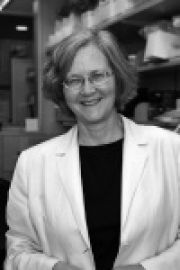
Elizabeth Helen Blackburn
Inducted in 2008 for services to:
- Science, technology, mathematics and research
Elizabeth Helen Blackburn
Inducted in 2008 for services to:
- Science, technology, mathematics and research
Born: 26 Nov 1948
(Hobart, Tasmania)
Elizabeth Blackburn was born the second of seven children. The family moved to Launceston, where Elizabeth attended Broadland House from 1953 to 1964, where she was an outstanding student. Elizabeth developed a love of science at an early age and gained her Bachelor of Science in 1970 and her Master of Science in 1972 from the University of Melbourne.
Elizabeth went on to complete her Ph.D in molecular biology at the University of Cambridge in 1975 and completed her postdoctoral study in molecular and cellular biology at Yale University from 1975 to 1977. In 1978, Elizabeth joined the faculty of the University of California, Berkeley in the Department of Molecular Biology. In 1990, she moved to the Department of Microbiology and Immunology at the University of California, San Francisco, where she served as Department Chair from 1993 to 1999.
Elizabeth’s career has been outstanding by any standards. She is a leader in the area of telomere and telomerase research, particularly as the discoverer of telomerase, which has a role in cancer and the ageing of cells. In 2006, Elizabeth and her co-researchers won the Albert Lasker Award for Basic Medical Research in recognition of this work.
In her long and illustrious career Elizabeth has received many prestigious awards and has been honoured by her peers. These awards have included, among others: Eli Lilly Research Award for Microbiology and Immunology (1988), the National Academy of Science Award in Molecular Biology (1990), an Honorary Doctorate of Science from Yale University (1991), the Australia Prize (1998), the Harvey Prize (1999), the Keio Prize (1999), California Scientist of the Year (1999) the American Association for Cancer Research – G.H.A. Clowes Memorial Award (2000), American Cancer Society Medal of Honour (2000), AACR-Pezcoller Foundation International Award for Cancer Research (2001), General Motors Cancer Research Foundation International Award for Cancer Research (2001), E.B. Wilson Award of the American Society for Cell Biology (2001), 26th Annual Bristol-Myers Squibb Award for Distinguished Achievement in Cancer Research (2003), and the Dr A.H. Heineken Prize for Medicine (2004).
In 2002, Elizabeth was appointed to President Bush’s Council on Bioethics, which is charged with advising the president on moral and ethical issues surrounding advances in biomedical science and technology. Her tenure on the Council ended in 2004. In 2007, Elizabeth was listed among the Time Magazine’s 100 Most Influential People in the World. In 2008, she was one of five women to receive the 10th annual L’Oréal-Unesco Awards for Women in Science.
Doctor Elizabeth Blackburn is a scientist, teacher, a wife and a mother – she has stated that the most memorable week of her life, which occurred at age 37, was when she received her full professorship at the University of California, San Francisco, and discovered in the same week that she was about to become a mother.
In 2009, Elizabeth Blackburn’s outstanding contribution to her chosen area of science was recognised through being named joint winner of the Nobel Prize for Medicine.

Elizabeth Braham (Beeton Braham)
Inducted in 2008 for services to:
- Human rights, justice and corrections
Elizabeth Braham (Beeton Braham)
Inducted in 2008 for services to:
- Human rights, justice and corrections
Born: 1849
(Windsor, Berkshire, England)
Died: 5 Nov 1917
(Launceston, Tasmania)
Elizabeth Beeton Braham was an activist ahead of her time. In a period of severe inequality she was a determined and passionate role model for generations of Tasmanian women. - Kim Simpson, Researcher, Heritage Tasmania, 2008
Elizabeth Braham (nee Smith) was born in Windsor, Berkshire, England around 1849. The daughter of a painter and glazier, she grew up in Windsor and Chelsea. In 1871 she was still living with her parents and worked as a machinist.
Elizabeth married Charles Beeton Braham, a grocer’s assistant, at the Edith Grove Independent Chapel in Chelsea on 1 January 1873. They had two daughters, Minnie, born in Pimlico, London around 1874 and Hilda Louise born in Dalston, London around 1876. In 1891, the family immigrated to Tasmania. They lived in the Wynyard area, where Elizabeth became local president of the Women’s Christian Temperance Union (WCTU).
The WCTU at that time was primarily dedicated to prohibition, but also had a broader agenda of ‘home protection’ and was involved in a wide range of social and political reform activities, mostly relating to the welfare of women and children. Importantly, the WCTU became a major supporter of the campaign for women’s suffrage in Tasmania as it was believed that power at the ballot box was the only way to achieve their goals.
Elizabeth voluntarily served in the WCTU, at both regional and state level, over 25 years and was passionate about prohibition. In the 1890s Tasmania was in the midst of a depression, with the government relying on taxes from the sale of alcohol for revenue, prohibition did not receive widespread support from the government. Elizabeth supported the introduction of a local option bill to the Tasmanian parliament, which would have allowed local communities the choice of prohibition. She was said to have travelled widely across the state promoting the necessity of ‘being up and doing’ on the question of temperance reform. Elizabeth was also President of the Launceston branch of the Child Protection Society.
In 1900, Elizabeth and her family returned to Britain for four years, where Elizabeth continued her union work. After their return to Tasmania, Elizabeth resumed her voluntary work with the WCTU and became President of the Launceston branch in 1906. After Jessie Rooke’s sudden death that same year, Elizabeth became acting state President and was soon elected to the position, a role she held for six years. Elizabeth was known for her ability and power as a public speaker and delivered a paper on ‘How to Interest the Parents’ at the triennial Australasian conference of the WCTU.
Elizabeth and her husband supported their daughter Hilda’s chosen career in midwifery, allowing her to open a private hospital in 1913 in the family’s residence at 78 Canning Street, Launceston. The hospital operated from April 1913 to April 1916.
Elizabeth died at the family home ‘Mentone’ in Erina Street, Launceston on 5 November 1917. She is buried at Carr Villa Cemetery.
Photograph reproduced courtesy of the Archives Office of Tasmania Ref. No. NS1591/1/1.
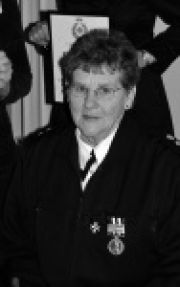
Kathryn Ann Burns
Inducted in 2008 for services to:
- Community, advocacy and inclusion
- Health
Kathryn Ann Burns
Inducted in 2008 for services to:
- Community, advocacy and inclusion
- Health
Born: 18 Sep 1942
Kathryn Burns grew up at Oyster Cove and Snug in the State’s south. She attended school in Woodbridge and Snug and worked on her parents’ dairy farm and piggery. As the eldest of nine children, Kathryn was responsible for caring for her younger siblings when her father passed away in 1960. In October 1961, Kathryn married David Burns and moved to Stonor in the lower Midlands. Kathryn and David both worked at Tasmanian Railways, Kathryn as Station Caretaker. During the 1960s, Kathryn became a member of the then Civil Defence Team for Stonor (which was later absorbed into the State Emergency Service). As a member of the Civil Defence Team, Kathryn completed numerous qualifications including her first aid certificate. In 1969 Kathryn and David moved to Bridgewater. They have five daughters and three sons.
In 1973, Kathryn joined the Claremont Unit of St John Ambulance Australia (Tasmania). She has now been a member of St John Ambulance for 35 years. Kathryn has made a significant contribution to her community through voluntary service and has been a role model for all St John members, holding numerous positions within the organisation. Testament to her skills and experience are her victories at National Open First Aid competitions, as a team member in 1979 and as an individual in 1981. In 1993 Kathryn was admitted into the Order of St John as a Serving Sister, and promoted to an Officer in 1997, in recognition of her extensive service.
Kathryn’s work with St John also acted as a motivator for her career development, inspiring her return to study as an adult to train as a registered nurse. She completed her nursing training in 1982 and continued working as a nurse for 12 years before retiring.
In 1995 Kathryn started training as a volunteer with the Tasmanian Ambulance Service, and has continued to be involved with the organisation to this day. In recognition of her dedicated service, she was awarded the organisation’s P.J. Parssey Memorial Award in 2002.
Kathryn has been an active supporter of a range of other community service organisations. She was a committee member and fundraiser for the Ace Tourette Marching Girls, often raising funds for the teams to compete nationally. Kathryn has also made a significant contribution to the first Dual Online Access Centre in Tasmania and served as Chairperson of the Access Centre Committee when it opened.
Kathryn has served on many school committees including those from Brighton Primary, Bridgewater Primary and Bridgewater High School, and was the first person to teach first aid in these schools in 1983. She continues to teach first aid to this day. Additionally, Kathryn sits on the Brighton Alive Committee as a representative for the Brighton Community Combined Division of St John.
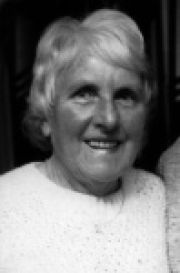
Joan Carswell
Inducted in 2008 for services to:
- Sport and recreation
Joan Carswell
Inducted in 2008 for services to:
- Sport and recreation
Born: 15 Apr 1924
(Launceston, Tasmania)
Joan Carswell was educated at Invermay School. Her schooling was cut short when she developed the symptoms of polio and her mother sent her to her family home ‘Glenfern’ at Kempton to recover. Joan began her working life in the warehouse office of Patons and Baldwins. She married Andy in 1944 and has two sons and one daughter.
In the 1960s, Joan became interested in tennis as a result of her children’s enthusiasm for the game. She took on the responsibility of organising the large City and Suburban Tennis Pennant at that time, a role she has continued to the present day.
The pennant provides regular competition for members of every club in Launceston and surrounding districts. Its organisation requires an enormous amount of time, which Joan gives willingly on a voluntary basis.
The City and Suburban Pennant spans centres from Georgetown to Perth and Longford, Ravenswood to Riverside and all points in between. It caters for players from all levels and brings hundreds of women, and often their small children, together for the chance to talk and play tennis. The low cost of the event allows women who may otherwise be isolated to interact with others on a regular basis.
Joan organises the grading and rosters for the large number of teams which participate from October to April, as well as organising the finals each year. She also fields all enquiries about the roster, from weather conditions to rule clarification.
By facilitating the ongoing viability of the City and Suburban Tennis Pennant, Joan also provides the opportunity for social interaction between a diverse range of people. There are no barriers to participation in the pennant. In more than 40 years’ voluntary service Joan has seen many friendships formed, assistance given to those who need it, and has given the women of Launceston an opportunity for a weekly gathering in a healthy atmosphere.
Joan was awarded an Australian Sports Medal in 2000 in recognition of her efforts.
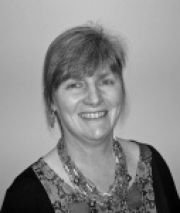
Megan Cavanagh-Russell
Inducted in 2008 for services to:
- Education and training
Megan Cavanagh-Russell
Inducted in 2008 for services to:
- Education and training
Born: 28 Jul 1952
(Tasmania)
Perhaps one of the greatest testaments to Megan’s 35 years of work in education is that the Cradle Coast campus is now full of students, the majority of whom are the first in their family to attend university. The benefits of this change will be felt in the North West region for years to come. - Leanne Topfer, 2008
Megan Cavanagh-Russell has been a champion of education since she began her career in 1973 as a part-time music teacher at Snug. Megan’s love of music and dedication to education and training led to her advancing her career in this area, and she was appointed Co-ordinator of Music Courses at the Centre for Music Studies at the Tasmanian State Institute of Technology. In this position, she established a pilot tertiary music program in North-West Tasmania.
In 1991, Megan was appointed Senior Lecturer and Manager of the University of Tasmania, North-West Centre. In 1996, she was appointed Director of the North-West Cradle Coast campus of the University, a position she continues to hold in addition to the position of Planning Dean for the UTAS College project.
Under Megan’s leadership, the Cradle Coast campus has grown from two study centres in houses in Burnie and Devonport to a recognised university campus. The campus has seen strong growth in student and staff numbers, and the diversity of courses offered to students has also increased, with two full bachelor degrees now able to be studied full time on campus.
A focus of Megan’s approach has been to build and maintain a strong connection between the community and the University. The Cradle Coast campus is now recognised nationally for its community engagement efforts and promoting a culture of education and opportunities for lifelong learning. Megan also held the position of Dean of Education for the Faculty of Education, from August 2006 to January 2008. This was held concurrently with her position as Director of the Cradle Coast campus. During her time in the role, she led the introduction of the full Bachelor of Education at the campus, extending the course offered from the first two years to the entire four years.
Megan’s love of music, arts and education has also led to her voluntary participation on a number of boards and committees including the Tasmanian Arts Advisory Board, of which she has served as Chair. Megan has also held the positions of Director of the Cradle Coast Authority and Director of the Brand Tasmania Council.
Megan was the recipient of a 2001 Centenary Medal in recognition of her contribution to culture and education on the North-West Coast of Tasmania.
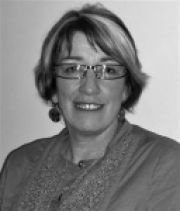
Kerry Degrassi
Inducted in 2008 for services to:
- Community, advocacy and inclusion
Kerry Degrassi
Inducted in 2008 for services to:
- Community, advocacy and inclusion
Born: 20 Sep 1953
(Tasmania)
Kerry views her contribution to community as an opportunity to act as a voice for those who are unable to express their own thoughts, feelings and experiences. [She] is a very effective demonstration that one person can make a difference. - Fiona Gilligan, 2008
Kerry Degrassi grew up in Warrane, Tasmania. Her sense of social justice developed from a young age and she has devoted much of her adult life to community work. She married George in 1977 and between them they have four children.
Kerry’s passion is children, and she has a long history of supporting and working for children and families at both a local and national level. As a member of the National Association for the Prevention of Child Abuse and Neglect (NAPCAN) she served as both a board member and President at state and national levels. Kerry has also been a member of the Commissioner for Children’s Advisory Council from 2004 to the present. She has mentored young women on a regular basis and is a member of EPOCH Tasmania (End Physical Punishment of Children).
During her time as Chairperson of the Sexual Assault Support Service (SASS) from 2004-06 Kerry, together with the CEO and Board, secured a significant funding increase for the service. This has allowed an extension of services to victims of sexual assault, including for children and youth services. She continues to sit on this board.
In 1983 Kerry, as part of a national team of veterans, partners and supporters lobbied for, and then worked on, the Royal Commission on the use and effects of herbicides and pesticides on Australian personnel during the Vietnam War. She was closely involved with a birth defects study conducted here in Tasmania.
In 1996, Kerry was elected to the Sorell Council. Her continuing tenure has also included a term as Mayor from 1999-2000. She has participated in setting up youth groups within her community and each year she works with students at her local high school, educating them about the responsibilities of governance. The students learn how the Sorell Council functions and about the roles of councillors and staff. They are encouraged to think of future career options available to them in the Council, including that of an elected member.
Kerry was a member of the Tasmanian Women’s Council from 2002-05. She is also a strong advocate for Neighbourhood Houses and in 1997 became the founding President of Okines Community House in Dodges Ferry, where she continues as a committee member today. She also initiated a volunteers festival to celebrate the work done by volunteers in her municipality. Kerry was the founding President of Southern Beaches Regional Arts which is now in its 13th year. She has helped raise funds for many organisations and in 1994 was named the Tasmanian Multicap Quest recipient. She has also been a Director of the TasSouth Tourism Association and was a representative on the Southern Tourism Taskforce.
Kerry’s life experience has enriched her contribution to the diverse roles and activities with which she has been involved. She takes every opportunity to develop her skills to stay up to date with current practices. Kerry’s life has been full of opportunities, which she has often created herself.
Kerry attributes the ability to do what she does, to having a very supportive and loving partner who believes in her.
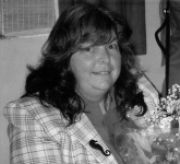
Margaret Linda Dennis
Inducted in 2008 for services to:
- Community, advocacy and inclusion
- Health
Margaret Linda Dennis
Inducted in 2008 for services to:
- Community, advocacy and inclusion
- Health
Born: 28 Jun 1949
(Derby, England)
Margaret has an extraordinary energy and zest for service and epitomises the expression ‘backbone of the community’. - Mrs Anna Lovitt, 2008
Margaret Dennis moved to Australia in 1973 and lived in Melbourne before moving to Rossarden, Tasmania, in 1985.
Margaret has been a volunteer ambulance officer since 1989, and is known as one of the ‘Avoca Angels’ - a group of seven female volunteer ambulance officers working in the Avoca region. Margaret has been a significant contributor to the Volunteer Ambulance Officers Association of Tasmania, and was Secretary of the organisation from 1996-2007; Treasurer since 2007; editor of the organisations’ First Response newsletter since 1996 and its webmaster since 1997. Margaret has been awarded life membership of this organisation in recognition of her contribution.
Margaret has received a number of awards in recognition of her voluntary service as an ambulance officer. In 2003 she was awarded a Centenary Medal for Ambulance Service and in 2006, she was awarded both a National Medal (for 15 years of service) and an Ambulance Service Medal.
Margaret is an active participant in the Rossarden community. As well as being a part-time post mistress, she has been editor of the community newspaper Rossarden Mountain Re-Echo since May 1991. Margaret is the Secretary of the Rossarden Friends Kids Christmas Club, and organises fundraisers for the annual Rossarden Christmas Party. This has included producing two volumes of a popular local recipe book entitled Rossarden Recipes, the proceeds of which have also benefited the Fred Hollows Foundation. Margaret has also been a member of the Northern Midlands Community and Health Interest Group since 1993, and Secretary of the group since 2000. In this position, she has organised many events and educational forums on topics including domestic violence. Margaret was appointed a Justice of the Peace in 2005.
In recognition of her community work, Margaret was awarded Northern Midlands Citizen of the Year in 2000.
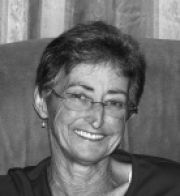
Anne Marie Drake
Inducted in 2008 for services to:
- Community, advocacy and inclusion
Anne Marie Drake
Inducted in 2008 for services to:
- Community, advocacy and inclusion
Born: 29 May 1951
(Broken Hill, New South Wales)
Died: 16 Oct 2008
Anne Drake moved to Tasmania in 1958. She was married to Ian and they had three children. She lived and worked in Rosebery for most of her life.
Anne’s community work in Rosebery was consistent throughout her adult life. She played and umpired hockey for more than 40 years and held the positions of President, Secretary and Treasurer of the Rosebery Women’s Hockey Association. Anne spent much time organising, playing and umpiring hockey tournaments for senior and junior women players. She taught many young women how to play hockey in a sporting manner and encouraged young women to become umpires, by umpiring alongside them to teach them the skills required. Anne was made a Life Member of the Blues Hockey Club and the Rosebery Women’s Hockey Association for her contribution to the sport.
In addition to her service to hockey, Anne was involved with fundraising and catering for the local football club. She also helped fundraise to build the Rosebery Basketball Stadium and was Secretary of the Rosebery Rockdrilling Club for many years, taking on the role of official record keeper for every rockdrilling race over the two day carnivals. Anne was a volunteer for the Rosebery Athletic Club and was a Targa Tasmania official and volunteer in Rosebery since the event began. She was on the Olympic Torch Committee for the West Coast.
As President of the Wee Georgie Wood Steam Train at Tullah, Anne took responsibility for all safety aspects of maintenance, running days and patrons. She also promoted the tourism potential of the region to everyone who travelled on the Wee Georgie Wood Steam Train.
Anne served as State President of the Tasmanian RSL Ladies Auxiliary and was Secretary and Treasurer of the Rosebery RSL Ladies Committee. She was a member for 30 years and cooked Dawn Service breakfasts on Anzac Day for the same period.
Her other community activities included being a member of the West Coast Health and Community Services Board and a member of the Rosebery Hospital Action Committee. Anne was the Chair of the Rosebery Centenary Committee and was a key organiser of the successful reunion weekend. She was the main proponent of the Tom MacDonald monument in the Main Street of Rosebery and was instrumental in raising $30,000 in funding for the monument. Anne was a member of the Clean Up Australia Day Committee and a Lions Lady with the Rosebery Lions Club.
Anne was elected to the West Coast Council in 1993 and served two terms as Deputy Mayor.
In recognition of her life-long commitment to her community Anne received the 2003 West Coast Council Tasmania Day Award. She also received recognition from then Prime Minister John Howard for Voluntary Service to the Community in 2007 and received the West Coast Council Australia Day Award in 2008.
Anne died on 16 October 2008 after a long battle with cancer.
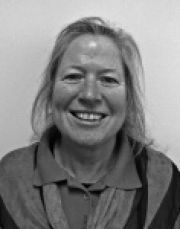
Catherine Fernon
Inducted in 2008 for services to:
- Community, advocacy and inclusion
Catherine Fernon
Inducted in 2008 for services to:
- Community, advocacy and inclusion
Born: 4 Mar 1952
Her passion for community development became obvious to me very early, as did her particular gift for getting the best out of people in the achievement of positive outcomes for the community. - Belinda Wright, 2008
Catherine Fernon grew up in a family of six children in Melbourne. In 1983 she took a years leave from her teaching job in Wangaratta Victoria to live in Tasmania with her new husband who was then studying at the University of Tasmania. She felt straight at home in Tasmania, so resigned from her teaching position and obtained employment working in community arts in Hobart. She moved to the North-West Coast of Tasmania in 1988 and bought land and a house in Boat Harbour where she now lives with her husband, dog and a very active and social local community.
Catherine Fernon has a diverse academic background, holding a number of tertiary qualifications including an Associate Diploma of Art, a Graduate Diploma in Education and a Postgraduate Diploma of Business in Tourism Development.
Her career path has been no less diverse. Following nearly a decade working in the arts field, Catherine had her first taste of community development when she took on the role of Community Development Officer with the Waratah-Wynyard Council from 1988 to1994. Following this, Catherine returned to her academic roots in business and education, teaching management at TAFE Tasmania and going on to become Team Leader of TAFE’s Institute of Business. A stint as Manager of the Portside Small Business Incubator followed before Catherine returned to the community development field, working for the Burnie City Council, firstly as Manager of Community Development, then in the role of Director of Community and Recreational Services. During her time with the Council, Catherine built a strong and successful community development department, founded on extensive community consultation.
Under Catherine’s leadership, and with a strong community connection in place, the department undertook a number of successful collaborative initiatives. They include the Spark Up project in Burnie, a major event involving 400 community participants led by five professional artists, culminating in a performance for the 2003 Ten Days on the Island festival. The project has been credited with building community capacity, attracting cultural tourism and boosting a number of local small cultural businesses. Catherine’s leadership of the Community Development Department has also seen the development of the Burnie Shines festival, an annual umbrella marketing activity that links many small to medium events under a common banner to attract business into Burnie throughout the six weeks of the event.
Catherine went on to become Business Manager of the Institute of Regional Development at the Cradle Coast campus of the University of Tasmania, a position she still holds.
Catherine’s acumen in the fields of business, arts, education and community development has led to her participation on many prominent boards, including the Tasmanian Arts Advisory Board, the Tasmanian Community Fund, Tasmania Together Progress Board, the Cradle Coast Authority and the North-West School Improvement Board. Catherine was also a member of the Community Leaders Group which had primary responsibility for the development of the Tasmania Together plan. Catherine was awarded a Centenary Medal in 2001, for service to this group.
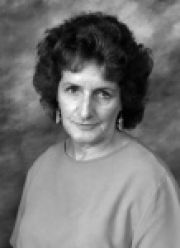
Wendy Noeline Frohmader
Inducted in 2008 for services to:
- Education and training
Wendy Noeline Frohmader
Inducted in 2008 for services to:
- Education and training
Born: 13 May 1943
(Hobart, Tasmania)
Died: 9 Aug 2005
Wendy Frohmader was, and continues to be, a role model for the women and girls of Tasmania. Her life was one of dedication and service – to her family, friends, her community, and her profession. - Carolyn Frohmader, 2008
Wendy Frohmader was educated at Ogilvie High School, a school with which she would continue to be associated for most of her life.
Wendy left school at an early age to take up employment to supplement the family income. She married early and had given birth to her third living child by the age of 21. She was married to Barry for 45 years, and in all they had five children.
Although devoted to her role as wife and mother, Wendy was committed to her childhood ambition to become a teacher. She gained her Education Degree while raising four young children and working two jobs. She went on to teach at Rose Bay High School, St James College Cygnet, and Ogilvie High School.
Wendy spent 30 years as an Ogilvie staff member in the roles of teacher, Grade Supervisor, Assistant Principal, and Acting Principal. She was the first Ogilvie Old Scholar to have held the position of Principal.
Wendy’s contribution to Ogilvie went beyond her role of teacher. She had a strong sense of social justice and often took responsibility for the welfare of ‘at risk’ girls. Wendy raised funds for a wide range of causes including many charities as well as for the benefit of individuals in need, including Ogilvie girls, their parents and staff members.
Wendy worked extensively with the ‘work experience’ programs for senior girls over many years, developing school-community and school-employer contacts and networks which enriched Ogilvie’s position in the wider community. She provided invaluable support to Ogilvie’s choral music program, including leading the concert choir trips to Europe and Japan. Wendy also represented Ogilvie at a special ceremony at Mejiro Gakuen, Ogilvie’s sister school in Tokyo, presenting an address to that school’s community and fostering the development of Tasmanian-Japanese links at a broad educational level. In recognition of her outstanding work, Wendy received a Tasmania Learning Together Award for Educational Excellence in 2003.
Wendy died after a courageous battle with breast cancer in 2005. In 2006, Ogilvie opened its new performing arts complex, naming it the ‘Frohmader Block’ in her honour. The annual Wendy Frohmader Memorial Prize is awarded to a student who demonstrates courage in pursuit of her goals, a fitting tribute to the way in which Wendy lived her life.

Helen Edith Geard
Inducted in 2008 for services to:
- Community, advocacy and inclusion
- Environment
Helen Edith Geard
Inducted in 2008 for services to:
- Community, advocacy and inclusion
- Environment
Born: 28 Jan 1971
(Hobart, Tasmania)
Helen Geard has been a dedicated advocate for the environment all of her adult life. Helen’s active participation in her community began at an early age with the Rural Youth Organisation of Tasmania. She held a range of positions with the organisation and was a part of the Rural Youth Agfest organising committee for 15 years. Helen took on the role of Chairman for Agfest 2001 and 2002, using her communication, technical, facilitation and leadership skills for which she is so highly regarded. During her time on the Agfest Organising Committee she played a role in the development of a vegetation and property management plan for Quercus Park, the home of Agfest.
Helen spent four years as the voluntary President of the Tasmanian Landcare Association. During her tenure she was a key spokesperson for Landcare in Tasmania, promoting the value and importance of sustainable agriculture and resource management. As well as her role as spokesperson, Helen actively supported groups throughout the State in the implementation of their projects. She successfully negotiated on-going Landcare Action Program funds from the Tasmanian Government to support groups with their administration costs and was also instrumental in establishing the Tasmanian Landcare Fund. The fund has since provided assistance for the implementation of more than 20 natural resource management projects across the State.
Since 2001, she has been a member of the Greening Australia (Tasmania) Board, providing input into the setting of strategic visions and project implementation. Helen has been an active member of the Midlands Tree Committee and has been integral in the distribution and planting of thousands of plants in the Midlands.
Helen has worked part-time as a Landcare Officer with the Southern Midlands Council since early 2000. She has worked with five Green Corps teams during that time and has proven to be a supportive mentor. Helen was awarded a Centenary Medal in 2001 for her services to the community through involvement with agriculture and as a role model.
In 2003, Helen was elected as a Councillor with the Royal Agricultural Society of Tasmania. In this role she assists with the organising and running of the Royal Hobart Show each year.
In 2007, Helen became the State Commissioner for Girl Guides Tasmania, leading a vast volunteer network. In the same year Helen received the Wattle Award from Girl Guides Tasmania for unusually good service to the State Girl Guide Association. She represents Tasmania’s views on the Girl Guides Australia Board.
Helen has also been a regular Lifeline volunteer since 2007. She completed the Australian Rural Leadership Program in 2005.
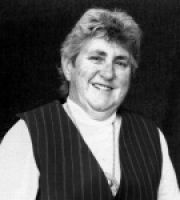
Suzanne (Sue) Goss
Inducted in 2008 for services to:
- Community, advocacy and inclusion
Suzanne (Sue) Goss
Inducted in 2008 for services to:
- Community, advocacy and inclusion
Born: 14 Mar 1945
(Launceston, Tasmania)
Sue is a ‘quiet achiever’ and receives great pleasure in supporting family and friends and ‘assisting people’ within the community, in need of physical, financial and emotional support. It has been reported that her ‘door is open to everyone’. - Mrs Lorraine Joy Gardiner, 2008
Born in Launceston, Suzanne Goss, or Sue as she prefers to be known, is a mother of five. Sue lives in Rowella with her husband Jack, whom she credits as having been a great support to her over the years. Sue and Jack have 16 grandchildren and one great-grandchild. Sue is also a foster parent, of 32 years’ experience. Over the years, Sue has cared for 72 foster children, many of whom have had special needs.
Sue takes a holistic approach to foster care, looking to build skills and experiences in all areas of a child’s life, and providing stability and structure. As well as providing a home for foster children she has enrolled many of them in local kindergartens or schools and involved them in community activities wherever possible. Sue also likes to share one of her favourite hobbies, fishing, with her foster children.
Sue’s commitment to fostering has been such that she continued to take children into her home, even while home nursing both her terminally ill parents. Sue has also continued to foster after herself suffering a stroke 13 years ago that rendered her left arm completely disabled. Despite what some might view as a setback, Sue still manages to change nappies, mow lawns, assist with home renovations, and bait fishing hooks.
Sue’s voluntary efforts have not stopped at her own home. She has been a dedicated fundraiser for people with disabilities, organising fundraising events for MultiCap in the West Tamar community. Additionally, for many years, while the children were at school, Sue volunteered for the local St Vincent De Paul shop. While her main tasks were to launder and mend clothes for the shop, Sue would willingly step in to the role of salesperson when required. This is how Sue Goss is known to Rowella residents, as someone who will help out in the community in whatever capacity she is needed, whether it is taking and developing photos for local community events or dressing up as Santa Claus at the local kindergarten.
Sue is also known for her creative talents; upholstery, home renovations, furniture making, painting and photography - skills she willingly offers to the community when required.
Sue has received a number of accolades for her voluntary work including the 1986 Retarded Citizen Welfare Association Award, the 2004 and 2005 Launceston City Council Children’s Week Awards, a 2007 National Foster Carer’s Recognition Award and the 2007 West Tamar Council Australia Day Award for Citizen of the Year.
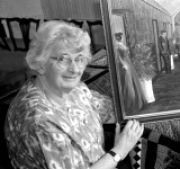
Patricia Joan (Pat) Hull
Inducted in 2008 for services to:
- Community, advocacy and inclusion
Patricia Joan (Pat) Hull
Inducted in 2008 for services to:
- Community, advocacy and inclusion
Born: 16 Sep 1921
(Oatlands, Tasmania)
Died: 10 Apr 2011
(Queenstown, Tasmania)
Blessed with a lively intelligence and great personal warmth she radiates enthusiasm and has the quality of being present, in every way. - Mrs Barbara Boyle, 2008)
Patricia Hull, or Pat as she was known to most people, was born in Oatlands and grew up in Hobart. In 1936, her father, who worked with the Post Master General’s Department, was transferred and the family moved to Queenstown. Pat took up a position on the telephone exchange at the local post office, and at the same time, took night classes at the Queenstown technical college in typing, short-hand, bookkeeping and other business skills. After the death of Pat’s father in1940, Pat and her mother returned to Hobart. Pat worked at the Hobart telephone exchange until 1942 when she married Bernard Hull and returned to Queenstown. Over the next 14 years, Pat and Bernard had five sons, and Pat resumed work at the Queenstown Post Office.
Pat’s sons, like other local children, attended preschools held in church halls. This led Pat to join a parents group which raised money to build a dedicated preschool for local children. This was the beginning of Pat’s interest in community work. Pat went on to become a founding member of the Queenstown Rebekah Lodge, an organisation of which she remained a member until late in her life. Pat was also involved with the Lions Ladies Auxiliary for 30 years, and was Secretary of the organisation for 10 years. She was a long-serving member of many regional committees, including the West Coast Heritage Committee, the West Coast Regional Arts Committee, the Abt Railway Committee and many others. Pat was also a keen amateur historian and a vocal campaigner for social justice and environmental issues.
Whilst Pat Hull was a significant contributor to her community, many people may first remember her as an accomplished artist. Pat did not discover this passion until later in her life. Whilst working at the Queenstown Post Office, Pat took up oil painting, focusing on landscapes. She spent many hours honing her skills, studying art books and visiting galleries and museums, before holding her first exhibition at Zeehan’s Gallery Z in 1977. A common theme throughout all of Pat’s artwork is her use of vibrant colours and her works have been hung in a number of West Coast museums, galleries, schools and churches. Pat also donated many of her artworks to charity for fundraising purposes. Pat was always keen to experiment with new media and also had success with sculpture, miniature painting, porcelain painting and quilting. One of Pat’s famed quilts, ‘Man of the West Coast’, is made from neck ties belonging to a diverse group of men who have lived or worked on the West Coast. Like many of Pat’s works, this quilt depicts her admiration and respect for the people and landscape of Tasmania’s West Coast.
As well as developing her own artistic skills, Pat, through teaching, helped many others to realise their potential. When Pat retired from the Post Office in 1981, she approached the Community College to offer her services as an art teacher. Over the next 14 years, she taught Adult Education classes in pottery and landscape painting in Queenstown, Rosebery and Strahan. Although she officially retired in 1995 at the age of 74, Pat continued to teach voluntarily for a number of years.
Pat Hull was honoured for her contribution to the community and arts scene of the West Coast with a number of awards including West Coast Citizen of the Year 1998 and an Adult Education Outstanding Tutor Award in 2003.
On 10 April, 2011, Pat passed away in her beloved Queenstown. Members of the West Coast arts community attended her funeral, all wearing an original artwork created by Pat.
Photograph courtesy of The Mercury.
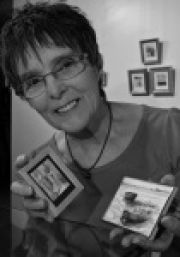
Joan Phyllis Kelly
Inducted in 2008 for services to:
- Arts and media
Joan Phyllis Kelly
Inducted in 2008 for services to:
- Arts and media
Born: 2 Nov 1938
(Victoria)
Joan is a highly respected member of the Burnie and North West Coast communities as an artist, administrator and caring and generous person. - Pamela Thorne, 2008
Born and educated in Victoria, Joan Kelly moved to the West Coast of Tasmania in 1968. Joan has lived in Burnie since 1982 and is married with four children.
Joan has had a lifelong interest in all forms of art and painted and drew landscapes from a young age. In addition to her long and varied career in office administration, Joan worked as an art tutor for many years, teaching drawing and painting throughout Northern Tasmania. This has included classes and workshops for Adult Education in Burnie, Wynyard, Ulverstone and Launceston. Joan has also taught at Burnie TAFE and Seabrook Christian School and been artist in residence at Launceston Preparatory School and Cradle Mountain Interpretation Centre. She has conducted weekend workshops throughout the North and North-West of Tasmania and has illustrated a number of publications including a collection of poetry titled Of Fleeting Things by Tasmanian poet and teacher, the late Elisabeth McKie Allott and Another Son Another Daughter by Queensland author Lynette Pukallus.
While Joan paints also in large format, she is renowned for her work in miniature and in 1992 became a founding member of the Tasmanian Branch of the Australian Society of Miniature Art (ASMA Tasmania Inc). Joan was elected President of ASMA in 2000. She represented Tasmania at the inaugural World Federation of Miniaturists (WFM) conference in London in 1995 where she also had work included in the first worldwide exhibition. Joan’s work has also been shown at the second and third worldwide exhibitions, the latter of which was held in 2004 at the Smithsonian Institution in Washington DC. Joan attended the exhibition and conference where she was elected President of the WFM. It was at this conference that Joan successfully promoted the Burnie Regional Art Gallery and the Civic Centre Complex as venues for the fourth WFM exhibition and conference. Following this recent conference in Burnie she was re-elected for a second term as President of the WFM.
Joan has had five solo exhibitions and has had work on show in more than 160 art exhibitions throughout Australia, the UK, the USA, Japan, France and Germany. She has received a number of awards for both her large format and miniature paintings and her paintings are held in public and private collections throughout Australia and internationally.
Joan’s expertise and experience have led to her taking on advisory and mentoring roles in the arts community. She has participated in a variety of community art events, and has judged art exhibitions and school competitions in North and North West Tasmania. Joan has also sat on many advisory committees and boards and has served as President for both ASMA Tasmania and the Burnie Coastal Art Group.
Photograph courtesy of The Advocate.
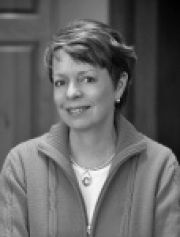
Clare Elizabeth McShane
Inducted in 2008 for services to:
- Agriculture/Primary industries
Clare Elizabeth McShane
Inducted in 2008 for services to:
- Agriculture/Primary industries
Born: 1948
(Sydney, New South Wales)
Clare McShane was born in Sydney and moved to Tasmania with her family when she was 17 years old. She attended St Michael’s Collegiate school before obtaining her Diploma of Teaching and Tasmanian Teachers Certificate. When Clare was posted to Oatlands as a young teacher, she believed it to be a temporary move. Instead, Clare met and married local grazier Allan McShane and they settled at Casaveen, a property farming 11,000 sheep at Lemont. Clare and Allan have five sons.
Clare is now the Director of Casaveen Holding Company and Tasmanian Quality Wool. She established Casaveen Knitwear in 1989 as an adjunct to the operation of the sheep property. The McShane family recognised the need to take greater control of the market and add value to their wool. When the wool industry collapsed in 1991, this decision meant the family was able to ride out the wool price crash. Casaveen Knitwear was started with one bale of wool producing 130 garments. Clare designed and knitted all the garments and they were sold around Australia at shows and field days.
The business grew from Clare and others knitting the garments in their homes, to an operational centre which was set up in Oatlands in 1996 and a factory built in Oatlands in 1999. At the Oatlands premises, factory tours are available and there is a showroom where garments are on display. The business was extended with the opening of the Casaveen Café in April 2005, the Interpretation Centre in March 2008 and the new Meeting Room. The café sources and showcases as much Tasmanian produce as possible.
Casaveen provides much-needed jobs in Oatlands and now employs 13 people. Casaveen Knitwear is also an award winning company that has received many accolades including the 1994 Tsuneichi Fuji Fellowship Trust Award, the 1999 Telstra Tasmanian Small Business Award, the 2000 Australian Family Business of the Year Award and the 2000 Family Business Australia First Generation Award.
Clare continues to design all Casaveen garments, which include skirts, sweaters, cardigans, vests, jackets, scarves, hats, socks, wraps and blankets. Casaveen Knitwear garments are available from retailers across Australia and are also purchased by private customers around the world through mail order or via the internet. The range is also exported to Japan and New Zealand.
Clare has served on many advisory boards and committees. She has been a member of the Tasmanian Chamber of Commerce and Tasmanian Quality Wool, an advisor to the Tasmanian Communities Online Advisory Group and an advisor to the Women and Information Taskforce.
Clare has received numerous personal accolades for her achievements including the 1994 Advance Australia Award, the 1996 Telstra Tasmanian Business Woman of the Year, the 1997 Telstra Tasmanian Small Business Entrepreneur of the Year, the 1998 Tasmanian Rural Achiever of the Year and the 2004 Bruce Forster Laincot Memorial Award for exemplary service to the merino wool and sheep industry.
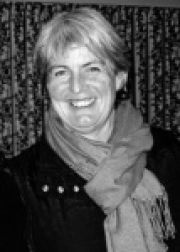
Ruth Joan Paterson
Inducted in 2008 for services to:
- Agriculture/Primary industries
Ruth Joan Paterson
Inducted in 2008 for services to:
- Agriculture/Primary industries
Born: 9 Sep 1959
(Launceston, Tasmania)
Ruth has a passion to ensure that women have a right to decision making in their industry…[She] is a winning example of blooming where you are planted and is a passionate leader in her rural community. - Caroline Brown, 2008
Ruth Paterson is married to Phillip and they have two daughters. Ruth and Phillip own and operate a mixed farming and irrigation enterprise in the Oaks district of central Northern Tasmania. Their business, Moreton Hill Investments, imports a range of hard hose irrigators from Italy and has had international success. Moreton Hill’s skills and product knowledge were recognised in June 2004, when the company was contracted by its European supplier to undertake the commissioning of 60 hard-hose irrigators to Indonesia’s largest pineapple grower in Southern Sumatra.
However, Ruth’s success has not been limited to the family business. Ruth’s career in the Tasmanian Government Department of Primary Industries and Water (DPIW) allowed her to play a role in the development of government policy and programs addressing the needs of rural women. Ruth was employed by DPIW from 1994 to 2003, during which time she was instrumental in developing the Tasmanian Women in Agriculture Program (TWiA), a non-government networking organisation for rural women, which now has more than a thousand members.
Ruth is passionate about creating opportunities for rural women, and this passion has crossed national and international borders. Ruth was the first woman in Australia to chair an Agriculture Field Day Committee (Agfest, 1993 and 1994) and is featured in the National Pioneer Women’s Hall of Fame in Alice Springs. She was the instigator for the exchange program between TWiA and the Nebraska Women in Agriculture organisation, and has been a Tasmanian delegation leader at World Rural Women’s Congress conferences in Australia, the USA and Spain.
Ruth is also an accomplished speaker and writer and has presented at conferences and submitted articles on rural women’s issues to organisations including the ABC and the Australian Bureau of Statistics.
Ruth’s experience in her field has led to her serving on a variety of boards and committees. This has included terms as the Chair of the Rural Financial Counselling Service of Tasmania, Vice-President of the Tasmanian Poppy Growers Association and membership of the Pearns Steam World Management Trust.
Ruth has received a number of awards in recognition of her contributions to agriculture, including the first Tasmanian Rural Woman of the Year Award in 1994, the 1995 Tasmanian Rural Youth Service Award and the 1996 Meander Valley Australia Day Citizen of the Year award. Ruth currently serves on the board of the Rivers and Water Supply Commission.
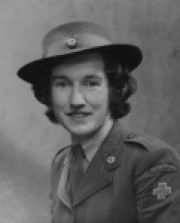
Dorothy Pearce MBE
Inducted in 2008 for services to:
- Community, advocacy and inclusion
Dorothy Pearce MBE
Inducted in 2008 for services to:
- Community, advocacy and inclusion
Born: 15 Oct 1923
(Hobart, Tasmania)
Dorothy Pearce was educated at the Friends School in Hobart. After completing a Bachelor of Arts degree at the University of Tasmania, Dorothy Pearce studied social work in Melbourne for two years. She completed a third year of study, an Almoners course, on a Red Cross scholarship. It was at Dorothy’s graduation in 1946 that she commenced her long association with the Australian Association of Social Workers (AASW). Dorothy spent the next four years working for the Red Cross in Adelaide, followed by four years with the Anti-Cancer Council in the Radiotherapy Department of the Royal Adelaide Hospital. During these eight years she took an active part in the South Australian Branch of the AASW and the Australian Association of Hospital Almoners and was closely associated with the South Australian Council of Social Services (SACOSS).
Dorothy moved back to Hobart in 1955, where she was able to help rebuild the struggling Tasmanian Branch of the AASW. She served for many years on the executive committee of the Branch where she held various offices including that of Branch President. She was the Tasmanian member of the professional Education and Training Committee and convenor of the Committee on Early Australian Qualifications and was elected Junior Vice President of the Association in 1969 and 1970 and Senior Vice President in 1971. As branch delegate to the Federal Council of the AASW her contributions were such that she was also made convenor of the Federal Constitution and Standing Orders Committee in 1971.
Through her involvement with the AASW, Dorothy was active in building educational and professional opportunities for social workers in Tasmania. She was a member of the training committee which paved the way for a social work course to be set up in Tasmania in 1973. Dorothy also held a position developing the Social Work Department within the Royal Hobart Hospital, a position that had not been filled since Catherine Walker was the hospital almoner for three years in the 1930s.
Dorothy was integral to the early development of the Tasmanian Council of Social Service (TasCOSS) as a functional and representative peak body for the Tasmanian community services sector. As President of the Tasmanian AASW, Dorothy joined with the Director of the then Department for Social Welfare, Mr G.C. Smith, in convening the inaugural meeting of the TasCOSS in the Hobart Town Hall in December 1961. Dorothy continued to be involved with TasCOSS, as a long-serving and dedicated Honorary Secretary and then in various voluntary capacities. Dorothy has devoted much of her time, energy and commitment to the organisation, particularly at a time when it was struggling for resources and recognition. Since 2003 TasCOSS has honoured Dorothy with an annual Dorothy Pearce Address, which promotes current social justice issues to a wide and varied audience.
Prior to her retirement, Dorothy fulfilled a personal goal to go trekking in the Himalayas. Now 85 years old, Dorothy still contributes to the community, volunteering for Meals on Wheels and the State Library courier service for homebound clients.
Dorothy was made a member of the Order of the British Empire in 1977 for service to the community.
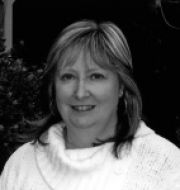
Jenny Kay Piemontese
Inducted in 2008 for services to:
- Community, advocacy and inclusion
Jenny Kay Piemontese
Inducted in 2008 for services to:
- Community, advocacy and inclusion
Born: 22 Jan 1965
(Hobart, Tasmania)
Jenny Piemontese is a mother of four. For the past three years Jenny has unhesitatingly opened her home to newborn babies, many of whom are premature and suffering from drug withdrawal. After the babies receive treatment in hospital, Jenny fosters them for the first critical months until they are moved to a more permanent home. In her own words she says “…I love children. I do it because in Tasmania we have so many children that need care for one reason or another”. The babies are often irritable from drug withdrawal and require feeding every two hours, day and night.
After Jenny and her husband Vince decided they were ready to foster children Jenny completed the appropriate training with the Department of Health and Human Services. Within weeks they were welcoming their first foster child with the philosophy that “It doesn't matter if it's only for 24 hours, they're part of our family and we love them”.
Jenny has volunteered in her local community for a number of years, in a variety of ways. She has been a school banking coordinator, library helper, canteen helper, parents and friends member, school fair helper, a coach and manager for her children’s sports teams and the District Leader for the Sandford Girl Guides.
In 2006, Jenny trained as a Lifeline telephone counsellor and received her Certificate of Accreditation for 100 hours of telephone counselling. She is also an enthusiastic member of the Lifeline Tasmania CHATS Team, which takes groups of elderly people in Clarence to various activities to maintain their health and social contacts. In 2007, Jenny organised a ‘Christmas Lights’ tour, providing the CHATS group with supper at her home and then a tour in a rented mini bus through the Eastern Shore to find houses with Christmas lights. She also provided each of the elderly people in the group with a small gift.
Jenny is currently studying at TAFE Tasmania for her Diploma in Community Welfare and is studying for a Certificate II in Community Pharmacy by distance education. Jenny is also working towards her Certificate IV in Telephone Counselling with Lifeline.
Jenny volunteers at Calvary Hospital one day a fortnight, spending time in the wards helping patients and giving them welcome company.
In recognition of her outstanding community service, Jenny won the Volunteering Tasmania Volunteering Award in the Community Achievement Awards 2007 and was named Citizen of the Year in the 2008 City of Clarence Australia Day Awards. Since her induction, Jenny has won the 2009 Pride of Australia - Tasmanian award for Care and Compassion, National Pride of Australia Award - Care and Compassion and was named Barnados Tasmanian Mother of the Year in 2010.
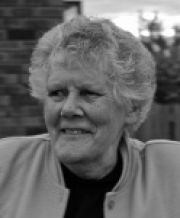
Phyllis Pitchford (Aunty Phyllis)
Inducted in 2008 for services to:
- Aboriginal or Torres Strait Islander affairs
- Arts and media
Phyllis Pitchford (Aunty Phyllis)
Inducted in 2008 for services to:
- Aboriginal or Torres Strait Islander affairs
- Arts and media
Born: 30 Oct 1937
(Launceston, Tasmania)
Died: Oct 2021
Phyllis Pitchford (Aunty Phyllis) was born at the Queen Victoria Hospital in Launceston in 1937, one of identical twins. After the birth, her mother returned to the family’s home on Cape Barren Island. When she was a young girl, Phyllis’s mother moved to mainland Tasmania and Phyllis and her five brothers then divided their time evenly between her father, who remained on Cape Barren Island, and her mother in Launceston. Phyllis remembers her childhood as a happy one, during which her parents helped her and her brothers maintain connections with their culture by involving them in traditional practises such as muttonbirding.
While in Launceston Phyllis attended Charles Street Primary School and Brooks High School, experiences she remembers fondly. After high school, Phyllis married a local man and moved to Flinders Island. Phyllis remembers a strong atmosphere of racism on Flinders Island, particularly during the 1980s, more so than she had experienced during her youth in Launceston and on Cape Barren Island. Despite this, Phyllis remained on Flinders Island. She raised five children and became extensively involved in the community.
For 35 years, Phyllis has been actively involved with, and worked for, the Tasmanian Aboriginal community. She is a respected Aboriginal Elder, mentor, poet and author. She is highly regarded as a passionate and proud advocate for Aboriginal people, their identity, culture and traditions.
Phyllis’s poetry and writing explores Aboriginal history, culture and identity. Many of Phyllis’s poems have been published, including Our Tally, If Only, Sad Memories and The First Xmas I Remember. One of her poems, We’re Here, is on exhibition at the National Museum of Australia. Phyllis has also written academic papers for state and national Aboriginal education programs and has been the Elder in Residence, a speaker and a Board Member for Riawunna, the University of Tasmania’s Centre for Aboriginal Education.
For the past 35 years, Phyllis has worked and served on boards and committees for a diverse range of Aboriginal organisations, often in a voluntary capacity. She was a founding member of the Flinders Island Aboriginal Association, the Babel Island Aboriginal Corporation and the Tasmanian Aboriginal Childcare Association and has been extensively involved with the Tasmanian Aboriginal Centre.
Also testament to the high regard in which Phyllis is held by the Tasmanian community is the government advisory roles in which she has served. These have included Phyllis’ membership of the Tasmanian Government State Strategic Planning Committee, the ya pulingina kani Indigenous Family Violence Working Group and the Tasmanian Women’s Consultative Council.
Phyllis has been a committed mentor for young Aboriginal people. She has been involved as an Elder and mentor in meenah mienne (my dream), an arts-based pilot project for Aboriginal youth in the justice system, and she visits and mentors young Aboriginal people in the Ashley Youth Detention Centre.
Phyllis has worked tirelessly for her community and has continued to work throughout mainland Tasmania on a wide range of issues including youth justice, childcare, education, housing, family violence and Aboriginal women’s health and wellbeing.
In 1992, Phyllis received a NAIDOC Award in recognition of her contribution to the communities of Tasmania, Flinders and Cape Barren Islands.
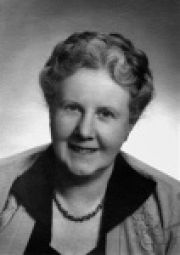
Joan Gladys Rawson BEM
Inducted in 2008 for services to:
- Community, advocacy and inclusion
Joan Gladys Rawson BEM
Inducted in 2008 for services to:
- Community, advocacy and inclusion
Born: 5 Aug 1903
(Hamburg, Germany)
Died: 17 Sep 2000
Joan Gladys Rawson, known to most people as Gladys, was the daughter of a prominent suffragette and a musician. When her family moved to England she retained her mother's maiden name of Rawson.
Gladys had a great interest in horticulture and studied at the Studley Agricultural College, in Warwickshire England, before eventually going on to establish a successful landscape design business. Gladys came to Tasmania from England in 1948 and obtained a position with the Tasmanian Farmers Federation. Her work took her to farms in rural areas around Tasmania. In both the city and the country, Gladys noticed the plight of dogs being left to roam the streets or being continually chained up and in poor conditions. To her dismay, Gladys discovered that there was no organisation to take care of stray or unwanted dogs, and she was not satisfied with the standard of council pounds at the time.
Despite having no money, Gladys was determined to set up an organisation dedicated to the welfare of dogs. She formed the Tasmanian Canine Defence League (TCDL) which she modelled on the National Canine Defence League of England. This allowed the TCDL to obtain literature and leaflets free of charge from the British organisation. On 19 December 1950, the Constitution of the Tasmanian Canine Defence League was adopted.
Gladys found few supporters early on, but managed to secure a site in South Hobart. However, the Hobart City Council closed this site after only a short period. It was not until 1955 that Gladys and her supporters were able to obtain more stable lodgings for their canine charges, leasing a block of council-owned land at Derwent Park. The property was furnished with an onsite manager's house and a few kennels. During the next 36 years, the Dogs' Home site was fully developed, with kennels reaching to the property perimeter and four local councils using the facility as their official pound. Gladys and her fellow members promoted the TCDL and raised funds through a variety of activities and campaigns, many aimed at involving children with their pets. Gladys believed that it was vitally important to educate children from a young age on the responsibilities and rewards of dog ownership. She encouraged schools to visit the dogs' homes and also visited schools herself to speak to students. Over the years, the TCDL set up dogs' homes in Launceston and Devonport and finally in Burnie in 1981.
Gladys resigned as secretary and member of the TCDL Council in 1984, after giving more than 30 years of service to the organisation.
Gladys was awarded a British Empire Medal in 1983 for service to animal welfare.
In 1991, a new Hobart Dogs' Home and Dog Pound was built at Risdon Vale. Gladys visited the new home, arriving at a special morning tea in the sidecar of a Harley Davidson, a treat arranged for a lady who had once been an avid motor cyclist. On her tour of the new facility, she was heard repeating: "I can't believe it."
Gladys passed away in 2000. The TCDL celebrated its 50th year in the same year, and installed a commemorative wishing well at the Hobart Dogs' Home in honour of its founder, Miss Joan Gladys Rawson.
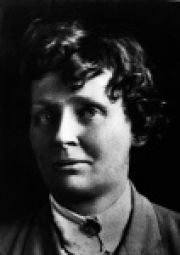
Ettie Annie Rout
Inducted in 2008 for services to:
- Health
Ettie Annie Rout
Inducted in 2008 for services to:
- Health
Born: 24 Feb 1877
(Launceston, Tasmania)
Died: 17 Sep 1936
(At sea)
Ettie Annie Rout and her twin sister, Nellie Frances, were born in Launceston to William John and Catherine Frances Rout. William was an ironmonger, with an established business in Charles Street, Launceston. The third, and final, child was Lilian Minnie, born in 1879.
The family migrated to New Zealand in the 1880s and William opened a hardware shop in Wellington. Unfortunate business decisions led to bankruptcy and Ettie needed to earn a living to help support the family. An extremely intelligent and physically fit young woman, Ettie attended Charles Gilby’s shorthand and typing classes in the 1890s, where she excelled. She set up her own shorthand typing business and became a government shorthand writer, recording court cases and commissions of enquiry.
Ettie developed radical ideas early. She became a vegetarian, a committed socialist, a physical culturist, an unorthodox dresser, a publicist and fighter for many causes, and a woman who expressed her opinions freely and often. Many of her opinions were regarded as outrageous, but are commonly held views in today's society. In a letter to her friend, H.G. Wells, she said: "It’s a mixed blessing to be born too soon".
It was Ettie’s contribution to the health and wellbeing of New Zealand and Australian soldiers in World War I that makes her so deserving of recognition and remembrance. During the Gallipoli campaign in 1915, she set up the New Zealand Volunteer Sisterhood and invited women aged 30 to 50 to Egypt to care for New Zealand soldiers. Despite government opposition, the first group of 12 volunteers went to Cairo in October 1915.
When Ettie arrived in Egypt in 1916, she became aware of the high venereal disease rate amongst soldiers and directed her formidable talents to doing something about it. The Australian Dermatological Hospital in Egypt was treating both Australian and New Zealand soldiers, and at one stage was receiving 250 new venereal disease patients a day. Many soldiers were hospitalised with venereal diseases without ever having engaged in battle.
Ettie was angered by the lack of any official action, with the traditional response being to either ignore it, or call on the soldiers to practice chastity. She embarked on a campaign of letter writing to Members of Parliament, newspapers and anyone she thought may be able to act on the problem. Her letters were eventually banned from New Zealand newspapers under the war regulations as many groups, notably women’s organisations, objected to her stance on the issue.
Unlike many people, Ettie saw the problem as medical, not moral, and realised that appealing to soldiers to practice abstinence from sex would not work. Ettie carried out research in England among the foremost doctors in the field of venereal disease, and combined the work of several to produce her own preventative kit, containing calomel ointment, condoms and Condy’s crystals. She sold these at the New Zealand Medical Soldiers Club, which she set up at Hornchurch near the New Zealand Convalescent Hospital.
Ettie also advocated the establishment of safe sex brothels, but had no success convincing authorities. Her solution to the venereal disease problem - proper sex education, free prophylactic kits and safe sex brothels - was eminently sensible, but way ahead of her era. Women’s groups in New Zealand were outraged, accusing Ettie of trying to make ‘vice’ safe.
Ettie’s constant lobbying paid off. By the end of 1917, the New Zealand Expeditionary Force had adopted her kit for free and compulsory distribution to soldiers going on leave. The New Zealand Government gave Ettie no recognition for her role in the kit’s development and adoption.
In April 1918, Ettie went to Paris and set up a safe sex brothel, as brothels were legal in France but not in England. She met troops as they arrived from the front and handed out cards recommending the brothel of Madame Yvonne, who had agreed to run her establishment with safe sex practices. Ettie’s operation in Paris amounted to a complete social and sexual welfare service for ANZAC soldiers who lined up each day to seek her advice on a wide variety of issues. The French Government decorated her with the Médaille de la Reconnaissance Française which was awarded to civilians for works of benevolence at home or abroad, for her work in Paris and in Villers Brettoneux, where she ran a Red Cross depot from 1919 to 1920.
After the war, Ettie lived in England, where she married long-time friend, Fred Hornibrook, and published books on safe marriage, health, vegetarianism and what is regarded as a largely inaccurate book on Maori culture. She returned to New Zealand in 1936 after her marriage failed, but was not received well by former friends and colleagues. Ettie took an overdose of quinine aboard ship in 1936, having sent out telegrams saying “Ettie died at sea”.
The life of this remarkable woman has been captured by Jane Tolerton in her biography Ettie: A Life of Ettie Rout – ‘Guardian Angel’ or ‘Wickedest Woman’?
Photograph reproduced with permission of the Alexander Turnbull Library, Wellington, New Zealand Ref. No. PAColl-4832.
Amy Rowntree OBE
Inducted in 2008 for services to:
- Arts and media
- Education and training
Amy Rowntree OBE
Inducted in 2008 for services to:
- Arts and media
- Education and training
Born: 13 Jul 1885
(Hobart, Tasmania)
Died: 1962
Amy Rowntree was born in Hobart, one of the nine children of Francis and Ann Maria Rowntree. Amy began her teaching career in 1902 at the age of 17.
She obtained her Bachelor of Arts with a First Class in Philosophy, and her Master of Arts in 1921 from the University of Tasmania. She also obtained her Certificate of Classification from Sydney, and passed her University Education 1 and 2 exams with high distinction.
Amy was working as Mistress of Method at the Elizabeth Street Practising School in Hobart when she was appointed the first female Inspector of Schools in 1919. She was the only woman to hold the Education Department’s highest professional certificate.
Amy retired from teaching in 1945, having been instrumental in revolutionising infant teaching in Tasmania. The infant education system she developed put Tasmania at the forefront of early childhood education in Australia. She received the Order of the British Empire for her outstanding achievements in education in 1949.
After retirement, Amy embarked on her second career, as a historical researcher and writer. Amy was meticulous in her research, often incorporating lively social history in her commentary. Her passion was for her immediate environment, Battery Point and Sandy Bay where she had grown up and continued to live.
Through the 1950s and early 1960s, until her death in 1962, Amy wrote at least eight books, covering the history and architecture of Hobart and Sandy Bay. She also produced a series of articles for the Saturday Evening Mercury on Tasmanian history. She was preparing a series of articles on the early history of Battery Point when she became seriously ill in 1961. Four were published before her death and the remainder were finished by her sister Fearn and friends of the family. Fearn also illustrated many of Amy’s books.
Amy's contribution to Tasmanian history was not limited to published works. Three of the Rowntree sisters, Amy, Fearn and Milli, were the principal instigators of the establishment of Narryna (Hampden Road, Battery Point) as a first class memorial folk museum which opened in 1957.
Photograph reproduced courtesy of the Archives Office of Tasmania.
Margaret Anne Sing
Inducted in 2008 for services to:
- Human rights, justice and corrections
Margaret Anne Sing
Inducted in 2008 for services to:
- Human rights, justice and corrections
Born: 14 Jul 1946
(Launceston, Tasmania)
Margaret Sing (formerly Thurstans) has provided leadership and been a trailblazer for women and the status of women across a broad range of fields throughout her career, which has included secondary teaching, trade unionism, vocational education and training, public sector policy and management, and local government.
Margaret was the first Equal Employment Opportunity Officer for State Government Employment, from December 1977 until January 1982. During her tenure there was a significant increase in the recruitment and promotion of women, improvements in the employment levels and conditions for Aboriginal people and people with a disability, introduction of permanent part-time work, and policies and procedures in relation to sexual harassment. Margaret was also involved in the development of the first Anti-Discrimination Bill and was a member of the group that wrote the first Women in TAFE report.
In 1982, Margaret became one of the first female industrial officers at the then Tasmanian Public Service Association (now the Community and Public Sector Union), rising to become the first female Senior Industrial Officer from late 1982 until July 1986. She set up and convened the Women’s Committee, Repetitive Strain Injury Support Group, and organised a range of awareness raising activities for women members.
Margaret became the first Equal Opportunity Officer at the University of Tasmania from 1986 until 1989. In that time she was a part of the working group for the establishment of a women’s studies course at the University. She also worked on the introduction of policies and procedures in relation to harassment, and activities to improve the participation of women in economics, science and engineering.
Through the 1970s and 1980s, Margaret became a well recognised public speaker on issues related to women and equal opportunity. She ran for election in the Hobart City Council elections in 1974 and in the State elections in the electorate of Denison in 1976, with the campaign slogan ‘Give a Woman a Go!’ Margaret polled well in both elections and encouraged female candidates to run in subsequent elections.
From the early 1970s, Margaret was actively involved in a wide range of volunteer women’s and community activities, including the Women’s Electoral Lobby (WEL), where she held the positions of Convenor, Publicity Officer, and Convenor of the Girls in Education Committee. At this time she was also involved in the establishment of the first women’s shelter and saving the Female Factory.
Margaret was also actively involved in the Australian Women’s Education Coalition (AWEC), including time as the Convenor, and in other groups such as the Child Health Association and the Hobart Consumer’s Group (HCG).
While working as the Senior Private Secretary to Fran Bladel, then Minister Assisting the Premier on the Status of Women, Margaret was Chair of the Working Party on Equal Opportunity Legislation and assisted with the development of the legislation introduced at that time.
Margaret retired from the position of Director, Local Government Division, Department of Premier and Cabinet in 2008.

Catherine (Kate) Marie Stanton
Inducted in 2008 for services to:
- Sport and recreation
Catherine (Kate) Marie Stanton
Inducted in 2008 for services to:
- Sport and recreation
Born: 19 Oct 1963
(San Jose, California)
Died: 25 Jun 2006
Kate Stanton was born in San Jose, California. She graduated from San Juan High School with a full scholarship to Willamette University in Salem, Oregon. She attended Willamette University for one year before immigrating to Australia in her late teens. Kate became an Australian Citizen in 1990.
Kate completed her Economics/Law Degree from Macquarie University and qualified for admission to the Bar. After graduating, Kate, who was fluent in French and German, spent a year in the Geneva office of Valorinform, working as a financial analyst. Kate established the Valorinform Australian office on her return to Australia.
Kate was a Certified Practising Accountant (CPA), had previously been a Chartered Accountant, and completed a Masters in Public Administration at the University of Tasmania. From the time she arrived in Tasmania Kate involved herself fully in the Tasmanian community, using her qualifications to voluntarily contribute to the Tasmanian community in a number of ways.
Kate was heavily involved in Womensport and Recreation Tasmania Inc., a non-government, primarily volunteer based organisation aimed at promoting and encouraging women and girls to be physically active. From 2001 onwards, Kate held various leadership positions within the organisation, contributing enormous time voluntarily to their regular events.
Although Kate was not an elite athlete, she was a fantastic role model to women around her and strove to encourage women to take up sport. She was a member of the Hobart Hash Harem, the Southern Tasmanian Veterans Cycling Club and had begun competing in triathlons, despite being a novice swimmer. Kate was also an accomplished sailor and cross-country skier.
As Treasurer of Bicycle Tasmania for six years, Kate was a passionate cycling amateur, greatly involved in local associations. As part of Bike Week she organised the annual Tour de Femme, which has now been renamed in her honour. Kate was a tireless advocate for improved cycling conditions and recognition of cyclists’ rights.
As an advocate for CPA Australia and the profession, Kate supported many programs and encouraged young students and accountants to advance their careers. Kate was a Fellow of the CPA and a former Tasmanian Divisional Councillor, State President, Board Public Sector Committee representative and Chairperson of CPA Australia’s Ethics and Corporate Governance Centre of Excellence. The CPA Tasmania Branch hosts the CPA Australia Kate Stanton Annual Research Lecture in her honour. Kate was also a Fellow of the Australian Institute of Company Directors.
She was an RACT Director from 2002 until her death, and Chairman of the Audit and Risk Management Committee and member of the Road and Traffic Committee.
Kate had worked at the Tasmanian Audit Office for 13 years, rising to the position of Director of Financial Audit. She had taken up the position of Assistant Director, Budget Management Branch, Department of Treasury and Finance shortly before her death. Kate’s life was full of accomplishments and giving. She is deeply mourned by the many people whose lives she touched.
Photograph courtesy of The Mercury.
Anne Mary Steele
Inducted in 2008 for services to:
- Sport and recreation
Anne Mary Steele
Inducted in 2008 for services to:
- Sport and recreation
Born: 18 Jun 1968
(Hobart, Tasmania)
Throughout our lives we all have our dreams and aspirations. Sometimes we choose to follow our dreams and sometimes we think they are beyond our reach. Everything is achievable. - Anne Steele, February 2007
Anne graduated from the University of Tasmania in 1992 with a Bachelor of Education Degree with First Class Honours. Anne also received the University Prize for Health, Physical Education and Recreation. Anne is married with two children. She has taught in the Catholic Education System since graduating and is currently employed at Sacred Heart College, New Town.
Anne began competitive pool swimming as a nine year old. She went on to represent Tasmania at Australian Open and Age Championships every year between the ages of 11 and 18. She was also actively involved with open water swimming and Surf Life Saving and achieved many awards and state titles.
Anne shifted her focus to marathon swimming in 1996. Her first distance swim was the 25 kilometre Sunset Coast Marathon Swim in Western Australia in January 1997. Due to poor conditions, only 17 people finished the swim. Anne was among them, and was the fourth Australian to finish. In February 1997, Anne won the Tasmanian 16km state title. She then went on to compete in the Pan Pacific Trials in Adelaide in March, where she finished sixth.
Over the next eight years, Anne maintained her involvement with swimming and went on to successfully compete in Masters Level State and Australian titles, Surf Life Saving and Open Water Swimming competitions.
In 2006 Anne began planning the fulfilment of her life-long dream to be the first Tasmanian to swim the English Channel. Anne trained intensively for 18 months before completing the swim on 8 August 2007, in 10 hours, 58 minutes and 32 seconds. This placed her among the top 50 times for all Channel swims. However, Anne’s swim marked not only the fulfilment of a personal goal. Anne created the Swim for Life Campaign, using her swim as a fundraising effort for the Children’s Cancer Institute of Australia. Through Swim for Life, Anne raised more than $372,000 for research into childhood cancer.
Since her successful English Channel swim, Anne has become a leading figure in the Tasmanian swimming community. In 2007, she was appointed Director of Swimming Tasmania. Anne also writes a weekly swimming column for the Mercury Newspaper and is a highly sought after motivational speaker. She gives talks to a variety of community organisations, schools and businesses on goal setting and achievement.
Anne was recognised for her efforts with the 2007 Tasmanian of the Year award.